Industrial Muffle Furnaces: From Heat to Precise Processing
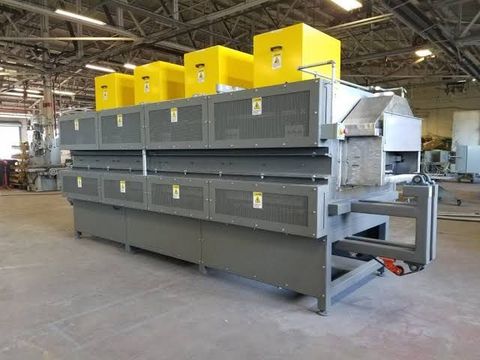
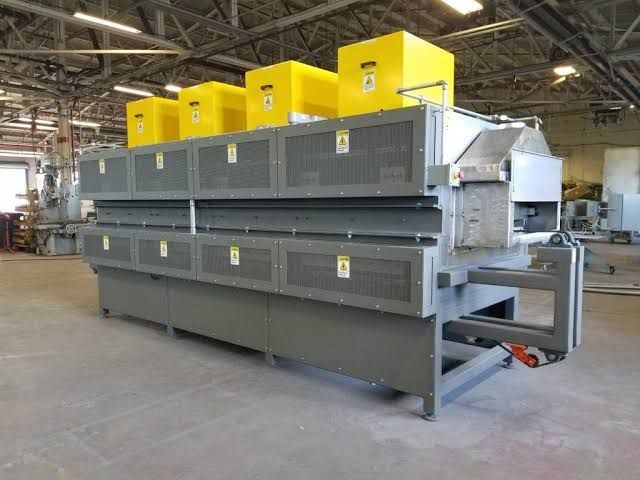
Industrial Muffle Furnaces are high-temperature heating systems designed to process materials under controlled thermal conditions.
By separating the heating elements from the work chamber, these furnaces help reduce direct exposure of the material to combustion products and support cleaner, more consistent thermal processing.
They are used across laboratories, manufacturing facilities, materials research, ceramics, metallurgy, chemical processing, and other industries where controlled heating is important. Modern systems combine insulated chambers, electric heating elements, temperature sensors, programmable controllers, and safety features to provide repeatable heating cycles.
What Are Industrial Muffle Furnaces?
Industrial Muffle Furnaces are electrically heated thermal processing systems with an insulated chamber designed to expose materials to controlled temperatures.
The word muffle refers to the separation between the heating source and the material being processed. Instead of placing the workpiece directly in contact with a flame or combustion gases, the material is heated inside a dedicated chamber.
Typical applications include:
- Heat treatment
- Ashing
- Calcination
- Ceramic processing
- Material testing
- Thermal decomposition
- Loss-on-ignition testing
- Laboratory research
- Metal treatment
- Powder processing
How Industrial Muffle Furnaces Work
The operating process generally moves from loading through controlled heating and cooling.
1. Material Loading
The material is placed inside a heat-resistant chamber, tray, crucible, or suitable container.
The chamber should not be overloaded because excessive material can interfere with temperature uniformity and airflow.
2. Temperature Programming
The required temperature profile is entered into the furnace controller.
Depending on the application, the program may define:
- Target temperature
- Heating rate
- Holding time
- Cooling conditions
- Multiple temperature stages
3. Controlled Heating
Electric heating elements generate thermal energy around the muffle chamber.
The insulation surrounding the chamber reduces heat loss and helps direct thermal energy toward the work area.
4. Temperature Measurement
Thermocouples or other temperature sensors monitor the chamber temperature.
The controller compares the measured temperature with the programmed setpoint and adjusts heating output as needed.
5. Thermal Processing
The material remains at the required temperature for a specified period.
Different processes require different temperature profiles. Some applications require rapid heating, while others require gradual temperature increases and extended holding periods.
6. Controlled Cooling
After the thermal cycle, the furnace may be allowed to cool naturally or follow a defined cooling procedure.
Controlled cooling can be important for materials that are sensitive to thermal shock or structural changes.
Main Components of Industrial Muffle Furnaces
A muffle furnace combines several components to create a controlled thermal environment.
| Component | Main Function |
|---|---|
| Heating elements | Generate thermal energy |
| Muffle chamber | Isolate the material from heating elements |
| Insulation | Reduce heat loss |
| Thermocouple | Measure temperature |
| Controller | Regulate the heating cycle |
| Door assembly | Provide chamber access |
| Chamber lining | Protect internal surfaces |
| Safety system | Monitor operating conditions |
| Ventilation system | Manage gases where required |
Heating Elements
Heating elements are among the most important components in an industrial muffle furnace.
Common heating technologies include resistance heating elements made from materials selected according to the required temperature range and operating environment.
The heating element configuration affects:
- Maximum temperature
- Heating rate
- Temperature uniformity
- Energy consumption
- Operating life
The appropriate element depends on the thermal process and atmosphere inside the chamber.
Furnace Insulation
High-temperature insulation helps retain thermal energy inside the furnace.
Common insulation approaches include ceramic fiber materials, refractory structures, and specialized insulating boards or bricks.
Effective insulation can improve temperature stability and reduce heat transfer to the external furnace structure.
Temperature Control Systems
Modern Industrial Muffle Furnaces commonly use digital temperature controllers.
A controller can regulate heating output based on sensor feedback and maintain the programmed temperature.
Advanced systems may include:
- Programmable temperature profiles
- Multiple heating stages
- Digital displays
- Data recording
- Alarm functions
- Over-temperature protection
- Remote monitoring capabilities
Major Types of Industrial Muffle Furnaces
Different furnace configurations are designed for different processing requirements.
Electric Muffle Furnaces
Electric models use resistance heating elements and are widely used where clean and precisely controlled heating is required.
High-Temperature Muffle Furnaces
These systems are designed for applications requiring elevated operating temperatures.
They may use specialized heating elements and refractory materials suitable for demanding thermal environments.
Programmable Muffle Furnaces
Programmable models allow users to define multi-stage heating profiles.
They are useful when a process requires specific ramp rates, holding periods, and repeatable thermal cycles.
Laboratory Muffle Furnaces
Laboratory models are commonly used for testing, material analysis, research, and small-batch thermal processing.
Controlled-Atmosphere Furnaces
Some applications require a controlled gas environment to reduce oxidation or create specific processing conditions.
These systems can incorporate gas inlet and monitoring arrangements designed for the intended atmosphere.
Industrial Applications
Metallurgy
Muffle furnaces can support heat treatment, material testing, oxidation studies, and thermal analysis of metals and alloys.
Ceramics
Ceramic materials may require carefully controlled heating and cooling cycles to achieve desired physical characteristics.
Chemical Processing
Muffle furnaces can be used for calcination, thermal decomposition, ashing, and other controlled heating processes.
Materials Research
Researchers use controlled thermal environments to evaluate how materials respond to temperature changes.
Mining and Minerals
Thermal processing can be used for sample preparation, ash determination, and mineral analysis.
Pharmaceutical and Laboratory Applications
Controlled heating can support analytical procedures, residue determination, and material testing where appropriate.
Industrial Muffle Furnaces vs. Conventional Furnaces
Muffle furnaces are designed around controlled chamber heating and separation of the work material from the heating source.
| Feature | Muffle Furnace | Conventional Direct-Heat Furnace |
|---|---|---|
| Heating method | Indirect chamber heating | Direct or indirect depending on design |
| Material exposure | Isolated from heating elements | May have greater exposure |
| Temperature control | Typically precise | Varies by configuration |
| Contamination control | Generally strong | Depends on design |
| Programmability | Common in modern systems | Varies |
| Typical applications | Testing, heat treatment, calcination | Broad industrial heating |
The appropriate design depends on the material, atmosphere, temperature range, throughput, and thermal process.
Factors to Consider When Selecting a Muffle Furnace
Maximum Temperature
The furnace should provide an operating temperature range appropriate for the process, with sufficient margin for the intended application.
Chamber Size
The chamber must accommodate the workpiece, containers, trays, or crucibles without excessive loading.
Temperature Uniformity
Uniform temperature distribution is important when multiple samples or components must receive consistent thermal treatment.
Heating Rate
Some processes require rapid temperature increases, while others need controlled ramping.
Controller Capability
For repeatable processing, programmable controllers can define temperature ramps, holding periods, and cooling sequences.
Atmosphere Requirements
If oxidation or chemical reactions with air are a concern, the furnace may need a controlled atmosphere or suitable ventilation arrangement.
Safety Features
Important safety considerations can include over-temperature protection, door interlocks, electrical protection, and fault alarms.
Temperature Uniformity and Process Control
Temperature uniformity is critical for achieving consistent results.
Several factors can influence uniformity, including chamber geometry, heating-element placement, insulation condition, loading arrangement, and airflow.
Regular temperature verification using appropriate reference instruments can help identify deviations between the controller reading and actual chamber conditions.
Energy Efficiency
Energy performance depends on furnace insulation, chamber size, heating-element efficiency, operating temperature, cycle duration, loading, and door-opening frequency.
Practical approaches to improve thermal efficiency include:
- Avoiding unnecessary door opening
- Selecting an appropriate chamber size
- Maintaining insulation
- Using suitable heating profiles
- Avoiding extended idle operation
- Monitoring thermal performance
- Maintaining heating elements
Efficient operation can also contribute to more stable thermal processing.
Automation and Data Monitoring
Modern Industrial Muffle Furnaces can incorporate automation for repeatable thermal cycles.
Digital systems may record:
- Temperature history
- Heating stages
- Holding periods
- Alarm events
- Cycle duration
- Process deviations
Recorded data can support process verification and quality documentation.
For production environments, furnace controllers can also be integrated with broader monitoring systems where compatible interfaces are available.
Maintenance Best Practices
Inspect Heating Elements
Heating elements should be inspected for deterioration, deformation, or other signs of thermal wear.
Check Insulation
Damaged or degraded insulation can increase heat loss and affect temperature performance.
Verify Temperature Sensors
Thermocouples and related sensors should be inspected and verified periodically.
Keep the Chamber Clean
Residues can accumulate during repeated thermal processing and may affect subsequent cycles.
Inspect Door Seals
Where a sealed or controlled atmosphere is used, door and chamber sealing components should be maintained appropriately.
Review Safety Systems
Over-temperature protection, alarms, interlocks, and electrical safety components should be checked according to the equipment maintenance schedule.
Industrial Muffle Furnace Comparison
| Selection Factor | Basic Model | Advanced Model |
|---|---|---|
| Temperature control | Digital setpoint | Multi-stage programmable |
| Data recording | Limited | Automated logging |
| Heating profile | Basic | Multiple ramps and holds |
| Monitoring | Local display | Digital or remote monitoring |
| Safety | Standard protection | Expanded alarm and interlock functions |
| Application | Routine heating | Complex thermal processing |
Frequently Asked Questions
What are Industrial Muffle Furnaces used for?
Industrial Muffle Furnaces are used for controlled high-temperature processes such as heat treatment, calcination, ashing, ceramic processing, material testing, and thermal decomposition.
How does a muffle furnace work?
A muffle furnace heats a separate insulated chamber using electric heating elements. Sensors monitor chamber temperature while a controller regulates heating according to the programmed temperature profile.
What is the advantage of a muffle furnace?
A major advantage is controlled indirect heating. The work material is separated from the heating elements, which can help provide a cleaner and more controlled thermal environment.
What temperature can an industrial muffle furnace reach?
The maximum temperature depends on the furnace design, heating elements, insulation, and intended application. Different models are available for different temperature ranges.
How can temperature uniformity be improved?
Appropriate loading, properly positioned heating elements, good insulation, calibrated sensors, and suitable temperature profiles can all contribute to improved temperature uniformity.
Conclusion
Industrial Muffle Furnaces provide controlled thermal environments for applications ranging from material testing and laboratory analysis to industrial heat treatment, calcination, and ceramic processing.
Their performance depends on the interaction of heating elements, chamber design, insulation, temperature sensors, controllers, and safety systems. Selecting the appropriate configuration requires consideration of temperature range, chamber capacity, heating rate, uniformity, atmosphere, automation, and process requirements.
Modern furnace technology increasingly combines programmable controls, digital monitoring, data recording, and automated thermal profiles. These capabilities can make thermal processing more repeatable while providing greater visibility into each heating cycle.
For any application, the furnace should be matched to the material characteristics, thermal profile, operating environment, and required measurement accuracy. Proper calibration, maintenance, loading practices, and temperature verification are also important for maintaining consistent results over time.