Mechanical Testing Tools: Essential Guide to Material Strength and Performance Analysis
Mechanical testing tools are instruments and systems used to evaluate how materials behave under different physical conditions.
These tools help engineers, manufacturers, researchers, and quality inspectors understand the strength, durability, flexibility, and reliability of materials before they are used in products, buildings, vehicles, or machinery.
The history of mechanical testing dates back to the industrial revolution, when industries needed reliable ways to assess the performance of metals and construction materials. As manufacturing processes became more advanced, the demand for accurate mechanical testing equipment increased. Today, a wide range of material testing machines are used in laboratories, production facilities, educational institutions, and research centers.
Mechanical testing tools are designed to measure properties such as tensile strength, hardness, impact resistance, compression resistance, and fatigue performance. These measurements help determine whether a material can safely perform its intended function.
Modern industrial testing equipment includes both traditional laboratory systems and advanced digital instruments that collect and analyze testing data automatically. These tools support product development, quality assurance, safety evaluations, and compliance with industry standards.
Importance
Understanding Material Performance
Materials are exposed to different forces throughout their lifecycle. Some materials stretch, bend, crack, or break under stress. Mechanical testing equipment helps identify these behaviors before materials are used in practical applications.
For example, a tensile testing machine measures how much force a material can withstand before it breaks. This information is important for products ranging from construction steel to plastic packaging.
Supporting Product Safety
Many products must meet specific safety requirements. Mechanical testing tools help verify that materials can perform reliably under expected operating conditions.
Examples include:
- Automotive components exposed to vibration and impact
- Construction materials subjected to heavy loads
- Consumer products that experience repeated use
- Medical devices requiring consistent performance
Improving Quality Control
Quality control testing tools help manufacturers monitor production consistency. By testing samples from production batches, organizations can identify variations in material quality before products reach the market.
Consistent testing helps reduce material defects and supports compliance with recognized standards.
Assisting Research and Development
Laboratory testing instruments play a significant role in material research. Scientists and engineers use these tools to evaluate new alloys, polymers, composites, and other advanced materials.
Testing data helps researchers understand material characteristics and compare alternative material options for different applications.
Recent Updates
Increased Automation
Recent developments in mechanical testing equipment have focused on automation and digital integration. Many modern material testing machines now include software that automatically records measurements, generates reports, and stores historical testing data.
Automation reduces manual data entry and improves testing consistency.
Integration with Smart Manufacturing
Industrial testing equipment is increasingly connected to manufacturing systems through digital networks. This integration allows testing results to be monitored alongside production information, helping organizations track quality trends more efficiently.
Advanced Sensor Technology
New sensor technologies have improved the accuracy of testing machines. High-resolution sensors can detect small changes in force, displacement, and deformation during testing procedures.
This enhanced precision supports research activities and quality verification processes.
Growth of Non-Destructive Evaluation
Non destructive testing equipment continues to gain attention because it allows materials and components to be inspected without causing damage.
Common examples include:
- Ultrasonic inspection
- Radiographic testing
- Magnetic particle testing
- Eddy current testing
- Visual inspection systems
These methods help identify defects while preserving the tested component.
Expanded Use of Data Analytics
Testing systems increasingly incorporate data analysis capabilities. Organizations use software tools to evaluate large datasets, identify performance patterns, and improve material selection decisions.
Laws or Policies
Mechanical testing activities are often influenced by national regulations, industry standards, and international guidelines. While requirements vary by country and industry, several common frameworks help ensure testing consistency and reliability.
International Standards
Organizations such as the International Organization for Standardization and ASTM International publish standards that define testing procedures for various materials.
These standards provide guidance on:
- Test preparation
- Equipment calibration
- Data collection methods
- Reporting requirements
Workplace Safety Regulations
Many countries require testing laboratories and manufacturing facilities to follow workplace safety regulations. These rules help protect personnel who operate testing equipment and handle materials during testing procedures.
Product Compliance Requirements
Industries such as construction, aerospace, automotive, and medical manufacturing often require documented testing results before products can be approved for use.
Mechanical testing data may be used to demonstrate compliance with applicable regulations and technical specifications.
Calibration and Quality Management
Testing laboratories frequently follow quality management systems that require regular calibration of laboratory testing instruments. Calibration helps ensure measurement accuracy and consistency over time.
Tools and Resources
Various types of mechanical testing tools are available for evaluating different material properties.
Common Mechanical Testing Equipment
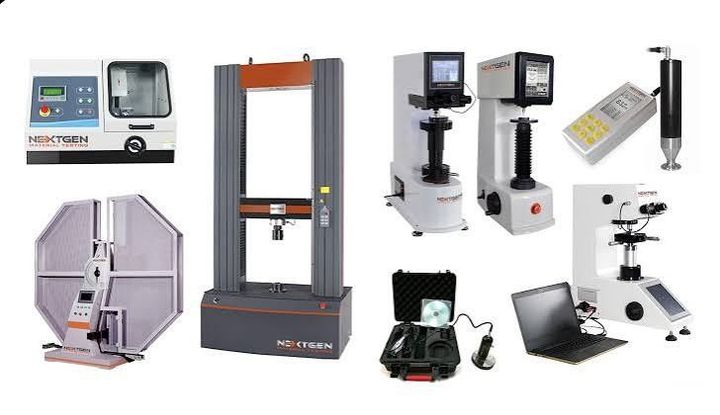
| Equipment Type | Primary Purpose | Typical Measurement |
|---|---|---|
| Tensile Testing Machine | Measures stretching resistance | Tensile strength and elongation |
| Universal Testing Machine | Performs multiple test types | Tension, compression, bending |
| Hardness Testing Machines | Evaluates surface resistance | Hardness values |
| Impact Testing Equipment | Measures energy absorption | Impact resistance |
| Compression Testing Machine | Assesses crushing strength | Compressive strength |
| Fatigue Testing System | Evaluates repeated loading effects | Fatigue life |
| Non Destructive Testing Equipment | Detects defects without damage | Internal and surface flaws |
Tensile Testing Machine
A tensile testing machine applies controlled pulling force to a material sample. The machine measures how the material responds until deformation or failure occurs.
Industries commonly use tensile testing to evaluate metals, plastics, composites, textiles, and rubber materials.
Universal Testing Machine
A universal testing machine is among the most versatile material testing machines. It can perform multiple testing methods using interchangeable fixtures and accessories.
Common applications include:
- Tensile testing
- Compression testing
- Flexural testing
- Shear testing
Hardness Testing Machines
Hardness testing machines determine a material's resistance to indentation or penetration. Different hardness scales are used depending on the material being tested.
Popular methods include:
- Rockwell testing
- Brinell testing
- Vickers testing
- Shore hardness testing
Impact Testing Equipment
Impact testing equipment measures how materials behave when subjected to sudden forces. These tests help evaluate toughness and fracture resistance.
Impact testing is commonly used for structural materials and components exposed to dynamic loading conditions.
Non Destructive Testing Equipment
Unlike destructive testing methods, non destructive testing equipment allows inspection without damaging the test object.
Common tools include:
- Ultrasonic flaw detectors
- X-ray inspection systems
- Thermal imaging devices
- Magnetic inspection instruments
Software and Data Management Tools
Modern testing systems often include software platforms that assist with:
- Data collection
- Statistical analysis
- Report generation
- Equipment monitoring
- Standard compliance documentation
Testing Machine Manufacturers Resources
Many testing machine manufacturers provide technical documentation, calibration guides, user manuals, and educational resources that help users understand testing procedures and equipment operation.
These materials support training and standardization efforts across different industries.
FAQs
What are mechanical testing tools used for?
Mechanical testing tools are used to measure the physical properties of materials, including strength, hardness, flexibility, durability, and impact resistance. They help determine whether materials are suitable for specific applications.
What is the difference between a tensile testing machine and a universal testing machine?
A tensile testing machine is primarily designed for tension-related tests. A universal testing machine can perform multiple types of tests, including tension, compression, bending, and shear testing.
How do hardness testing machines work?
Hardness testing machines apply a controlled force to a material surface using a specific indenter. The size or depth of the resulting indentation is measured to determine hardness values.
What is non destructive testing equipment?
Non destructive testing equipment examines materials and components without causing damage. These methods help identify defects, cracks, corrosion, or structural issues while keeping the tested object intact.
Why are quality control testing tools important in manufacturing?
Quality control testing tools help verify material consistency and product reliability. They allow manufacturers to detect variations, monitor production quality, and document compliance with relevant standards.
Conclusion
Mechanical testing tools play an important role in evaluating the strength, durability, and performance of materials across many industries. Equipment such as tensile testing machines, hardness testing machines, universal testing machines, and non destructive testing equipment provide valuable information about material behavior under different conditions. Advances in automation, digital data analysis, and sensor technology continue to improve testing accuracy and efficiency. By supporting quality control, safety verification, and research activities, mechanical testing equipment remains an essential part of modern manufacturing and material evaluation.