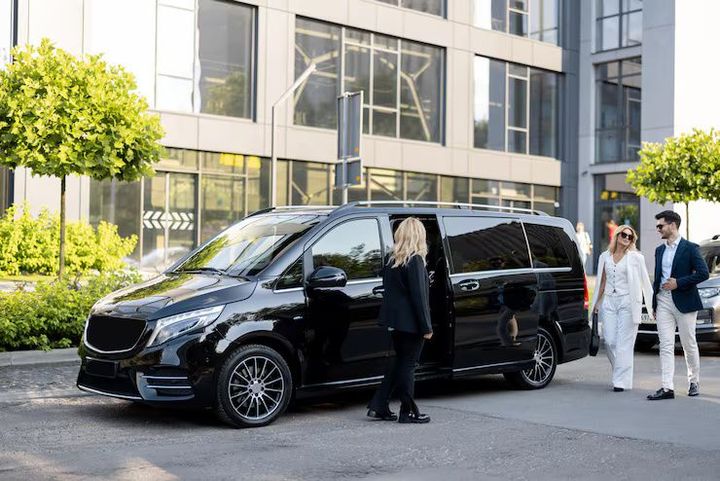
Mini bus corporate shuttle transportation refers to passenger vehicles designed to carry groups of employees or business teams between locations. These vehicles typically accommodate between 12 and 30 passengers, making them suitable for short-distance and urban travel.
Compared with large buses, mini buses offer greater flexibility and are commonly used for workplace commuting and scheduled transport services. They help organizations manage employee movement efficiently, especially in cities with heavy traffic or limited parking.
Common Use Cases
Mini bus shuttle programs are used in various corporate scenarios. These services help streamline transportation logistics and improve coordination.
-
Daily employee commuting routes
-
Transportation between multiple office campuses
-
Airport transfers for corporate travel groups
-
Conference and corporate event transportation
-
Team travel for meetings, workshops, or training programs
Features of Mini Bus Shuttles
Corporate mini buses are equipped with features that focus on comfort, safety, and efficiency. These features make them suitable for professional use.
-
Climate-controlled interiors
-
Comfortable passenger seating
-
GPS navigation and fleet tracking
-
Luggage storage for travel groups
-
Safety monitoring systems
These vehicles are widely used across industries such as technology, finance, healthcare, manufacturing, and education.
Why Corporate Shuttle Transportation Matters Today
Corporate transportation has become more important as organizations adapt to hybrid work models and distributed offices. Efficient commuting solutions help employees travel reliably and reduce logistical challenges.
Mini bus shuttle systems address modern workplace issues in several ways. They improve commuting efficiency, support large group coordination, and contribute to sustainability goals.
Key Benefits
Corporate shuttle programs offer multiple operational and environmental advantages.
-
Reduced parking demand near office locations
-
Improved punctuality for meetings and events
-
Simplified travel coordination for large groups
-
Enhanced mobility across multiple office locations
These benefits are especially valuable for organizations operating across large campuses or industrial zones.
Recent Trends in Corporate Shuttle Transportation (2024–2025)
Corporate mobility systems have evolved alongside changes in workplace structures. In 2025, several trends are shaping how mini bus transportation is managed.
One major development is the adoption of smart fleet management technology. Organizations now use GPS tracking, route optimization, and digital scheduling tools to improve efficiency.
Hybrid work patterns have also influenced shuttle operations. Flexible schedules require dynamic routing rather than fixed timetables.
Emerging Trends
-
Smart fleet management systems
-
Dynamic scheduling based on hybrid work models
-
Sustainability initiatives such as electric mini buses
-
Data-driven route planning using mobility analytics
Corporate Mobility Priorities (2025)
| Corporate Mobility Priority | Industry Focus |
|---|
| Route optimization | High |
| Sustainability initiatives | High |
| Digital scheduling tools | Moderate |
| Data-driven transportation | High |
These priorities highlight the shift toward smarter and more efficient transportation systems.
Regulatory and Policy Considerations
Corporate shuttle transportation is subject to various regulations and safety standards. These rules ensure passenger safety and responsible operation.
Organizations must comply with regional laws, which may vary depending on location.
Key Regulatory Areas
-
Vehicle safety standards for passenger protection
-
Driver licensing requirements for commercial vehicles
-
Insurance and liability coverage
-
Environmental regulations promoting low-emission transport
Examples of regulatory influence include:
-
European Union low-emission transport policies
-
Clean transportation initiatives in U.S. states
-
Urban congestion controls in cities like London and Singapore
Tools and Digital Resources for Transportation Planning
Modern corporate transportation relies on digital tools to manage routes and vehicles efficiently. These tools improve coordination and provide real-time insights.
Common Technology Solutions
-
Fleet management software for tracking vehicles
-
Route optimization tools for efficient planning
-
Mobility analytics platforms for data analysis
-
Travel management systems for coordinating group transport
Typical Planning Workflow
-
Identify employee commuting patterns
-
Map pickup and drop-off points
-
Create optimized transportation routes
-
Monitor performance using fleet data
Transportation Planning Tools
| Tool Category | Primary Purpose |
|---|
| Fleet management software | Vehicle monitoring and tracking |
| Route optimization tools | Efficient travel planning |
| Mobility analytics platforms | Commuting data analysis |
| Travel management systems | Coordinating group travel |
Frequently Asked Questions
What is a mini bus corporate shuttle?
A mini bus corporate shuttle is a passenger vehicle used to transport employees or business teams between locations such as offices, airports, or event venues.
How many passengers can a mini bus carry?
Most mini buses can carry between 12 and 30 passengers, depending on configuration.
Why do companies use corporate shuttle transportation?
Organizations use shuttle services to simplify commuting, manage group travel, and coordinate transportation across multiple locations.
How are shuttle routes planned?
Routes are designed using commuting data, employee patterns, and route optimization tools to ensure efficiency.
Are corporate shuttle vehicles regulated?
Yes, these vehicles must comply with safety, licensing, and insurance regulations set by transportation authorities.
Corporate Mobility Data Example
Transportation planners often analyze employee commuting preferences to optimize shuttle services. This helps reduce congestion and improve efficiency.
| Transportation Method | Percentage of Employees |
|---|
| Personal vehicle | 48% |
| Public transit | 28% |
| Corporate shuttle | 16% |
| Ridesharing | 8% |
Conclusion
Mini bus corporate shuttle transportation plays a key role in modern workplace mobility. It supports efficient commuting, reduces congestion, and simplifies group travel coordination.
With advancements in technology, sustainability initiatives, and data-driven planning, corporate shuttle systems continue to evolve. These solutions remain an essential component of transportation strategies for organizations worldwide.