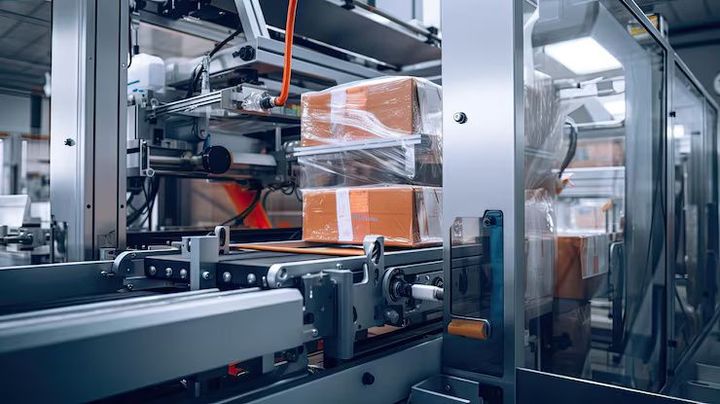
Packaging Machine Information: Guide to Modern Technology
Packaging machines are automated or semi-automated systems designed to prepare products for handling, storage, transportation, and distribution.
Modern packaging machine technology can perform tasks such as filling, weighing, sealing, labeling, wrapping, coding, cartoning, and palletizing with consistent operating processes.
Packaging equipment is used across food and beverages, pharmaceuticals, cosmetics, chemicals, electronics, agriculture, and consumer goods. Recent developments have focused on automation, digital monitoring, flexible production, energy efficiency, robotics, machine vision, and packaging formats that support changing environmental requirements.
Context
A packaging machine is equipment that performs one or more stages of the packaging process. Depending on the application, a production line may use individual machines or several connected units working as an integrated system.
Common packaging machine categories include:
| Machine Type | Main Function | Common Applications |
|---|---|---|
| Filling Machine | Measures and fills products | Food, beverages, chemicals |
| Sealing Machine | Closes packages | Pouches, trays, containers |
| Wrapping Machine | Applies protective wrapping | Food, logistics, consumer goods |
| Labeling Machine | Applies identification labels | Bottles, cartons, containers |
| Cartoning Machine | Places products into cartons | Pharmaceuticals, food |
| Coding Machine | Adds dates and product information | Food, cosmetics, medicines |
| Palletizing Machine | Arranges packaged products | Manufacturing and logistics |
The development of packaging machinery has progressed from manually operated equipment toward electronically controlled and highly automated systems. Programmable logic controllers, sensors, servo motors, human-machine interfaces, machine vision, and industrial robots are now commonly integrated into advanced production environments.
The basic purpose remains consistent: move products through packaging stages in a controlled and repeatable manner. Machine selection depends on product characteristics, package dimensions, material properties, production requirements, hygiene conditions, and applicable regulations.
Importance
Packaging machinery matters because packaging is closely connected with product protection, identification, handling, quality control, and distribution. Consistent machine operation can help maintain uniform filling, sealing, labeling, and coding across large production volumes.
Different industries have different technical requirements. Food packaging equipment may require hygienic construction and materials suitable for food-contact environments. Pharmaceutical packaging generally requires strict control of contamination, traceability, and product identification. Chemical packaging may require equipment designed around the physical and chemical characteristics of the material.
Modern packaging systems can also collect operational information. Sensors and connected controllers may monitor parameters such as temperature, pressure, speed, filling levels, machine cycles, and detected faults. This information can support production analysis and equipment maintenance planning.
Important considerations when evaluating packaging technology include:
- Product characteristics and dimensions
- Packaging material and format
- Required production capacity
- Filling and sealing accuracy
- Changeover requirements
- Operator safety
- Cleaning and hygiene requirements
- Data collection and machine connectivity
- Applicable regional regulations
Automation is particularly relevant where repetitive packaging activities involve high volumes or require consistent positioning. Robotic systems can also handle activities such as picking, case packing, palletizing, and other repetitive material movements.
Recent Updates
Packaging technology between 2024 and 2026 has increasingly focused on connected automation, robotics, flexible production, sustainability, and data-driven manufacturing. Research in smart manufacturing during 2026 highlights artificial intelligence, advanced sensing, digital twins, robotics, industrial data analytics, and connected manufacturing systems as important areas of development.
Machine vision is another important development. Cameras and image-processing systems can inspect package position, labels, seals, printed information, and visible defects. These systems can help identify irregularities during production rather than relying entirely on manual inspection.
Robotic packaging has also advanced. Research published in 2024 demonstrated adaptive robotic approaches for automated bagging, using visual feedback and coordinated robotic movement to handle flexible packaging materials.
Sustainability is influencing both packaging materials and machine design. Equipment increasingly needs to accommodate lightweight structures, recyclable materials, different film properties, paper-based formats, and changing package dimensions. The European Union's Packaging and Packaging Waste Regulation is also increasing attention on packaging composition, reuse, recovery, and waste prevention. The regulation entered into force in February 2025 and generally applies from August 12, 2026.
Another emerging area is smart packaging. Research published in 2024 described battery-free packaging incorporating sensing, wireless communication, and active functions for monitoring food freshness. Such technologies are still developing and are distinct from conventional packaging machinery, but they illustrate the broader movement toward connected packaging systems.
Laws or Policies
Packaging machinery and packaging operations are affected by different rules depending on the country, industry, product, and packaging material. There is no single worldwide regulation covering every packaging machine.
In the United States, workplace machinery must follow applicable Occupational Safety and Health Administration requirements. OSHA identifies machine guarding as an important protection against hazards created by moving parts, points of operation, rotating components, and other mechanical risks.
Food-related packaging also involves rules concerning materials that come into contact with food. The U.S. Food and Drug Administration explains that food-contact substances can include packaging components and processing equipment, with regulatory status depending on the individual substances and their intended conditions of use.
In India, food packaging requirements are overseen through the Food Safety and Standards Authority of India. FSSAI publishes regulations and amendments concerning food packaging and labeling, including developments recorded during 2026.
For organizations operating internationally, requirements may also include machinery safety, electrical safety, labeling, food-contact materials, environmental packaging rules, waste management, and product traceability. Regulations should therefore be checked according to the destination market and specific application.
Tools and Resources
Several resources can help readers understand packaging machine technology and regulatory requirements.
Useful resources include:
- OSHA machine-guarding guidance for workplace equipment safety.
- FDA information on food packaging and food-contact substances.
- FSSAI notifications and regulations for food packaging requirements in India.
- European Commission information on packaging and packaging waste rules.
- Manufacturer technical manuals for machine specifications, operating parameters, and maintenance procedures.
- Packaging material datasheets for film, paper, carton, glass, metal, and polymer characteristics.
- Production spreadsheets for tracking machine speed, downtime, changeovers, rejected packages, and output.
A useful evaluation worksheet can compare machine type, package format, product characteristics, automation level, control system, safety features, cleaning requirements, utilities, and regulatory requirements. Such a structured comparison can make technical planning easier.
FAQs
What is a packaging machine?
A packaging machine is equipment that performs one or more packaging activities, such as filling, sealing, wrapping, labeling, coding, cartoning, or palletizing.
What are the main types of packaging machines?
Common categories include filling machines, sealing machines, wrapping machines, labeling machines, cartoning machines, coding machines, and palletizing systems. The appropriate type depends on the product and package format.
How does automation affect packaging machines?
Automation can coordinate sensors, controllers, motors, conveyors, inspection systems, and robotic equipment. It can improve process consistency and provide operational data for monitoring and analysis.
What technologies are shaping packaging machines in 2026?
Important developments include machine vision, robotics, connected sensors, artificial intelligence, digital manufacturing systems, flexible automation, and equipment designed to accommodate changing packaging materials.
Are packaging machines subject to regulations?
Yes. Requirements can cover machine safety, worker protection, food-contact materials, labeling, environmental packaging rules, and electrical or technical standards. The applicable requirements depend on the country and industry.
Conclusion
Packaging machine technology has developed from basic mechanical equipment into increasingly automated and connected production systems. Modern systems combine mechanical components, sensors, controls, robotics, inspection technology, and data collection to support different packaging requirements.
From 2024 through 2026, major areas of development include flexible automation, machine vision, robotics, connected manufacturing, sustainability, and regulatory adaptation. Understanding the machine type, product characteristics, packaging material, safety requirements, and applicable regulations is essential for evaluating packaging technology objectively.
Packaging machinery will continue to evolve as manufacturers address changing package formats, environmental expectations, traceability requirements, and production needs. Digital monitoring and intelligent automation are likely to remain important areas of development as packaging operations become more connected.