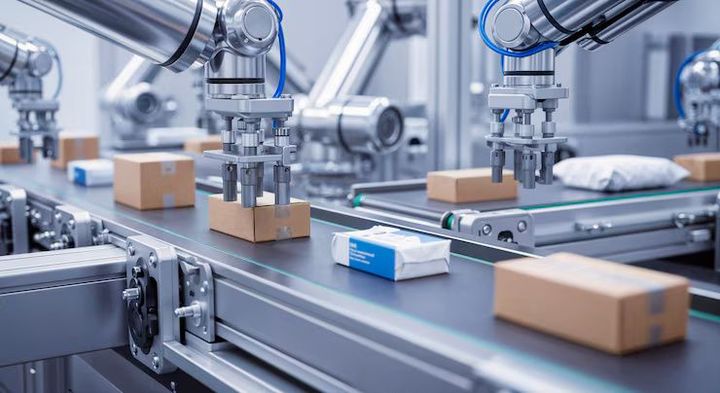
Packaging Machinery Guide: Types, Uses, and Benefits for Modern Manufacturing
Packaging machinery refers to automated or semi-automated equipment used to package products for storage, transportation, and distribution. These machines perform tasks such as filling, sealing, labeling, wrapping, and palletizing products in manufacturing environments.
Packaging machinery plays a vital role in modern manufacturing by improving efficiency, accuracy, and consistency. These machines ensure that products are safely contained, properly labeled, and ready for distribution across supply chains.
With the growth of industrial production and global logistics, automated packaging systems have replaced manual methods. This transition allows companies to handle higher production volumes while maintaining uniform standards.
Industries That Use Packaging Machinery
Several industries rely heavily on packaging machinery to support their operations:
- Food and beverage manufacturing
- Pharmaceutical production
- Consumer electronics manufacturing
- Cosmetics and personal care industries
- E-commerce fulfillment centers
These industries depend on automation to ensure consistent packaging quality and faster processing speeds.
Types of Packaging Machinery
Packaging machinery includes different categories designed for specific tasks. Each type contributes to a streamlined production process.
Common Machine Categories
- Filling machines for liquids, powders, or granules
- Sealing machines for closing packages
- Labeling machines for product identification
- Wrapping machines for protection
- Palletizing systems for transportation preparation
Packaging Machinery Overview
| Packaging Machine Type | Primary Function | Typical Industry |
|---|---|---|
| Filling Machines | Dispense liquids, powders, or granules | Food, pharmaceutical |
| Sealing Machines | Close packages using heat or pressure | Consumer goods |
| Labeling Machines | Apply identification labels | Retail products |
| Wrapping Machines | Protect products with film or material | Logistics |
| Palletizing Systems | Arrange packages for transport | Warehousing |
These machines form the foundation of modern production and distribution systems.
Why Packaging Machinery Matters Today
Packaging machinery has become essential in global manufacturing due to increasing demand for efficiency and consistency. Automated systems help maintain production standards across large-scale operations.
Key Benefits
- Improved production efficiency with high-speed processing
- Enhanced product safety through secure packaging
- Better traceability using labeling and coding systems
- Reduced operational errors through automation
These benefits make packaging machinery a critical component in modern supply chains.
Industries Impacted
- Manufacturing companies producing consumer goods
- Pharmaceutical laboratories requiring sterile packaging
- Agricultural processors preparing food products
- Logistics companies managing distribution networks
- E-commerce platforms handling large shipment volumes
Modern systems also support sustainability by enabling the use of recyclable and biodegradable materials.
Recent Developments and Industry Trends
The packaging machinery sector has seen rapid innovation, especially during 2024 and early 2025. Companies are adopting advanced technologies to improve performance and flexibility.
Key Trends
- Adoption of AI-assisted packaging automation
- Increased use of flexible packaging systems
- Growth in sustainable packaging solutions
- Integration of IoT sensors in production lines
- Expansion of robotic palletizing systems
These advancements reflect the shift toward smart manufacturing and Industry 4.0 technologies.
Technology Adoption Trends
| Technology Trend | Industry Adoption Level (2025) |
|---|---|
| AI Quality Inspection | High |
| Robotic Packaging Systems | High |
| IoT Monitoring Sensors | Moderate |
| Digital Twin Simulation | Growing |
These trends show how digital tools are transforming packaging operations.
Regulatory and Policy Considerations
Packaging machinery must comply with national and international regulations to ensure safety and environmental responsibility. These policies guide packaging practices across industries.
Key Regulatory Bodies in India
- Food Safety and Standards Authority of India (FSSAI)
- Bureau of Indian Standards (BIS)
- Central Drugs Standard Control Organization (CDSCO)
These organizations establish standards for hygiene, labeling, and packaging materials.
Global Standards
- ISO 9001 (quality management)
- ISO 22000 (food safety management)
- Good Manufacturing Practices (GMP)
Compliance ensures reliable and safe packaging operations across global markets.
Tools and Resources for Packaging Machinery
Modern packaging systems rely on digital tools and industrial technologies to improve efficiency and monitoring. These tools help manufacturers optimize workflows and reduce downtime.
Common Tools
- Computer-Aided Design (CAD) software
- Manufacturing Execution Systems (MES)
- Supply chain management software
- Industrial automation control systems
- Barcode verification tools
Tools and Their Functions
| Tool Type | Purpose |
|---|---|
| CAD Design Software | Designing machinery components |
| PLC Programming Systems | Controlling automated machines |
| Production Analytics Platforms | Monitoring efficiency |
| Packaging Simulation Tools | Testing workflows before production |
Predictive maintenance tools are also widely used to monitor machine performance and prevent unexpected failures.
Frequently Asked Questions
What is packaging machinery used for?
Packaging machinery prepares products for storage, transportation, and distribution. It performs tasks such as filling, sealing, labeling, and organizing products for shipment.
What industries rely heavily on packaging machinery?
Industries such as food manufacturing, pharmaceuticals, electronics, cosmetics, and logistics depend on these systems for efficient operations.
What is automated packaging?
Automated packaging uses machines and robotics to perform packaging tasks with minimal manual involvement. This improves speed, accuracy, and consistency.
How does packaging machinery improve supply chains?
It ensures standardized packaging, proper labeling, and secure handling. This improves inventory tracking, storage efficiency, and transportation processes.
What technologies are shaping packaging machinery?
Technologies such as artificial intelligence, robotics, IoT sensors, and smart manufacturing systems are driving innovation in packaging machinery.
Conclusion
Packaging machinery is a key component of modern manufacturing and global logistics. It enhances efficiency, ensures product safety, and supports consistent production standards.
As industries continue adopting advanced technologies, packaging systems are evolving rapidly. Innovations such as AI-driven automation and sustainable packaging materials are shaping the future of the sector.
Understanding packaging machinery helps businesses, engineers, and supply chain professionals optimize operations and improve product delivery worldwide.