Robotic Welding Insights Into Industrial Automation, Precision, and Production Efficiency
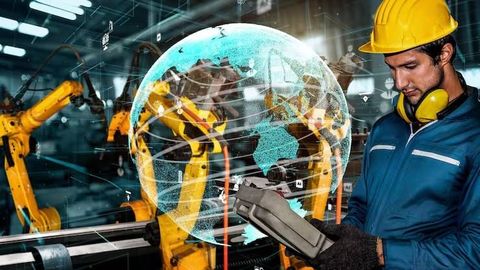
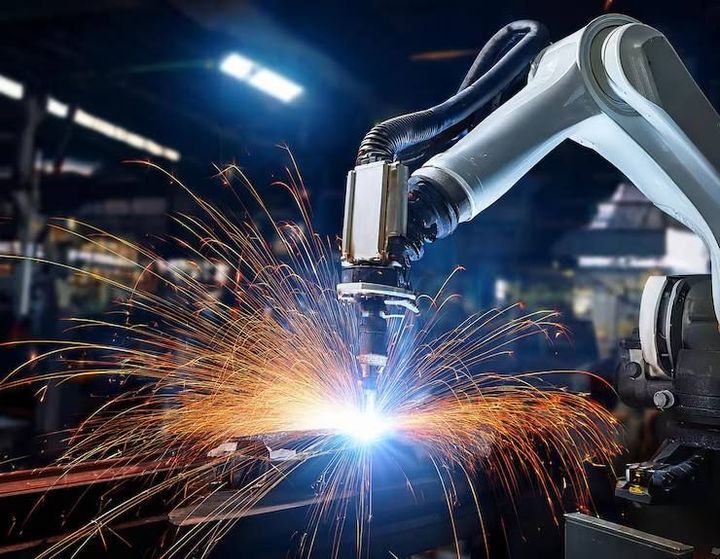
Robotic welding is an important part of modern industrial automation, helping manufacturers join metal components with consistent movements, controlled heat, and repeatable welding patterns.
It combines robotic arms, welding equipment, sensors, and computer-based controls to perform tasks in industries such as automotive manufacturing, construction equipment production, shipbuilding, and metal fabrication.
Understanding robotic welding provides useful insights into precision, production efficiency, workplace safety, and manufacturing quality. As industrial automation develops, robotic welding systems are becoming more adaptable through improved sensors, digital monitoring, artificial intelligence, and integration with other production technologies.
Context
Robotic welding is an automated process in which a programmable robot moves a welding tool along a defined path to join metal components. The system follows programmed instructions that control movement, welding speed, torch position, and other operating parameters.
Traditional manual welding relies heavily on the operator's skill and physical control. Robotic welding transfers many repetitive movements to a machine, allowing the same welding sequence to be repeated across multiple components. Human operators remain important for programming, inspection, maintenance, setup, and process supervision.
The development of industrial robots expanded during the twentieth century as manufacturers sought greater consistency in repetitive production tasks. Automotive manufacturing became an important application because vehicle bodies contain numerous welds that must meet specific dimensional and structural requirements.
Modern robotic welding systems typically include the following components:
Robotic arm that positions the welding tool.
Welding power source that generates the required electrical output.
Welding torch or tool that performs the joining operation.
Sensors that detect component positions or monitor process conditions.
Controller and software that coordinate movement and welding parameters.
Safety equipment, including protective enclosures and interlocks.
Common robotic welding methods include gas metal arc welding (GMAW), also known as MIG welding, gas tungsten arc welding (GTAW), commonly called TIG welding, and resistance spot welding. The appropriate method depends on the material, component design, required joint strength, and production environment.
Importance
Robotic welding matters because it can improve repeatability, reduce variation in repetitive operations, and support predictable production schedules. Its usefulness depends on appropriate system design, programming, material preparation, and quality control.
One major advantage is consistency. When components are positioned correctly and operating conditions remain stable, a robot can follow the same welding path repeatedly. This can help reduce differences between individual parts and support established manufacturing specifications.
Robotic welding also affects workplace safety. Welding can involve intense light, fumes, heat, electrical hazards, and molten metal. Automation can reduce the need for workers to remain close to repetitive welding operations. However, robotic equipment introduces other risks, including unexpected movement, crushing hazards, and interaction with automated machinery.
Several groups are affected by robotic welding:
Manufacturing engineers who design welding processes and production layouts.
Robot programmers who define paths, movements, and operating parameters.
Quality inspectors who assess weld appearance, dimensions, and integrity.
Maintenance technicians who inspect equipment and troubleshoot faults.
Production managers who monitor output, downtime, and process consistency.
Robotic welding can improve productivity when production volumes, component designs, and cycle times suit automation. However, it is not automatically the best approach for every application. Small production runs, frequent design changes, complex component shapes, and difficult access to joints may require additional programming or flexible equipment.
The following table summarizes important considerations.
Factor | Potential benefit | Important consideration |
|---|---|---|
Precision | Repeatable welding paths | Accurate component positioning is necessary |
Productivity | Consistent operating cycles | Setup and downtime affect output |
Quality | Reduced process variation | Inspection remains essential |
Safety | Less direct exposure to welding | Robot-cell hazards require controls |
Flexibility | Programmable welding sequences | New parts may require reprogramming |
Recent Updates
Recent developments in robotic welding focus on improved sensing, adaptive control, connected manufacturing systems, and more flexible automation. These technologies aim to help robots respond to variations in components and production conditions.
Sensor-based welding is one important development. Cameras, laser scanners, and other sensing devices can help locate joints, measure component positions, and identify deviations from programmed paths. Depending on the equipment, the robot may adjust its movements to accommodate certain variations.
Artificial intelligence and machine learning are also being explored in welding applications. These methods can support image analysis, defect detection, process monitoring, and the identification of unusual operating conditions. Their effectiveness depends on the available data, system configuration, and validation procedures.
Digital monitoring provides another useful capability. Connected systems can record information such as welding current, voltage, robot cycle time, alarms, and equipment status. Engineers can use this information to investigate production interruptions and identify patterns that may affect quality.
Collaborative robots, commonly called cobots, are another area of development. They are designed with features that can support certain forms of human-robot interaction. However, a collaborative robot is not automatically safe for every welding task. The complete application must be assessed, including the welding arc, hot surfaces, fumes, tools, and workpiece movement.
Current development areas include:
Adaptive welding paths based on sensor feedback.
Automated visual inspection and defect classification.
Integration with manufacturing execution systems.
Predictive maintenance using equipment data.
Flexible robotic cells for different component designs.
These technologies can improve process visibility and adaptability, but their practical results depend on implementation, operator training, maintenance, and the characteristics of the welding task.
Laws or Policies
Robotic welding systems must be designed and operated with applicable workplace safety, machinery, electrical, and environmental requirements in mind. The relevant rules depend on the country, industry, equipment, and installation.
In the United States, the Occupational Safety and Health Administration (OSHA) publishes requirements and guidance relevant to welding, electrical safety, machine guarding, and hazardous workplace exposure. Its welding-related requirements address hazards such as fumes, radiation, fire, and protective equipment.
ANSI/RIA R15.06 is an important US industrial robot safety standard. It addresses industrial robot systems and applications, including risk assessment and protective measures. The applicable edition and associated requirements should be checked for the specific installation.
Internationally, ISO 10218 provides safety requirements for industrial robots and their applications. ISO 12100 addresses machinery safety and risk assessment, while ISO 13849-1 covers safety-related parts of control systems. Applicability depends on the system and relevant legal or contractual requirements.
In India, manufacturers and facility operators should review applicable occupational safety requirements, factory regulations, electrical safety provisions, and environmental rules. The Occupational Safety, Health and Working Conditions Code, 2020, is part of India's occupational safety legislative framework; implementation status and applicable provisions should be verified through current official government sources.
Important compliance considerations include:
Conducting a documented risk assessment before commissioning.
Installing suitable guarding, interlocks, and emergency-stop systems.
Providing appropriate welding ventilation and protective equipment.
Establishing safe isolation procedures before maintenance.
Training personnel in operating procedures and emergency response.
Maintaining inspection, maintenance, and incident records.
Compliance should be confirmed with qualified safety professionals and the relevant authorities. Meeting a single standard does not automatically establish that an entire robotic welding installation is safe or legally compliant.
Tools and Resources
Several technical resources can help manufacturers, engineers, and students understand robotic welding and industrial automation.
Resource | Main purpose |
|---|---|
OSHA website | US workplace safety requirements and guidance |
ISO website | International machinery and robot safety standards |
ANSI website | American standards and safety publications |
American Welding Society | Welding technology, education, and technical guidance |
NIST Manufacturing resources | Research on manufacturing technology and automation |
Robot simulation software | Testing robot paths and identifying collisions |
Welding procedure documentation | Recording materials, joint details, and process parameters |
Official websites are useful starting points for verifying standards and regulations. Technical publications from recognized welding organizations can help explain welding processes, joint design, inspection methods, and material behavior.
Robot simulation tools allow engineers to evaluate robot reach, torch orientation, cycle time, and possible collisions before production begins. Their accuracy depends on the quality of the digital model and the assumptions used during simulation.
Manufacturers should also maintain practical documentation, including welding procedure specifications, equipment inspection schedules, risk assessments, maintenance records, and quality inspection results.
FAQs
1. What is robotic welding in industrial automation?
Robotic welding uses programmable robots to perform welding operations along defined paths. It combines robotic movement, welding equipment, controllers, and sometimes sensors to support repeatable manufacturing processes.
2. How does robotic welding improve production efficiency?
It can maintain consistent operating cycles, perform repetitive welds, and reduce variation. Actual efficiency depends on setup time, equipment reliability, component preparation, and the frequency of production changes.
3. Which industries use robotic welding?
Common applications include automotive manufacturing, agricultural machinery, heavy equipment, shipbuilding, metal fabrication, and certain aerospace manufacturing processes. The required system depends on the materials, component geometry, and quality specifications.
4. Is robotic welding safer than manual welding?
Robotic welding can reduce direct exposure to welding hazards, but it introduces risks from moving machinery and automated cells. Proper guarding, ventilation, training, risk assessment, and maintenance are essential.
5. What skills are useful for working with robotic welding systems?
Useful skills include welding fundamentals, robot programming, industrial automation, sensor operation, troubleshooting, quality inspection, and workplace safety. Knowledge of digital monitoring and simulation can also support effective system operation.
Conclusion
Robotic welding connects industrial automation with precision, repeatability, and production efficiency. Its applications range from repetitive automotive welds to specialized metal fabrication, with results shaped by equipment selection, process control, component preparation, and inspection practices.
Recent advances in sensors, artificial intelligence, simulation, and connected manufacturing are expanding the capabilities of robotic welding systems. However, successful implementation requires careful planning, skilled supervision, and compliance with relevant safety requirements.
For manufacturers and learners, understanding robotic welding provides a foundation for evaluating automation methods and identifying where they can support reliable production. A balanced approach that combines suitable technology, trained personnel, and effective quality management remains essential.