Rotary Kilns for Cement Plants: Complete Guide to Industrial Cement Production Systems
Rotary kilns are among the most important machines used in modern cement plants. They play a central role in converting raw materials into clinker, the primary ingredient used to manufacture cement.
These large rotating cylinders operate under extremely high temperatures, making them essential for efficient and continuous cement production.
As construction projects continue to expand worldwide, cement manufacturers rely on advanced rotary kiln systems to improve production efficiency, reduce energy consumption, and maintain consistent product quality. Modern rotary kilns incorporate automation, process monitoring, heat recovery systems, and environmental control technologies to support reliable industrial operations.
This guide explains how rotary kilns work, their major components, different types, practical applications, advantages, and future developments in the cement industry.
Understanding the Concept
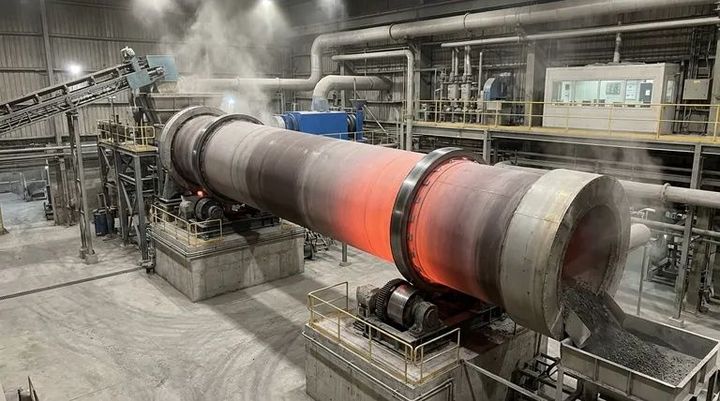
A rotary kiln is a long, slightly inclined cylindrical furnace that rotates slowly while heating raw materials at very high temperatures. Inside the kiln, limestone, clay, shale, and other raw materials undergo chemical changes that produce clinker.
The kiln rotates continuously, allowing the material to move gradually from the feeding end to the discharge end. During this movement, the material passes through several temperature zones where drying, heating, calcination, and clinker formation take place.
Rotary kilns are designed to operate continuously for long periods, making them suitable for large-scale industrial production. Their ability to maintain stable temperatures and controlled material movement contributes to consistent clinker quality.
Key Types or Categories
Dry Process Rotary Kilns
Dry process rotary kilns handle raw materials in powdered form before entering the kiln.
Key characteristics include:
- Lower energy consumption
- Improved thermal efficiency
- Higher production capacity
- Reduced fuel usage
- Widely adopted in modern cement plants
This process has become the preferred choice for many manufacturers because of its operational efficiency.
Wet Process Rotary Kilns
Wet process kilns use raw materials mixed with water to create a slurry before heating.
Features include:
- Easier raw material blending
- Consistent material mixing
- Suitable for specific raw material conditions
Although still used in some facilities, wet process kilns generally require more energy than dry process systems.
Long Rotary Kilns
Long rotary kilns perform most processing stages inside a single extended kiln.
Advantages include:
- Continuous material flow
- Stable operation
- Simplified production sequence
These kilns are commonly found in traditional cement manufacturing facilities.
Preheater Rotary Kilns
Preheater kilns use cyclone towers to heat raw materials before they enter the kiln.
Benefits include:
- Better fuel efficiency
- Reduced heat loss
- Higher production output
- Lower operating expenses
Preheaters improve overall plant performance by recovering heat from exhaust gases.
Precalciner Rotary Kilns
Precalciner systems begin the calcination process before the material reaches the rotary kiln.
This configuration provides:
- Increased production capacity
- Improved fuel utilization
- Reduced kiln workload
- Better temperature control
Many modern cement plants use precalciner technology for large-scale production.
Important Subsections
Kiln Shell
The kiln shell forms the main body of the rotary kiln.
It is manufactured using heavy-duty steel capable of withstanding high temperatures and continuous rotation.
Refractory Lining
The inside of the kiln is covered with refractory bricks.
These specialized materials:
- Resist extreme temperatures
- Protect the steel shell
- Improve heat retention
- Extend equipment lifespan
Regular inspection of refractory lining supports reliable operation.
Support Rollers
Support rollers carry the weight of the rotating kiln while maintaining smooth movement.
Proper alignment reduces vibration and mechanical wear.
Drive System
The drive system rotates the kiln at a controlled speed.
Major components include:
- Electric motors
- Gearboxes
- Girth gears
- Pinions
- Variable speed controls
Accurate speed control supports stable clinker production.
Burner System
The burner supplies the heat required for clinker formation.
Modern burners are designed to achieve:
- Stable flame characteristics
- Efficient fuel combustion
- Uniform temperature distribution
- Reduced emissions
How It Works
Rotary kilns operate through a continuous sequence of production stages.
Step 1: Raw Material Preparation
Raw materials such as limestone, clay, silica, and iron ore are crushed, blended, and prepared before entering the kiln system.
Consistent material composition helps produce high-quality clinker.
Step 2: Preheating
In many modern plants, cyclone preheaters warm the material using hot exhaust gases from the kiln.
This process improves thermal efficiency while reducing fuel consumption.
Step 3: Calcination
As temperatures increase, limestone releases carbon dioxide in a chemical reaction known as calcination.
This stage prepares the material for clinker formation.
Step 4: Clinker Formation
Inside the hottest section of the rotary kiln, temperatures may exceed 1,400°C.
Minerals combine to form clinker nodules, which become the primary ingredient for cement production.
Step 5: Clinker Cooling
Hot clinker leaves the kiln and enters specialized cooling equipment.
Rapid cooling preserves clinker quality while recovering heat for reuse in the production process.
Benefits and Advantages
Rotary kilns provide numerous operational benefits for cement plants.
High Production Capacity
Continuous operation allows large volumes of clinker to be produced efficiently.
Improved Thermal Efficiency
Modern kiln systems recover heat from exhaust gases, reducing overall energy requirements.
Consistent Product Quality
Stable temperature control supports uniform clinker formation and reliable cement quality.
Automation Integration
Advanced control systems monitor:
- Temperature
- Material flow
- Rotation speed
- Fuel consumption
- Process efficiency
Automation improves operational consistency.
Long Equipment Life
Proper maintenance and quality refractory materials contribute to extended equipment lifespan.
Environmental Improvements
Modern emission control technologies help reduce dust and improve environmental performance.
Real-World Examples or Applications
Rotary kilns are widely used across several industries.
Cement Manufacturing
Their primary application is clinker production for cement manufacturing.
Lime Production
Rotary kilns convert limestone into quicklime for industrial processes.
Mineral Processing
Many minerals undergo thermal treatment inside rotary kilns before further processing.
Metallurgical Industries
Some metal extraction processes use rotary kilns for roasting and heat treatment.
Waste Treatment
Specialized rotary kilns process industrial waste under controlled thermal conditions.
Important Factors to Understand
Several factors influence rotary kiln performance.
Raw Material Quality
Consistent raw material composition supports stable kiln operation and clinker quality.
Fuel Selection
Different plants use various fuel sources depending on operational requirements and environmental objectives.
Temperature Control
Accurate temperature management is essential for efficient clinker formation.
Preventive Maintenance
Routine inspection of rollers, gears, bearings, refractory lining, and burner systems helps reduce unexpected shutdowns.
Environmental Compliance
Modern cement plants use dust collection systems, emission monitoring equipment, and pollution control technologies to support environmental standards.
Future Trends and Industry Insights
Rotary kiln technology continues to evolve with advances in industrial manufacturing.
Artificial Intelligence Process Optimization
Artificial intelligence helps analyze production data, improve fuel efficiency, and optimize kiln performance.
Industrial Automation
Advanced automation systems provide continuous monitoring of equipment health and production conditions.
Predictive Maintenance
Industrial sensors collect operational data to identify potential maintenance requirements before equipment failures occur.
Energy Recovery Systems
Modern plants increasingly recover waste heat for electricity generation and improved plant efficiency.
Sustainable Cement Manufacturing
Manufacturers continue developing technologies that reduce emissions, improve fuel efficiency, and increase the use of alternative raw materials while maintaining production quality.
Conclusion
Rotary kilns remain the foundation of modern cement manufacturing by providing continuous, high-temperature processing for clinker production. Their ability to combine thermal efficiency, large production capacity, automation, and reliable operation makes them essential equipment in cement plants around the world.
With advancements in artificial intelligence, predictive maintenance, waste heat recovery, and environmentally responsible manufacturing, rotary kiln technology continues to improve. Understanding how these systems operate helps industry professionals appreciate their importance in producing the cement used in buildings, roads, bridges, and infrastructure projects worldwide.