What You Should Know About Commercial 5 Axis CNC Milling Machines
Modern manufacturing demands exceptional precision, efficiency, and flexibility to produce increasingly complex components. Commercial 5 Axis CNC Milling Machines have become an essential technology in industries that require intricate machining, tight tolerances, and high production accuracy.
By allowing cutting tools to move across five different axes simultaneously, these advanced machines can manufacture sophisticated parts with fewer setups, improved surface finishes, and greater productivity.
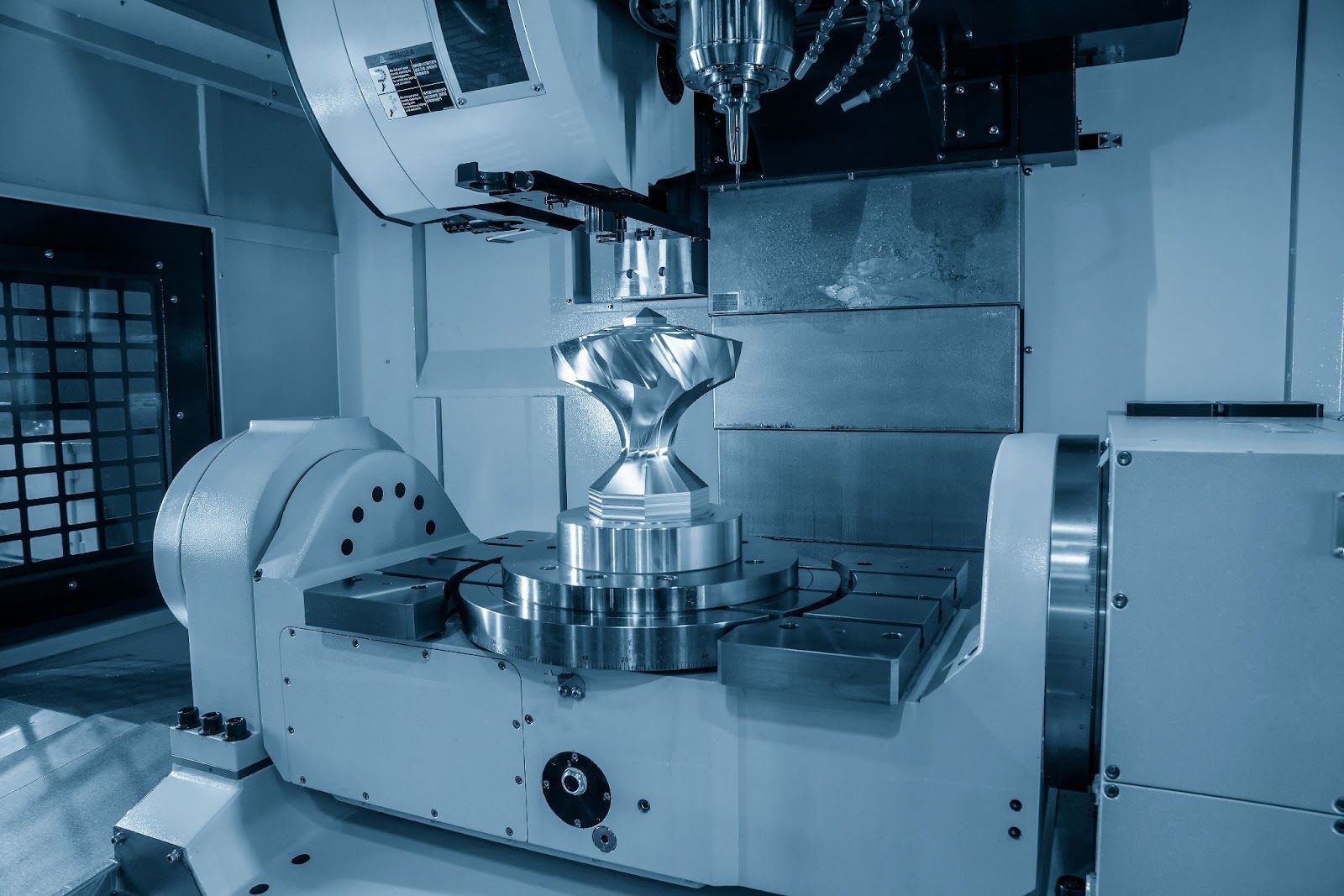
From aerospace and automotive engineering to medical devices, energy equipment, and precision tooling, 5-axis CNC milling technology supports the production of components that would be difficult or impossible to machine using traditional three-axis systems. Understanding how these machines work can help manufacturers evaluate their role in modern production environments.
Note: Machine specifications, spindle speed, work envelope, control systems, automation features, and compatible materials vary by manufacturer and model. This article is intended for general educational purposes only.
What Are Commercial 5 Axis CNC Milling Machines?
Commercial 5 Axis CNC Milling Machines are computer-controlled machine tools that move a cutting tool or workpiece along five independent axes. In addition to the traditional X, Y, and Z linear movements, the machine can rotate around two additional axes, allowing the cutting tool to approach the workpiece from multiple angles without repeated repositioning.
These machines are commonly used to manufacture:
Aerospace components
Automotive parts
Medical implants
Precision molds
Turbine blades
Industrial equipment components
Tooling and dies
Complex prototypes
The exact capabilities depend on machine design, spindle configuration, and control software.
How 5-Axis CNC Milling Works
The machining process combines digital design with highly precise automated movement.
CAD Design
Engineers create a three-dimensional model using Computer-Aided Design (CAD) software.
CAM Programming
Computer-Aided Manufacturing (CAM) software generates machining toolpaths and converts them into CNC machine instructions.
Multi-Axis Motion
The CNC controller coordinates movement across five axes simultaneously, enabling complex machining operations.
Material Removal
The cutting tool removes material with high precision while maintaining programmed dimensions and surface quality.
Finished Component
Many parts require little additional machining because multiple surfaces can be completed during a single setup.
Advantages of 5-Axis Milling
Compared with conventional machining, five-axis systems provide several operational benefits.
Potential advantages include:
High machining precision
Reduced setup time
Improved surface finish
Greater machining flexibility
Ability to produce complex geometries
Shorter production cycles
Better tool access
Increased manufacturing efficiency
Actual performance depends on machine configuration, programming, tooling, and operator expertise.
Materials Commonly Machined
Commercial 5-axis milling machines can process a wide range of engineering materials.
Examples include:
Aluminum
Stainless steel
Titanium
Carbon steel
Brass
Copper
Engineering plastics
Composite materials
Material compatibility depends on spindle power, tooling, and machining parameters.
Industries Using 5-Axis CNC Milling
These machines are widely used across advanced manufacturing sectors.
Common industries include:
Aerospace
Automotive
Medical device manufacturing
Defense
Energy
Industrial machinery
Mold and die manufacturing
Precision engineering
Each application may require specialized tooling, software, and machining strategies.
Choosing a Commercial 5 Axis CNC Milling Machine
Before selecting equipment, manufacturers often evaluate several factors.
Consider:
Work envelope size
Spindle speed and power
Machine rigidity
CNC control system
Automation compatibility
Tool magazine capacity
Software integration
Maintenance and service requirements
The appropriate machine depends on production volume, component complexity, and operational objectives.
Commercial 5 Axis CNC Milling Machines Overview
| Feature | Primary Benefit |
|---|---|
| Five-Axis Motion | Machine complex geometries from multiple angles |
| CNC Control | Precise automated machining |
| CAD/CAM Integration | Digital manufacturing workflow |
| High-Speed Spindle | Efficient material removal |
| Automatic Tool Changer | Reduced production downtime |
| Multi-Sided Machining | Fewer setups and improved accuracy |
Best Practices for Efficient Operation
Proper operation and maintenance support long-term performance.
Helpful recommendations include:
Use high-quality cutting tools suited to the material.
Verify CNC programs before production.
Calibrate the machine regularly.
Monitor tool wear.
Maintain proper coolant systems where applicable.
Follow preventive maintenance schedules.
Train operators on machine safety and programming.
Perform routine quality inspections.
Consistent maintenance helps maximize machine reliability and machining accuracy.
Current Industry Trends
Five-axis machining continues to evolve with Industry 4.0 technologies.
Recent developments include:
Artificial intelligence-assisted toolpath optimization
Digital twin manufacturing
Industrial Internet of Things (IIoT) connectivity
Predictive maintenance systems
Automated robotic loading
Cloud-based production monitoring
Adaptive machining technologies
Real-time process analytics
These innovations improve productivity, reduce downtime, and support smarter manufacturing operations.
Looking Ahead
The future of Commercial 5 Axis CNC Milling Machines is expected to include greater automation, AI-powered machining optimization, enhanced robotics integration, and more advanced digital manufacturing systems. As precision manufacturing continues to expand across industries, five-axis CNC technology will remain a key driver of efficient and high-quality production.
Why Understanding Commercial 5 Axis CNC Milling Machines Matters
Understanding Commercial 5 Axis CNC Milling Machines helps manufacturers evaluate advanced machining solutions capable of producing highly accurate and complex components. Careful selection of equipment, software, and operational practices supports improved productivity, precision, and long-term manufacturing performance.
Conclusion
Commercial 5 Axis CNC Milling Machines represent one of the most advanced machining technologies available today. By combining multi-axis motion, computer-controlled precision, and sophisticated CAD/CAM integration, these systems enable manufacturers to produce complex components with exceptional accuracy and efficiency. As automation, artificial intelligence, and smart manufacturing continue to advance, five-axis CNC milling will remain a cornerstone of modern industrial production.