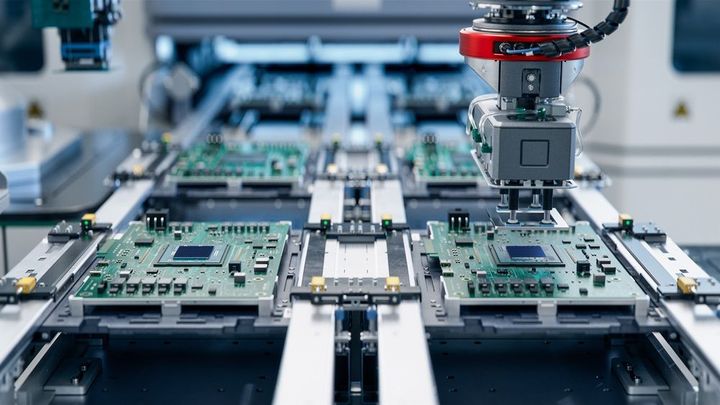
Automated PCB Assembly Machinery Complete Guide to Modern Electronics Manufacturing
Printed Circuit Boards (PCBs) form the foundation of nearly every electronic device, from smartphones and computers to medical equipment, automotive systems, and industrial automation.
As electronic products become more compact and complex, manufacturers increasingly rely on Automated PCB Assembly Machinery to achieve high production speeds, exceptional accuracy, and consistent quality. These advanced systems streamline component placement, soldering, inspection, and testing while reducing manual intervention.
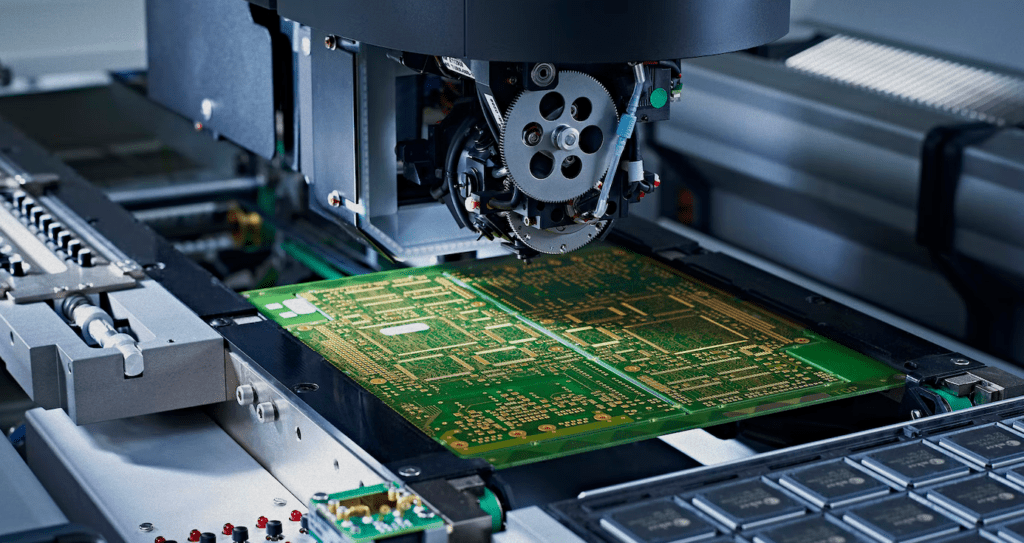
Modern PCB assembly lines integrate robotics, artificial intelligence (AI), machine vision, and Industry 4.0 technologies to improve efficiency and support large-scale electronics manufacturing. Understanding how automated PCB assembly machinery works can help manufacturers evaluate solutions that enhance productivity and product reliability.
Note: Machine specifications, production capacity, placement accuracy, supported component sizes, software capabilities, and automation features vary by manufacturer and production requirements. This article is intended for general educational purposes only.
What Is Automated PCB Assembly Machinery?
Automated PCB Assembly Machinery refers to a group of computer-controlled machines used to assemble electronic components onto printed circuit boards. These systems automate multiple production stages, including solder paste application, component placement, soldering, inspection, and testing.
Typical equipment found in an automated PCB assembly line includes:
Solder paste printers
Pick-and-place machines
Reflow ovens
Automated Optical Inspection (AOI) systems
X-ray inspection systems
In-Circuit Testing (ICT) equipment
Functional testing stations
Conveyor and material handling systems
Together, these machines create a highly efficient manufacturing workflow.
How Automated PCB Assembly Works
PCB production follows a carefully controlled sequence of operations.
PCB Preparation
Bare printed circuit boards are loaded into the production line and prepared for assembly.
Solder Paste Printing
A stencil printer accurately applies solder paste to designated pad locations on the PCB.
Component Placement
Pick-and-place machines position electronic components onto the solder paste with high precision using machine vision systems.
Reflow Soldering
The assembled boards pass through a reflow oven, where controlled heating permanently solders components to the PCB.
Inspection
Automated Optical Inspection (AOI) and, where appropriate, X-ray inspection systems verify component placement, solder quality, and manufacturing accuracy.
Testing
Electrical and functional tests confirm that the assembled PCB performs according to design specifications.
Benefits of Automated PCB Assembly Machinery
Automation provides several advantages for electronics manufacturers.
Potential benefits include:
High production speed
Precise component placement
Consistent manufacturing quality
Reduced manual labor
Lower production errors
Improved product reliability
Better process repeatability
Increased manufacturing efficiency
Performance depends on equipment quality, production planning, and process control.
Industries Using PCB Assembly Automation
Automated PCB assembly supports a wide range of industries.
Common sectors include:
Consumer electronics
Automotive electronics
Medical devices
Telecommunications
Aerospace
Industrial automation
Defense electronics
Renewable energy systems
Each industry may require specialized quality standards and testing procedures.
Key Equipment Selection Factors
Before investing in PCB assembly machinery, manufacturers often evaluate several technical considerations.
Important factors include:
Placement speed
Placement accuracy
Supported component sizes
Board dimensions
Production volume
Software compatibility
Inspection capabilities
Maintenance requirements
Selecting equipment that matches production requirements supports efficient manufacturing.
Automated PCB Assembly Machinery Overview
| Equipment | Primary Function |
|---|---|
| Solder Paste Printer | Apply solder paste accurately |
| Pick-and-Place Machine | Position electronic components |
| Reflow Oven | Solder components to the PCB |
| AOI System | Inspect placement and solder quality |
| X-Ray Inspection | Detect hidden solder defects |
| Functional Test System | Verify electrical performance |
Best Practices for PCB Manufacturing
Efficient production depends on consistent quality control.
Helpful recommendations include:
Maintain accurate machine calibration.
Inspect solder paste quality regularly.
Monitor component feeders.
Verify PCB design files before production.
Perform routine preventive maintenance.
Train operators on equipment operation.
Monitor production data continuously.
Conduct final quality inspections before shipment.
Strong process control helps improve product consistency and reduce defects.
Current Industry Trends
Electronics manufacturing continues to advance rapidly.
Recent developments include:
Artificial intelligence-assisted quality inspection
Machine learning for defect prediction
Industry 4.0 smart factories
Industrial Internet of Things (IIoT) connectivity
Collaborative robotics
Automated material handling
Digital production monitoring
Predictive equipment maintenance
These innovations help manufacturers increase productivity while maintaining high quality standards.
Looking Ahead
The future of Automated PCB Assembly Machinery is expected to include greater automation, AI-powered production optimization, enhanced machine vision, and deeper integration with digital manufacturing platforms. As electronic devices continue to become smaller, faster, and more sophisticated, automated PCB assembly systems will remain essential to efficient, high-precision electronics manufacturing.
Why Understanding Automated PCB Assembly Machinery Matters
Understanding Automated PCB Assembly Machinery helps manufacturers evaluate technologies that improve production efficiency, product quality, and operational reliability. Careful equipment selection, preventive maintenance, and advanced automation can support competitive electronics manufacturing in a rapidly evolving industry.
Conclusion
Automated PCB Assembly Machinery has transformed electronics manufacturing by automating component placement, soldering, inspection, and testing with remarkable precision. Through robotics, machine vision, AI, and advanced quality control systems, these production lines enable manufacturers to produce reliable electronic assemblies at high speed and consistent quality. As smart manufacturing technologies continue to evolve, automated PCB assembly will remain a cornerstone of modern electronics production.