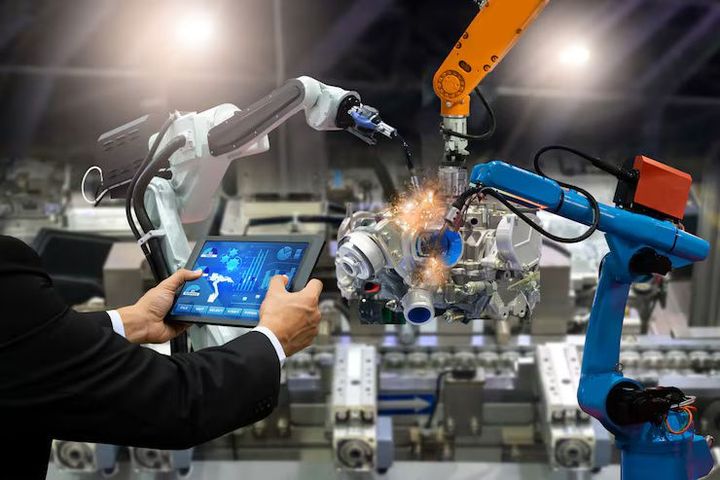
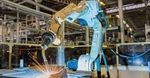
Traditional manufacturing systems often rely on manual monitoring and fixed production processes. Smart manufacturing machinery addresses these limitations by enabling machines to communicate, analyze data, and automatically adjust production.
This concept is part of Industry 4.0, where factories become highly automated and data-driven. Machines are equipped with sensors, software, and connectivity tools to monitor performance and optimize operations.
Common Examples of Smart Manufacturing Machinery
-
Industrial robots used in automated assembly lines
-
CNC machines with digital monitoring systems
-
Smart packaging machines with automated quality inspection
-
Automated guided vehicles (AGVs) for material handling
-
AI-powered vision inspection systems
These technologies improve precision, production speed, and reliability.
Why Smart Manufacturing Machinery Matters Today
Smart manufacturing is essential as industries demand higher efficiency, accuracy, and sustainability. Modern factories must produce complex products while maintaining strict quality standards.
Many sectors depend on these technologies:
-
Automotive manufacturing
-
Semiconductor production
-
Aerospace engineering
-
Electronics assembly
-
Pharmaceutical manufacturing
Key Benefits
-
Improved production efficiency through automation
-
Reduced downtime with predictive maintenance
-
Higher product quality using AI inspection
-
Better supply chain visibility
-
Enhanced workplace safety
Data-Driven Manufacturing Insights
Smart machines generate continuous data that helps improve productivity. Sensors monitor:
-
Temperature
-
Vibration
-
Production speed
-
Energy consumption
-
Tool wear
This allows early detection of issues and prevents disruptions.
Smart manufacturing also supports sustainability by reducing waste and optimizing resource usage.
Recent Updates in Smart Manufacturing Technology
Smart manufacturing has evolved significantly in recent years. In 2025, several innovations are shaping the industry.
Key Trends in 2025
-
Increased use of Artificial Intelligence for monitoring and optimization
-
Growth of predictive maintenance systems
-
Expansion of digital twin technology
-
Adoption of edge computing for real-time processing
Notable Developments
-
Wider use of collaborative robots (cobots)
-
Growth of 5G-enabled smart factories
-
Expansion of computer vision for quality inspection
-
Increased focus on energy-efficient machinery
These advancements are making factories more intelligent and connected.
Laws, Regulations, and Government Programs
Smart manufacturing operates under regulations that ensure safety and environmental protection. Governments worldwide promote advanced manufacturing adoption.
In India, initiatives like Make in India support digital transformation in manufacturing.
Key Regulatory Areas
-
Worker safety regulations
-
Environmental standards
-
Data protection laws
-
Equipment certification requirements
Common Industrial Standards
| Standard | Purpose |
|---|
| ISO 9001 | Quality management systems |
| ISO 45001 | Occupational health and safety |
| ISO 14001 | Environmental management |
| IEC 62443 | Industrial cybersecurity |
These regulations ensure safe and reliable industrial operations.
Tools and Resources for Smart Manufacturing Systems
Various digital tools support smart manufacturing by improving monitoring, analysis, and control.
Key Tool Categories
Manufacturing Execution Systems (MES)
MES tracks and controls production activities while providing real-time insights.
Industrial IoT Platforms
IIoT connects machines and collects operational data for analysis.
Predictive Maintenance Software
These tools identify patterns that signal potential equipment failure.
Digital Twin Platforms
They simulate machine behavior for testing and optimization.
AI-Based Quality Inspection Tools
Computer vision systems detect product defects automatically.
Technology Comparison Table
| Technology | Main Function | Industrial Benefit |
|---|
| Industrial Robotics | Automated assembly | Faster production |
| AI Vision Systems | Quality inspection | Improved accuracy |
| IIoT Sensors | Machine monitoring | Real-time analytics |
| Digital Twin Systems | Virtual simulation | Process optimization |
| Predictive Maintenance Tools | Equipment monitoring | Reduced downtime |
Production Monitoring Metrics
-
Machine uptime percentage
-
Production output rate
-
Energy consumption trends
-
Maintenance intervals
These metrics help teams make informed decisions.
Frequently Asked Questions
What is smart manufacturing machinery?
Smart manufacturing machinery refers to advanced equipment that uses automation, sensors, and data analytics to improve production efficiency.
How does Industrial IoT improve manufacturing?
Industrial IoT connects machines and sensors to provide real-time monitoring and predictive maintenance.
What industries benefit most?
Industries like automotive, electronics, aerospace, pharmaceuticals, and semiconductors benefit significantly.
What is predictive maintenance?
Predictive maintenance uses data analytics to detect potential failures before they occur.
How do digital twins help factories?
Digital twins simulate real-world operations, allowing optimization without interrupting production.
Conclusion
Smart manufacturing machinery is transforming modern industry by combining automation, AI, and data analytics. These technologies enable more efficient, reliable, and flexible production systems.
Advancements such as predictive maintenance and digital twins continue to accelerate Industry 4.0 adoption. Governments and standards organizations support this transformation through regulations and innovation programs.
As manufacturing evolves, smart machinery will play a key role in improving productivity, maintaining quality, and supporting sustainable development.