Solar Tracker Systems Guide: Explore Types, Components, Tracking Methods, Benefits, and Applications
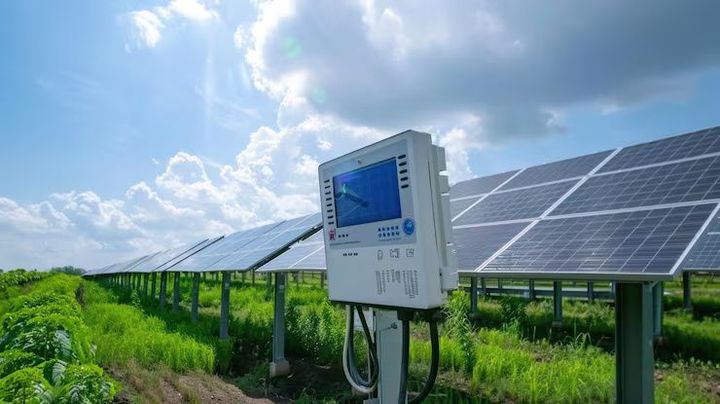
A solar tracker system is a mechanical structure that changes the position of solar panels so they can follow the apparent movement of the sun. Unlike fixed solar mounting systems, trackers adjust the angle of photovoltaic panels during the day to maintain a more favorable orientation toward incoming sunlight.
The idea behind solar tracking comes from the basic relationship between sunlight and panel orientation. Solar photovoltaic modules generally receive more direct sunlight when their surface is positioned toward the sun. A tracker uses mechanical movement, control electronics, and structural components to change the panel position as the sun moves across the sky.
Solar tracking technology has been used in different forms for decades, particularly in locations where increased solar exposure can justify additional mechanical equipment. Modern systems are commonly associated with utility-scale solar plants, although smaller tracking systems also exist for specialized applications.
How Solar Tracking Differs From Fixed Mounting
A fixed solar array remains at one selected angle throughout the day. Its orientation is determined during system design based on factors such as location, latitude, available space, shading, and structural requirements.
A tracking system changes its orientation during operation. The movement may occur around one axis or two axes, depending on the tracker design.
Why Trackers Are Used
The main purpose of a solar tracker is to keep photovoltaic modules more closely aligned with the sun. This can increase the amount of solar radiation reaching the module during parts of the day compared with a fixed orientation.
However, tracking also introduces additional mechanical and electrical components. Motors, gear systems, controllers, sensors, foundations, wiring, and structural supports must work together. As a result, tracker design involves a balance between solar exposure, structural requirements, maintenance needs, land arrangement, and system complexity.
Importance
Solar tracker systems matter because the position of the sun changes continuously throughout the day and varies with the season. A fixed solar panel can receive direct sunlight during some periods but may be positioned at a less favorable angle during others.
Trackers are particularly relevant to large photovoltaic installations where even incremental changes in energy capture can influence overall plant performance. Their use also affects how solar modules are arranged, how electrical wiring is routed, and how maintenance activities are planned.
Main Benefits of Solar Trackers
Solar trackers can provide several potential advantages depending on the project and location:
- They can maintain a more direct orientation toward the sun.
- They can increase solar energy capture during suitable operating periods.
- They can make greater use of morning and afternoon sunlight.
- They can support large-scale photovoltaic plant designs.
- They can work with various photovoltaic module configurations.
- Automated movement can reduce the need for manual repositioning.
The actual improvement depends on geographic location, tracker design, weather, module characteristics, terrain, shading, system controls, and operating conditions. Tracking is therefore not automatically appropriate for every solar installation.
Challenges and Limitations
Trackers contain moving parts that are not present in a basic fixed mounting structure. Motors, bearings, actuators, gears, controllers, and structural connections require inspection and appropriate maintenance.
Wind can also affect tracker operation because solar modules have a large exposed surface. Many systems therefore include a stow position that moves the array into a predetermined orientation during high-wind conditions.
Terrain can present another challenge. Sloping or uneven land may require specialized tracker layouts, grading, structural adjustments, or different row arrangements.
Recent Updates
From 2024 through 2026, solar tracker development has continued to focus on automation, digital controls, structural optimization, wind management, and integration with larger utility-scale photovoltaic systems. The wider solar industry has also continued expanding its manufacturing and quality-control frameworks.
Modern tracker systems increasingly use electronic controllers that calculate or receive the expected solar position. Instead of relying only on light sensors, many systems can use astronomical algorithms based on location, date, and time. This allows the controller to determine an expected sun position and command the drive system accordingly.
Smarter Tracking Controls
Digital control systems can combine programmed solar-position calculations with information from sensors and equipment monitoring. This can help identify unusual movement, drive-system problems, communication interruptions, or other operating conditions.
Some systems also use data analytics to monitor tracker movement and operational behavior. These approaches are part of the broader shift toward digitally monitored renewable-energy infrastructure.
Structural and Wind Management Developments
Tracker designs have also evolved around structural efficiency and environmental conditions. Wind loading is an important consideration because panels mounted on moving structures can experience changing aerodynamic forces.
Modern tracker controllers can automatically place rows into predetermined positions when environmental conditions require it. The exact control strategy depends on the tracker manufacturer, structural design, site conditions, and applicable engineering requirements.
India's solar regulatory environment has also continued to develop. The Ministry of New and Renewable Energy maintains current policies and guidelines for solar photovoltaic projects, including guidelines for tariff-based competitive bidding for grid-connected solar PV projects.
MNRE has also continued updating requirements related to solar photovoltaic modules, inverters, testing, and quality control. Its Solar Systems, Devices and Components Goods Order framework has been accompanied by implementation notifications and testing guidance.
Laws or Policies
In India, a solar tracker is generally part of a larger photovoltaic installation, so applicable requirements can involve electrical equipment, photovoltaic modules, structural systems, grid connection, land use, workplace safety, and project-specific approvals.
The Ministry of New and Renewable Energy is a central source for national solar policies and guidelines. Its published material includes guidelines for procurement of power from grid-connected solar PV projects and other renewable-energy programs.
Solar Module Requirements
The Approved Models and Manufacturers of Solar Photovoltaic Modules framework, commonly known as ALMM, is important for certain categories of projects. MNRE states that models and manufacturers included in the applicable ALMM list are eligible for use in Government Projects, Government-assisted Projects, projects under Government Schemes and Programmes, Open Access, and Net-Metering projects covered by the order.
The ALMM framework has continued to receive updates covering photovoltaic modules and cells. MNRE's current information includes revisions and amendments extending through 2026.
Standards and Quality Control
The Bureau of Indian Standards maintains standards relevant to photovoltaic modules and other solar equipment. Its compulsory-registration information includes standards covering crystalline silicon PV modules, thin-film PV modules, and photovoltaic power converters.
BIS also provides its Know Your Standard portal, where users can search for Indian Standards using an IS number or keyword and review associated documents and technical information.
Requirements can differ according to the type of project and equipment. Developers, engineers, and operators should therefore verify the current rules applicable to their specific installation rather than relying on general information.
Tools and Resources
Several technical resources can help readers understand solar tracker systems and evaluate how they operate.
Solar Position Calculators
Solar position calculators estimate the sun's position based on geographic coordinates, date, and time. They can help explain why a tracker changes panel orientation during daylight hours.
Solar Irradiance Data
Solar resource databases provide information about solar radiation at different locations. Such data can be used when studying whether a tracking configuration is suitable for a particular geographic area.
Tracker Layout Tools
Solar plant design software can model tracker rows, module orientation, shading, terrain, electrical connections, and expected solar production. These tools are generally used during engineering and project planning.
Monitoring Platforms
Solar monitoring systems can display information such as energy generation, tracker position, inverter status, alarms, and operational conditions. In larger installations, monitoring platforms can combine data from many tracker rows.
Useful Information to Record
A basic solar tracker evaluation may include:
| Factor | Information to consider |
|---|---|
| Tracker type | Fixed, single-axis, or dual-axis |
| Tracking method | Programmed, sensor-based, or hybrid |
| Rotation range | Available movement around the tracking axis |
| Module arrangement | Number and orientation of modules |
| Drive system | Motor, actuator, gearbox, or related mechanism |
| Control system | Controller, communication, and position feedback |
| Site conditions | Terrain, wind, temperature, and shading |
| Monitoring | Position, alarms, electrical output, and equipment status |
These factors provide a structured way to understand how a tracker fits into a photovoltaic installation.
FAQs
What is a solar tracker system?
A solar tracker system is a mechanical and electronic arrangement that moves solar panels to follow the apparent movement of the sun. Its purpose is to maintain a more favorable panel orientation during daylight hours.
What are the main types of solar tracker systems?
The main types are single-axis and dual-axis trackers. Single-axis systems rotate around one primary axis, while dual-axis systems can adjust the panel orientation around two axes.
How does a single-axis solar tracker work?
A single-axis solar tracker rotates solar panels around one axis, commonly following the sun's movement from east to west. The controller determines the required position and operates the drive mechanism to move the array.
What components are used in a solar tracker system?
Common components include a structural frame, rotating mechanism, bearings, drive motor or actuator, gearbox, controller, position sensors, electrical connections, and safety or wind-stow controls. The exact configuration varies by design.
Where are solar tracker systems commonly used?
Solar tracker systems are commonly associated with utility-scale photovoltaic plants and other large solar installations. They can also be used in specialized smaller systems where the additional mechanical complexity is suitable for the application.
Conclusion
Solar tracker systems use mechanical movement and electronic controls to adjust photovoltaic panels toward the sun. Single-axis and dual-axis designs differ mainly in the number of movement axes and the level of positional adjustment they provide. Recent developments have emphasized automated controls, monitoring, structural design, and environmental response. In India, solar projects are also shaped by MNRE policies, photovoltaic quality-control requirements, ALMM provisions, and relevant BIS standards.