Tire Balancing Machines Guide: Explore Types, Components, Accuracy, Applications, and Planning Factors
Tire balancing machines are equipment used to identify uneven weight distribution in a wheel and tire assembly. A tire balancing machine rotates the assembly and measures variations that can indicate where corrective weights may be required. Understanding tire balancing machines helps explain how wheels are checked before they are returned to regular road use.
Wheel balancing developed as vehicle speeds increased and wheel assemblies became more standardized. Small differences in weight distribution can create centrifugal forces when a wheel rotates. Balancing equipment provides a controlled way to detect these differences and determine their location.
Modern machines can range from basic workshop equipment to computerized systems with digital displays and automated measurement features. Although designs vary, the main purpose remains the same: measure wheel imbalance and provide information for correction.
What Wheel Imbalance Means
A wheel and tire assembly is considered balanced when its mass is distributed appropriately around the axis of rotation. If the weight distribution is uneven, the rotating assembly can generate vibration.
Two common forms are static and dynamic imbalance. Static imbalance is associated with an uneven distribution in a single plane, while dynamic imbalance involves weight differences across the width of the wheel assembly and can produce more complex movement during rotation.
Basic Balancing Process
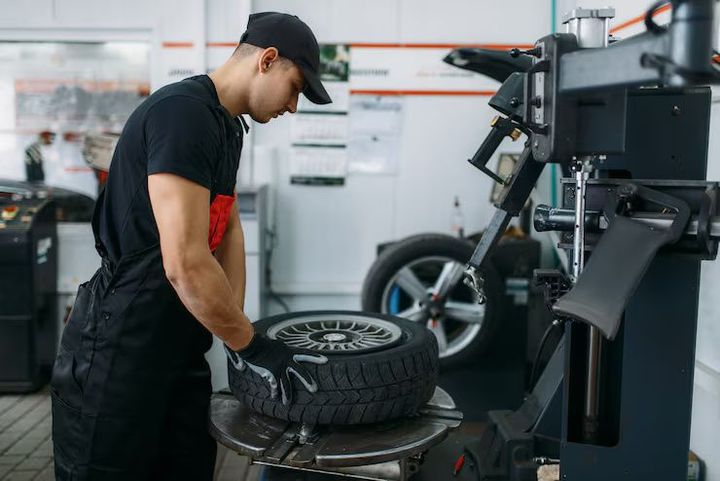
A typical balancing process involves mounting the wheel assembly on a machine shaft, entering relevant wheel dimensions, and rotating the assembly. Sensors measure forces or movement generated during rotation, and the machine calculates the position and amount of correction required.
Depending on the equipment, the operator may then install clip-on or adhesive weights at specified locations. The wheel can be rotated again to verify the result.
Importance
Proper wheel balance is relevant to vehicle handling, ride comfort, tire wear, and the condition of components connected to the wheel assembly. An imbalance may become more noticeable as rotational speed increases.
For drivers, noticeable symptoms can include vibration through the steering wheel, seat, or vehicle body. However, vibration can have several possible causes, including tire damage, wheel deformation, suspension problems, alignment issues, or other mechanical conditions. Wheel balancing should therefore be understood as one part of overall wheel and vehicle maintenance.
Who Uses Tire Balancing Machines?
Tire balancing equipment is used in many environments where wheels and tires are inspected or maintained. These include:
- Automotive workshops
- Tire and wheel facilities
- Vehicle inspection environments
- Fleet maintenance facilities
- Motorcycle workshops
- Commercial vehicle maintenance operations
- Manufacturing and testing environments
The machine type selected generally depends on wheel dimensions, vehicle category, expected workload, measurement requirements, and available workspace.
Why Accuracy Matters
A balancing machine must detect relatively small differences in weight distribution while the wheel is rotating. Accurate measurement is important because an incorrect measurement can result in an inappropriate correction.
Machine accuracy can be affected by factors such as mounting method, shaft condition, calibration, wheel cleanliness, sensor condition, and operator technique. Even a technically capable machine can produce unreliable results if the wheel is mounted incorrectly.
Recent Updates
From 2024 through 2026, tire balancing equipment has continued to incorporate more digital controls, automated measurement functions, and improved operator interfaces. These developments are part of a broader move toward computerized workshop equipment.
Many newer machines use digital displays to show imbalance values and correction positions. Some systems can automatically determine wheel dimensions through measurement arms, reducing the amount of manual data entry.
Automated Measurement
Automatic distance and diameter measurement systems can collect wheel information as the operator positions the measurement arm. Some equipment also supports automatic brake positioning, allowing the wheel to stop at a calculated correction location.
These features can reduce repetitive manual steps, although the actual functions vary between machines.
Road-Force Measurement
Some advanced balancing systems incorporate road-force measurement. Instead of evaluating only rotational imbalance, these systems can apply a controlled load against the tire and measure variations associated with the tire and wheel assembly.
Road-force equipment is used when standard balancing procedures do not fully explain persistent vibration concerns. It can provide additional information about the interaction between the tire and wheel.
Digital Diagnostics
Computerized balancing systems may record measurement results and display correction instructions in graphical form. Some equipment can also support different balancing programs for steel, alloy, motorcycle, or other wheel types.
The increasing use of digital controls does not eliminate the importance of correct wheel mounting, calibration, and inspection.
Laws or Policies
In India, tire balancing machines operate within a broader vehicle safety and workplace safety framework. Requirements can involve vehicle regulations, roadworthiness procedures, occupational safety rules, and applicable technical standards.
The Central Motor Vehicles Rules, 1989 establish requirements covering motor vehicles and their components. The Ministry of Road Transport and Highways maintains information concerning the Central Motor Vehicles Rules and amendments. Applicable requirements can vary according to vehicle category and the specific inspection or maintenance activity.
For workplace environments, the Occupational Safety, Health and Working Conditions Code provides a broader framework for occupational safety and working conditions. The Ministry of Labour and Employment publishes information and materials relating to the Code and associated rules.
Technical standards can also be relevant to wheels, tires, balancing equipment, and measurement procedures. The Bureau of Indian Standards maintains standards and certification information through its official standards resources.
Workshops should consider the specific vehicle category, workplace conditions, machine instructions, and applicable Indian requirements rather than relying on general descriptions of tire balancing equipment.
Workplace Safety Considerations
Tire balancing involves rotating equipment and potentially heavy wheel assemblies. Basic safety considerations include securing the wheel correctly, using appropriate machine guards, keeping loose clothing away from rotating parts, and following the equipment manufacturer's operating instructions.
The rated speed and operating limits of the machine should also be observed. Operators should not attempt to run a wheel assembly that is visibly damaged or improperly mounted.
Tools and Resources
Several resources can help operators, workshop managers, and general readers understand tire balancing equipment and related procedures.
Machine Manuals
The equipment manual normally provides information about maximum wheel dimensions, mounting methods, calibration procedures, balancing programs, error codes, and maintenance requirements. It should be used as the primary reference for a particular machine.
Wheel and Tire Specifications
Tire manufacturers and vehicle manufacturers publish technical information about tire dimensions, wheel specifications, inflation requirements, and application limits. These references can help determine whether a wheel and tire combination is appropriate for a particular vehicle.
Calibration Tools
Many balancing machines have calibration procedures that use a known test weight or a specified calibration sequence. Calibration requirements differ by machine, so the manufacturer's procedure should be followed rather than applying a generic method.
Measurement and Inspection Records
A simple record can help track balancing results and identify recurring issues.
| Factor | Information to record |
|---|---|
| Wheel type | Steel, alloy, motorcycle, or other |
| Tire size | Marked tire dimensions |
| Wheel dimensions | Diameter and width |
| Imbalance | Measured inner and outer values |
| Correction | Weight and position |
| Balancing mode | Static, dynamic, or specialized mode |
| Verification | Final measurement |
| Notes | Tire or wheel condition |
These records can be useful when investigating repeated vibration or irregular tire wear.
Planning Factors
Choosing and operating tire balancing equipment involves several practical considerations. The machine must be compatible with the wheels it will handle, and the available workspace should allow safe mounting, rotation, inspection, and movement around the equipment.
Wheel Compatibility
Important compatibility factors include wheel diameter, wheel width, wheel weight, shaft configuration, mounting accessories, and the types of vehicles being handled. Passenger-car wheels may require different accessories from motorcycle or commercial-vehicle wheels.
Measurement Accuracy
The machine's measurement resolution and repeatability should be considered alongside its intended application. Accuracy specifications should be interpreted according to the manufacturer's test conditions and technical documentation.
Mounting Method
The wheel must be centered correctly on the machine shaft. Incorrect centering can produce measurement errors that may appear to be actual wheel imbalance.
Different cones, collets, adapters, and mounting accessories are available for different wheel designs. Selecting an appropriate mounting method is therefore an important part of the balancing process.
Workspace Requirements
The physical installation area should provide enough room for the machine, wheel handling, operator movement, and related equipment. Electrical requirements, floor conditions, lighting, ventilation, and access should also be considered.
Maintenance
Routine maintenance can include cleaning the machine, inspecting the shaft and mounting accessories, checking guards, verifying calibration, and following manufacturer-specific maintenance intervals. Dust, dirt, damaged adapters, or worn components can affect measurement quality.
FAQs
What is a tire balancing machine?
A tire balancing machine is equipment that rotates a wheel and tire assembly to detect uneven weight distribution. It calculates the location and amount of correction that may be required.
How accurate are tire balancing machines?
Accuracy varies according to the machine design, sensor system, calibration condition, mounting method, and operating procedure. A machine should be evaluated using the accuracy and repeatability specifications provided by its manufacturer.
What are the main components of a tire balancing machine?
Common components include an electric motor, spindle, shaft, mounting accessories, sensors, control panel, display, protective cover, and wheel measurement system. Advanced equipment may include automatic measurement arms and specialized force-measurement systems.
What types of tire balancing machines are available?
Common categories include static balancers, dynamic computerized balancers, motorcycle balancing equipment, heavy-duty wheel balancers, and systems incorporating road-force measurement. Each type is designed for particular wheel and measurement requirements.
Why does a tire still vibrate after balancing?
Vibration can have causes other than wheel imbalance. Possible factors include tire uniformity problems, wheel deformation, improper mounting, tire damage, wheel alignment, suspension components, or other vehicle conditions. Further inspection may be required to identify the actual cause.
Conclusion
Tire balancing machines measure uneven weight distribution in rotating wheel and tire assemblies and provide information for corrective action. Their main components include a drive system, spindle, sensors, mounting equipment, controls, and measurement interfaces. Recent equipment trends include digital displays, automated measurements, and road-force testing capabilities. Correct wheel mounting, calibration, equipment compatibility, workplace safety, and applicable vehicle requirements all influence the reliability of the balancing process.