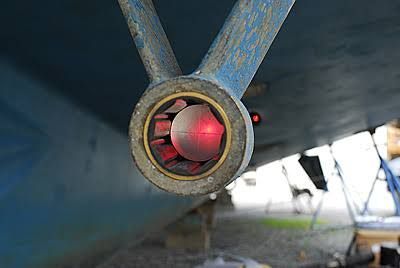
What Is Marine Shaft Alignment Equipment and How Does It Work
Marine propulsion systems depend on precise positioning between engines, gearboxes, bearings, propeller shafts, and other rotating components.
Even relatively small alignment errors can contribute to uneven loads, vibration, bearing wear, coupling problems, and accelerated component deterioration. Marine Shaft Alignment Equipment is used to measure and evaluate the relative position of these components during ship construction, installation, maintenance, and repair.
Modern alignment technologies range from traditional dial indicators and optical instruments to laser-based measurement systems. These tools help marine engineers establish shaft centerlines, identify offset and angular misalignment, and determine the adjustments needed to achieve the specified alignment condition.
What Is Marine Shaft Alignment Equipment?
Marine Shaft Alignment Equipment includes measurement instruments, sensors, fixtures, software, and supporting tools used to determine the alignment of marine propulsion shafts and related machinery.
A marine propulsion train can include:
- Main engine
- Gearbox
- Couplings
- Intermediate shafts
- Stern tube
- Shaft bearings
- Propeller shaft
- Propeller
These components must work together along an appropriate shaft centerline.
Alignment equipment helps engineers determine whether the machinery and shaft components are positioned according to the design requirements.
Why Is Marine Shaft Alignment Important?
A ship's propulsion shaft operates under substantial rotational and mechanical loads. The shaft also experiences changing conditions as the vessel operates in water, including hull deformation, temperature changes, bearing loads, and propulsion forces.
Proper alignment can help support:
- Reduced vibration
- More consistent bearing loading
- Improved coupling operation
- Reduced shaft bending
- Better propulsion reliability
- Longer component operating life
- More predictable maintenance requirements
Alignment is therefore considered during both new-vessel construction and maintenance of existing propulsion systems.
How Does Marine Shaft Alignment Equipment Work?
The general measurement process involves establishing a reference line and comparing the actual position of shaft and machinery components against that reference.
1. Establishing the Shaft Reference
Engineers first establish the intended shaft centerline based on engineering drawings, vessel geometry, and propulsion-system requirements.
The reference may be established using laser, optical, mechanical, or other measurement techniques.
2. Installing Measurement Equipment
Sensors, targets, brackets, dial indicators, laser heads, or optical instruments are mounted on the relevant shaft or machinery components.
The equipment must be securely positioned so that measurements remain stable during shaft rotation.
3. Measuring Shaft Position
The shaft is rotated or measured at selected positions.
The equipment records relative movement between measurement points.
Depending on the technology, measurements can identify:
- Vertical offset
- Horizontal offset
- Angular misalignment
- Bearing position
- Shaft centerline deviation
4. Comparing Measurements
Collected measurements are compared with the specified alignment condition.
Software can calculate the difference between the measured shaft position and the target alignment.
5. Determining Corrections
If the measurements show that a component is outside the specified alignment range, engineers can determine the required positional adjustment.
Corrections can involve:
- Machinery movement
- Bearing adjustments
- Shimming
- Mounting corrections
- Support modifications
6. Verification
After adjustments, the alignment is measured again.
Repeated measurements confirm whether the shaft train has reached the required alignment condition.
Major Types of Marine Shaft Alignment Equipment
1. Laser Shaft Alignment Systems
Laser alignment systems use a laser beam and measurement sensors to establish a highly controlled reference.
A typical system includes:
- Laser transmitter
- Detector or sensor
- Mounting brackets
- Measurement targets
- Data-processing unit
- Alignment software
Laser systems can provide digital measurement records and graphical alignment reports.
2. Optical Alignment Systems
Optical systems use telescopes, optical targets, reference lines, or similar instruments to establish shaft centerlines.
They have been used extensively in marine and industrial alignment applications.
3. Dial Indicator Systems
Dial indicators measure relative movement between components as a shaft is rotated.
They can be used for coupling alignment, shaft measurements, bearing positioning, and other mechanical alignment tasks.
4. Shaft Sag Measurement Equipment
Shaft sag measurements account for the effect of shaft weight and gravitational deflection during alignment.
This can be important when long shaft sections are supported between measurement points.
5. Bearing Position Measurement Systems
Specialized equipment can measure the position and alignment of shaft bearings relative to the intended propulsion shaft centerline.
6. Digital Shaft Measurement Systems
Digital systems combine electronic sensors with measurement software.
They can record multiple measurement points and generate calculations and reports automatically.
7. Integrated Marine Alignment Systems
Integrated systems combine laser measurement, sensors, software, shaft positioning data, and reporting tools.
These systems can support complex propulsion trains involving multiple shafts and bearings.
Marine Shaft Alignment Equipment Comparison
| Equipment Type | Measurement Principle | Typical Application |
|---|---|---|
| Laser system | Laser and sensors | Precision shaft alignment |
| Optical system | Optical reference | Shaft centerline measurement |
| Dial indicators | Mechanical displacement | Coupling and shaft alignment |
| Shaft sag equipment | Deflection measurement | Long shaft trains |
| Bearing measurement tools | Position measurement | Bearing alignment |
| Digital systems | Electronic sensors | Automated measurement |
| Integrated systems | Multiple technologies | Complex propulsion systems |
Key Measurements in Marine Shaft Alignment
Offset
Offset describes the difference in position between two shaft centerlines.
It can occur horizontally or vertically.
Angular Misalignment
Angular misalignment occurs when two shaft centerlines meet at an angle rather than remaining properly aligned.
Shaft Centerline
The shaft centerline represents the intended geometric or operational path of the propulsion shaft.
Bearing Position
Bearing location relative to the shaft centerline is important because bearing loads can change when the shaft is incorrectly positioned.
Shaft Deflection
Long shafts can bend under their own weight and operational loads. Measurement and calculation of shaft deflection can therefore be part of an alignment assessment.
Factors Affecting Marine Shaft Alignment
Marine shaft alignment is more complicated than simply positioning components in a straight geometric line.
Hull Deflection
A vessel's hull can deform under loading and environmental conditions.
Temperature
Engine and propulsion components can change position as they heat during operation.
Bearing Loads
Bearing loads influence shaft position and can affect the overall alignment condition.
Shaft Weight
Long shaft sections can experience gravitational deflection.
Propeller Forces
The propeller generates thrust and other forces that influence the propulsion system during operation.
Foundation Movement
Engine and gearbox foundations can experience dimensional changes or movement that affect component positioning.
Applications of Marine Shaft Alignment Equipment
New Ship Construction
Alignment equipment is used during installation of propulsion machinery and shaft systems.
Shipyard Propulsion Installation
Engineers can measure engine, gearbox, bearing, and shaft positions before final installation and commissioning.
Vessel Maintenance
Existing vessels can undergo alignment measurements when vibration, bearing wear, or propulsion-system issues are investigated.
Propeller Shaft Replacement
New shaft installation requires accurate positioning relative to the existing propulsion train.
Marine Engine Alignment
Alignment tools can establish the relationship between the engine output shaft and the downstream propulsion system.
Benefits of Modern Marine Shaft Alignment Systems
Improved Measurement Accuracy
Laser and digital systems can provide detailed positional measurements.
Faster Data Collection
Electronic measurement systems can reduce manual calculation requirements.
Digital Reporting
Software can automatically record measurement results and generate alignment reports.
Repeatable Measurements
Fixed measurement procedures and digital sensors can support consistent alignment assessments.
Better Troubleshooting
Measurement data can help engineers investigate vibration, bearing loading, coupling problems, and other propulsion-system conditions.
Challenges in Marine Shaft Alignment
Limited Access
Ship machinery spaces can contain large equipment and restricted working areas.
Long Shaft Trains
Long propulsion shafts require careful measurement across multiple bearings and supports.
Environmental Conditions
Temperature, vibration, lighting, and working conditions can influence measurement procedures.
Hull Movement
The vessel structure can change shape depending on loading and operating conditions.
Measurement Setup
Laser heads, targets, brackets, and sensors must be mounted securely and positioned correctly.
Best Practices for Marine Shaft Alignment
- Establish the correct design reference before measurement.
- Inspect shafts, bearings, couplings, and foundations before alignment.
- Use appropriate measurement equipment for the shaft configuration.
- Secure measurement brackets and sensors firmly.
- Account for shaft sag where applicable.
- Consider thermal and hull-related movement.
- Record measurements at defined shaft positions.
- Use software calculations where appropriate to reduce manual errors.
- Verify alignment after every major adjustment.
- Maintain complete measurement records for future maintenance.
Marine Shaft Alignment Process
A simplified alignment workflow can be summarized as follows:
Design reference → Equipment setup → Shaft measurement → Data analysis → Component adjustment → Verification
Each stage contributes to establishing a controlled relationship between the propulsion shaft and supporting machinery.
Frequently Asked Questions
What is Marine Shaft Alignment Equipment?
Marine Shaft Alignment Equipment consists of tools and measurement systems used to determine the position and alignment of propulsion shafts, bearings, engines, gearboxes, and related marine machinery.
How does laser shaft alignment work?
A laser alignment system projects a controlled laser reference between measurement points. Sensors detect the laser position and software calculates shaft offset, angular alignment, and required corrections.
Why is shaft alignment important on ships?
Proper alignment helps manage shaft and bearing loads, vibration, coupling conditions, and mechanical stresses within the propulsion system.
What causes marine shaft misalignment?
Potential factors include installation errors, hull deformation, bearing movement, foundation changes, thermal expansion, shaft deflection, and changes in operating conditions.
When is marine shaft alignment equipment used?
It can be used during new vessel construction, propulsion machinery installation, shaft replacement, maintenance, troubleshooting, and major shipyard repair work.
Conclusion
Marine Shaft Alignment Equipment provides the measurement capability needed to position and evaluate complex ship propulsion systems. Laser systems, optical instruments, dial indicators, digital sensors, and integrated alignment platforms can measure shaft position, offset, angularity, bearing locations, and other alignment parameters.
The alignment process generally involves establishing a reference, installing measurement equipment, collecting shaft-position data, calculating deviations, making appropriate adjustments, and verifying the final condition.
Because marine propulsion systems operate under changing mechanical, thermal, and structural conditions, alignment requires more than simply creating a visually straight shaft line. Careful measurement, engineering calculations, appropriate correction procedures, and verification are essential for maintaining a controlled propulsion-system geometry.