Automated Industrial Printing: Guide to Smart Printing Systems
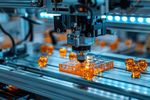
Automated industrial printing refers to the use of advanced printing equipment, software, sensors, digital workflows, and automated controls in industrial production. Unlike traditional printing processes that may depend heavily on manual setup and inspection, automated systems can coordinate several stages of production with limited operator intervention.
These systems are used across packaging, labels, electronics, automotive components, textiles, product identification, decorative surfaces, and other manufacturing applications. Depending on the application, technologies can include industrial inkjet, digital presses, screen printing, thermal inkjet, electrophotographic printing, and hybrid systems.
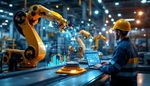
The main purpose is not simply to make printing faster. Smart printing systems are designed to connect production data with machine controls. This can help manufacturers monitor equipment, detect printing errors, manage production schedules, and maintain consistent output.
A typical automated industrial printing workflow may include:
- Digital artwork preparation
- Automated file checking
- Color and print-data management
- Material or substrate handling
- Automated print setup
- Inline inspection
- Defect detection
- Data collection
- Production monitoring
- Quality reporting
- Traceability and record keeping
Digital printing has become increasingly important because manufacturers often need shorter production runs, variable information, customized designs, and more flexible production planning. Recent industry research also identifies packaging, labels, and industrial applications as important areas of digital-print growth.
Why Smart Printing Systems Matter
Importance in Modern Manufacturing
Industrial printing is no longer limited to putting graphics onto paper. Printed information can become part of a manufactured product, package, electronic component, textile, or identification system.
For example, printed codes can support product identification and traceability. Printed electronic patterns can be used in certain electronic manufacturing applications. Packaging can contain variable information that changes from one production batch to another.
Automation can help address several common production challenges.
Consistent print quality: Automated inspection can monitor print characteristics and identify defects during production.
Reduced manual intervention: Software and machine controls can automate repetitive setup and monitoring tasks.
Better production visibility: Connected systems can collect information about equipment status, production progress, and quality.
Variable-data printing: Digital systems can change text, codes, images, or other information without requiring traditional plate changes for every variation.
Traceability: Production records can connect printed information with batches, materials, or manufacturing stages.
Waste management: Automated inspection can identify defects earlier, allowing problems to be addressed before a larger quantity of material is affected.
These capabilities are particularly relevant as manufacturers move toward smart factory models. AI-based diagnostics, predictive maintenance, dynamic scheduling, and real-time monitoring are increasingly being incorporated into modern print workflows.
Key Applications
Automated industrial printing can be applied to many manufacturing areas.
| Application | Typical Printing Purpose |
|---|---|
| Packaging | Graphics, product information, codes and variable data |
| Labels | Identification, branding information and tracking |
| Electronics | Conductive and functional printed patterns |
| Automotive | Decorative and identification components |
| Textiles | Digital patterns and graphics |
| Industrial parts | Marking, identification and instructions |
| Pharmaceuticals | Packaging information and traceability |
| Consumer products | Decorative surfaces and product information |
The exact technology depends on the substrate, ink or toner characteristics, resolution requirements, production volume, durability requirements, and regulatory environment.
Recent Developments and Industry Trends
AI and Intelligent Automation
One of the major developments during 2025 and 2026 has been the increasing integration of artificial intelligence with industrial print workflows.
AI can be applied to areas such as image inspection, predictive maintenance, production scheduling, and operational data analysis. Modern systems can use machine data to identify unusual patterns and help operators investigate potential production problems.
In 2026, industry discussions have increasingly focused on intelligent automation rather than automation of the printer alone. The wider objective is to connect prepress, production, inspection, workflow management, and reporting into a more coordinated system.
Growth of Digital Industrial Printing
Recent market research published in 2025 reported strong expansion in digital printing and identified packaging, labels, and industrial applications as important growth areas. Another 2025 assessment valued combined screen and digital industrial printing at $81.7 billion for that year.
The trend is also visible in inkjet technology. A 2026 industry analysis highlighted packaging and industrial printing as significant areas of development, while identifying AI-driven diagnostics, predictive maintenance, inline inspection, and fleet management as emerging automation capabilities.
Smarter Workflow Management
Modern printing environments increasingly use centralized software to monitor multiple machines and production stages. These systems can provide dashboards for equipment status, production information, quality measurements, and workflow coordination.
The movement toward connected print factories is part of a broader Industry 4.0 approach, where machines communicate with software and production data is used for operational decisions.
Sustainability and Waste Reduction
Sustainability has also become an important consideration. Digital workflows can support shorter production runs and variable production, while automated inspection can identify defects earlier.
However, automation does not automatically make a printing process sustainable. Energy use, substrate selection, ink chemistry, waste treatment, equipment utilization, and recycling arrangements all influence the environmental impact.
Laws, Standards, and Policies in India
Environmental and Waste Management Rules
Industrial printing in India can be affected by environmental, packaging, waste-management, workplace-safety, and product-specific requirements.
India's Solid Waste Management Rules, 2026 came into effect on April 1, 2026, replacing the earlier 2016 framework. The updated rules include requirements related to source segregation, waste processing, monitoring, and circular-economy principles. These requirements can be relevant to manufacturing facilities that generate paper, packaging, and other forms of industrial waste.
Packaging-related requirements are also changing. Government notifications concerning packaging made from materials such as paper, paperboard, glass, and metal include responsibilities for producers, importers, brand owners, and waste processors, with provisions taking effect from April 1, 2026.
Food-Contact Printing Considerations
Printing intended for food-related packaging requires particular attention to material and ink suitability. In June 2026, India's food-safety authority advised against using newspapers for packing or serving food because of concerns related to printing inks and contamination.
Indian standards work also covers printing inks, including inks used for food, pharmaceutical, and hygiene packaging, as well as coatings and varnishes used in printing and packaging.
Manufacturers should therefore identify the specific regulations and standards applicable to their substrate, ink, product category, and intended use before selecting an automated printing workflow.
Tools and Resources for Smart Printing
Production Planning Tools
Digital production-planning software can help organize print files, schedules, materials, and machine availability. A centralized workflow can reduce unnecessary manual data entry and improve visibility.
Print Management Dashboards
Monitoring dashboards can display machine status, production progress, quality information, alerts, and maintenance indicators. These dashboards are particularly useful when several printers or production lines operate together.
Color Management Tools
Color-management systems help maintain consistency between digital files, printing equipment, substrates, and finished output. Color profiles, calibration routines, measurement devices, and proofing workflows can all contribute to consistent results.
Automated Inspection Systems
Machine-vision cameras and image-analysis software can inspect printed output during production. These systems may identify missing areas, registration problems, streaks, color differences, or other visible defects.
Data and Analytics Tools
Production analytics can help manufacturers review equipment utilization, defect rates, downtime patterns, material usage, and workflow performance.
Learning Resources
Useful educational resources include:
- Printing technology manuals
- Industrial automation guides
- Digital color-management references
- Packaging standards documentation
- Machine-vision tutorials
- Industry research reports
- Government environmental regulations
- Workplace safety documentation
- Printing-process calculators and templates
The most useful resource depends on the printing technology, industry, material, and regulatory requirements involved.
Frequently Asked Questions
What is automated industrial printing?
Automated industrial printing uses printing equipment, software, sensors, inspection systems, and data technologies to coordinate printing with less manual intervention. It is commonly used for packaging, labels, product identification, textiles, electronics, and industrial components.
How does AI support industrial printing?
AI can support image inspection, predictive maintenance, scheduling, anomaly detection, and production-data analysis. Its actual capabilities depend on the equipment, software, data quality, and implementation.
What is the difference between digital and automated printing?
Digital printing describes a printing method in which digital data is used to create the printed output. Automation refers to how much of the workflow is controlled or coordinated by software, machines, sensors, and other automated systems. A digital printer can therefore be operated manually or as part of a highly automated production line.
Is automated printing suitable for every manufacturing application?
No. The appropriate technology depends on the substrate, print resolution, durability, production volume, ink requirements, product specifications, and regulatory conditions. Some applications may continue to use conventional printing technologies.
Why is inline inspection important?
Inline inspection allows printed output to be checked during production rather than relying only on final inspection. Early detection can help manufacturers identify defects and investigate process problems before they affect a larger production quantity.
Conclusion
Automated industrial printing is becoming an important part of modern manufacturing because printing is increasingly connected with digital production, quality control, traceability, and data management.