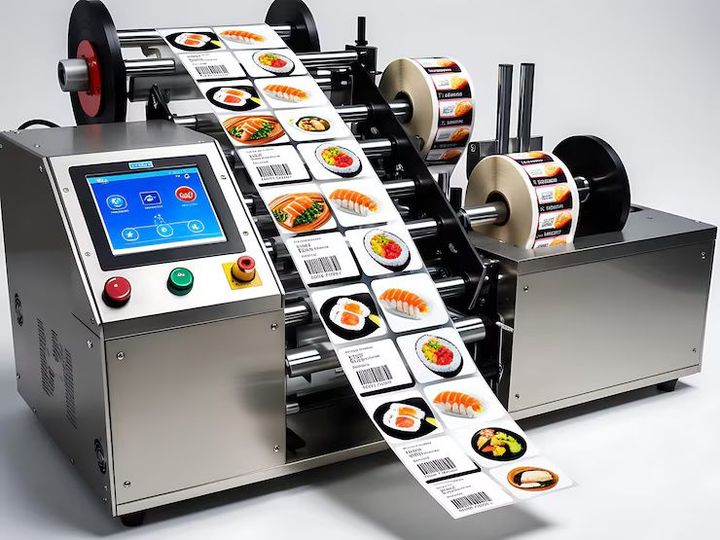
Automatic Labeling Machines Explained: Types, Process, and Industry Uses
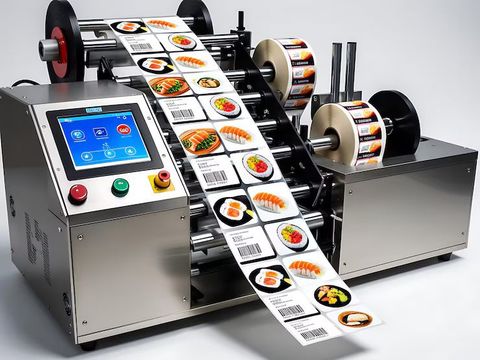
Automatic labeling machines are industrial packaging systems designed to apply labels to products or containers with limited manual intervention. A label may contain important information such as the product name, ingredients, batch identification, dates, barcode, handling instructions, or other regulatory details.
The basic purpose of an automatic labeling machine is to position a label consistently on a product as it moves through a production or packaging line. Depending on the machine design, labels can be applied to bottles, jars, cartons, boxes, pouches, containers, and other packaging formats.
A typical system combines a conveyor, product detection sensor, label dispenser, control system, and application mechanism. More advanced equipment can also integrate printers, barcode readers, machine vision, and inspection systems.
Automatic labeling is part of the broader movement toward industrial automation. As manufacturing processes have become faster and more standardized, manufacturers have needed packaging equipment that can maintain repeatable label placement while handling different product formats.
The exact configuration depends on product shape, packaging material, label dimensions, production speed, and the required labeling position.
How an Automatic Labeling Machine Works
The labeling process generally follows these steps:
- Products enter the machine through a conveyor or feeding mechanism.
- A sensor detects the approaching product.
- The control system calculates the correct timing for label application.
- A label is separated from its backing material.
- An applicator transfers the label onto the product.
- Rollers, belts, or brushes may press the label onto the surface.
- A camera or sensor can inspect label position and presence.
- Incorrectly labeled products may be identified for further inspection.
This sequence allows labeling to become a repeatable part of an automated packaging workflow.
Importance
Automatic labeling machines matter because labeling is closely connected with product identification, traceability, packaging consistency, and regulatory information.
Manual labeling can become difficult when production volumes increase or when products require precise placement. Repeated manual handling may also create variations in label position, orientation, or adhesion.
Automation addresses several common challenges:
- Consistent label positioning
- Better production-line coordination
- Reduced repetitive manual handling
- Improved product identification
- Easier barcode and batch tracking
- Integration with packaging automation
- More systematic quality inspection
The technology affects many industries. Food and beverage manufacturers use labeling systems for bottles, jars, cans, cartons, and pouches. Pharmaceutical packaging may require highly controlled identification and traceability. Cosmetics, chemicals, household products, logistics packaging, and consumer goods can also use automated labeling equipment.
Labeling is particularly important when packages carry information that must remain readable throughout handling and distribution. A poorly positioned or damaged label can make important information difficult to interpret.
Main Types of Automatic Labeling Machines
Different labeling systems are designed for different product shapes and packaging requirements.
| Machine Type | Typical Application | Main Feature |
|---|---|---|
| Pressure-Sensitive Labeler | Bottles, jars, cartons | Uses adhesive-backed labels |
| Wrap-Around Labeler | Cylindrical containers | Applies labels around curved surfaces |
| Front-and-Back Labeler | Bottles and containers | Places labels on two sides |
| Top Labeler | Boxes, trays, packages | Applies labels to upper surfaces |
| Side Labeler | Cartons and containers | Labels one side of a product |
| Print-and-Apply System | Cases and cartons | Prints variable data before application |
| Sleeve Labeling System | Bottles and containers | Places shrink sleeves around products |
| Rotary Labeling Machine | High-volume lines | Uses rotating stations for continuous operation |
The choice depends on container geometry, label material, production requirements, and the type of information being printed or applied.
Key Components
An automatic labeling system usually contains several coordinated components.
Conveyor: Moves products through the labeling area at a controlled speed.
Product Sensor: Detects the position of each product and triggers the labeling sequence.
Label Dispenser: Separates labels from the backing material and feeds them toward the application point.
Application Mechanism: Transfers the label onto the product. It may use rollers, brushes, air systems, belts, or other mechanisms.
Controller: Coordinates sensors, motors, timing, and other machine functions.
Inspection System: Cameras or sensors can check whether a label is present and positioned correctly.
Printer or Coding Unit: Some systems add batch numbers, dates, barcodes, or variable information.
Recent Updates
Automatic labeling technology has continued to develop alongside industrial automation, machine vision, digital traceability, and flexible packaging.
One notable trend during 2025 and 2026 has been stronger integration between labeling equipment and inspection technologies. Machine-vision systems can help detect missing labels, incorrect positions, damaged codes, and other packaging inconsistencies.
Another development is greater use of flexible automation. Manufacturers increasingly work with multiple container sizes and packaging formats, making quick changeover and recipe-based machine settings useful features.
Digital traceability is also influencing packaging lines. Labels may carry barcodes or machine-readable codes that connect physical products with production, inventory, and distribution information.
Regulatory developments in India have also kept packaging information important. The Department of Consumer Affairs lists amendments to the Legal Metrology (Packaged Commodities) Rules during 2025 and 2026.
For food packaging, the Food Safety and Standards Authority of India lists amendments to the Food Safety and Standards (Labelling and Display) Regulations, 2020, including amendments dated August 8, 2025 and March 24, 2026.
These developments do not mean that every labeling machine must be changed. Instead, they highlight the importance of keeping packaging processes aligned with applicable labeling requirements.
Automation Trend Overview
Manual Labeling        █████
Semi-Automatic         █████████
Automatic              ██████████████
Vision-Integrated      █████████████████
Connected Automation   ███████████████████
The graph is a conceptual comparison of automation integration rather than a market-size measurement.
Laws or Policies
In India, labeling equipment can be affected indirectly by regulations governing what information must appear on packaged products.
The Legal Metrology (Packaged Commodities) Rules, 2011 establish requirements for declarations on applicable packages. The Department of Consumer Affairs identifies information such as manufacturer or importer details, commodity identity, net quantity, relevant dates, Maximum Retail Price, consumer-care information, and other applicable declarations.
The department also lists amendments to the packaged-commodity rules issued in 2025 and 2026, so manufacturers should check the current requirements applicable to their products rather than relying only on older packaging specifications.
Food manufacturers have an additional regulatory framework. FSSAI's Food Safety and Standards (Labelling and Display) Regulations, 2020 cover labeling requirements for pre-packaged foods. The regulations require applicable information to be clear, prominent, legible, and presented in accordance with the prescribed requirements.
FSSAI's 2026 updates include a First Amendment to the Labelling and Display Regulations concerning areas such as infant nutrition products and non-retail containers.
For this reason, an automated labeling system should be configured around the current packaging specification and applicable regulations. The machine itself does not determine whether a label is legally compliant; the product owner remains responsible for the accuracy and required content of the package information.
Tools and Resources
Several tools can help organizations plan, operate, and evaluate an automatic labeling process.
Label Design Software: Useful for preparing label layouts, barcodes, product information, and variable fields.
Barcode Verification Tools: Help check whether printed barcodes can be correctly read.
Machine-Vision Inspection: Cameras and inspection software can identify missing, misplaced, rotated, or damaged labels.
Production Calculators: Packaging-line calculators can help estimate throughput, conveyor requirements, label consumption, and changeover planning.
Maintenance Checklists: Regular inspection templates can track sensors, rollers, belts, label-feed components, and other machine parts.
Regulatory Checklists: Packaging teams can use structured checklists to compare label content with applicable regulatory requirements.
Training Resources: Equipment manuals, packaging-automation guides, technical standards, and operator training materials can help staff understand machine operation and maintenance.
A useful implementation checklist includes:
- Product dimensions
- Container shape
- Label size and material
- Label position
- Required labeling speed
- Sensor arrangement
- Barcode requirements
- Inspection requirements
- Changeover requirements
- Applicable regulatory declarations
FAQs
What is an automatic labeling machine?
An automatic labeling machine is packaging equipment that applies labels to products or containers automatically as they move through a production line. It uses sensors, controls, and an application mechanism to position labels consistently.
What products can automatic labeling machines handle?
They can handle many packaging formats, including bottles, jars, cartons, boxes, pouches, trays, and containers. The appropriate machine depends on the product shape, label design, material, and application position.
What is the difference between automatic and semi-automatic labeling?
An automatic system normally integrates product movement and label application into a production line. A semi-automatic system may require an operator to position or feed products before the machine applies the label.
Can an automatic labeling machine print information?
Some systems can integrate printing or coding equipment. Depending on the configuration, variable information such as batch codes, dates, serial numbers, or barcodes can be printed before or after label application.
Why is label inspection important?
Inspection helps identify missing, incorrectly positioned, damaged, or unreadable labels. When labeling is connected with barcode or vision inspection, packaging teams can identify potential errors earlier in the production process.
Conclusion
Automatic labeling machines are an important part of modern packaging automation. They combine product handling, sensors, label dispensing, application mechanisms, and control systems to create a repeatable labeling process.