Bakery Production Line Machinery Insights: Improving Production Efficiency, Product Quality, and Food Safety
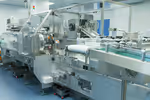
Bakery production line machinery refers to the collection of machines used to automate the preparation, mixing, shaping, baking, cooling, and packaging of baked products. These systems are commonly found in facilities that produce bread, buns, biscuits, cookies, cakes, crackers, pastries, and other bakery items in large quantities.
Modern industrial bakery equipment combines mechanical engineering, food processing technology, and digital controls to support consistent production.
The development of bakery machinery began with simple mechanical mixers and ovens during the Industrial Revolution. As consumer demand for packaged baked goods increased, manufacturers introduced more specialized equipment capable of handling multiple production stages. Today, an automatic bakery production line can integrate several machines into a continuous workflow, reducing manual handling while maintaining consistent product quality.
Bakery processing equipment is designed to work with different recipes, ingredients, and production capacities. Depending on the product being manufactured, equipment may include dough mixers, dough dividers, proofing chambers, baking ovens, cooling conveyors, and packaging systems.
How a Bakery Production Line Works
A bakery production line follows a sequence of processing steps that transform raw ingredients into finished baked products.
The process typically begins by combining flour, water, yeast, sugar, salt, fats, and other ingredients inside industrial mixers. After mixing, the dough moves through dividing, rounding, shaping, proofing, baking, cooling, and packaging stages. Bakery conveyor systems transport products between machines, allowing continuous movement throughout the production process.
Different product categories require different processing methods. Industrial bread making machines differ from biscuit manufacturing machinery because dough consistency, baking temperatures, and shaping techniques vary between products.
Main Types of Bakery Machinery
Common categories of bakery production equipment include:
- Dough mixing machines
- Dough dividing equipment
- Dough rounders
- Dough sheeters
- Proofing systems
- Tunnel ovens
- Rotary ovens
- Cooling conveyors
- Bakery conveyor systems
- Packaging equipment
Each machine performs a specific function within the overall production line.
Importance
Supporting Large-Scale Food Production
Bakery products are consumed daily in many countries. Industrial bakery equipment enables manufacturers to produce consistent quantities of bread, biscuits, cakes, and related products for retail, hospitality, institutional kitchens, and food manufacturing.
Automation supports continuous production while reducing interruptions between processing stages.
Improving Product Consistency
Maintaining consistent product size, texture, baking time, and appearance is important in commercial food production.
An automatic bakery production line controls mixing time, dough weight, proofing conditions, baking temperature, and conveyor speed to maintain uniform production.
Increasing Production Efficiency
Modern bakery processing equipment allows multiple manufacturing stages to operate together. Dough preparation, baking, cooling, and packaging occur in sequence, reducing unnecessary material movement throughout the facility.
Industrial bread making machines also reduce repetitive manual handling during production.
Supporting Food Safety
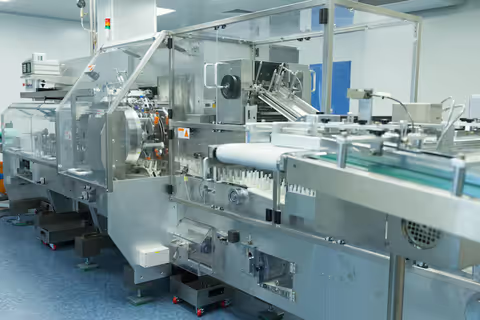
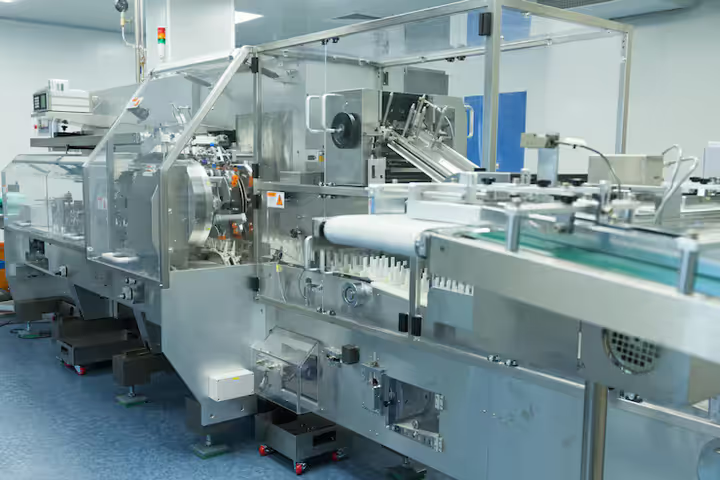
Food manufacturing facilities follow strict hygiene practices. Modern commercial bakery machinery often incorporates stainless steel construction, enclosed processing sections, washable surfaces, and automated cleaning features that help maintain sanitary production environments.
Adapting to Different Products
Manufacturers often produce several bakery products using the same production facility.
Equipment settings can be adjusted for different dough formulations, product sizes, baking profiles, and packaging formats, allowing greater manufacturing flexibility.
Main Components of an Automatic Bakery Production Line
Ingredient Handling
The first stage includes storage silos, ingredient weighing systems, and automatic feeding equipment that measure raw materials before mixing.
Dough Mixing
Industrial mixers blend ingredients into uniform dough. Mixing time and speed vary depending on product type.
Dough Processing
After mixing, dough passes through equipment that divides, rounds, shapes, or sheets it according to the intended product.
Examples include:
- Bread loaf forming
- Bun shaping
- Cookie forming
- Cracker sheeting
- Pastry rolling
Proofing
Bread products often require proofing chambers where yeast fermentation occurs under controlled temperature and humidity.
Proofing time influences dough expansion before baking.
Baking
Industrial ovens bake products using carefully controlled temperature profiles.
Common oven types include:
- Tunnel ovens
- Rack ovens
- Rotary ovens
- Deck ovens
Each design supports different production requirements.
Cooling
Freshly baked products move through bakery conveyor systems to cooling areas where temperature gradually decreases before packaging.
Cooling reduces moisture condensation inside packaging.
Packaging
Finished bakery products enter packaging equipment that wraps, seals, labels, and prepares products for storage and distribution.
Typical Bakery Production Flow
| Production Stage | Primary Function |
|---|---|
| Ingredient preparation | Measure raw materials |
| Dough mixing | Combine ingredients |
| Dough forming | Shape products |
| Proofing | Allow dough expansion |
| Baking | Cook products |
| Cooling | Reduce product temperature |
| Packaging | Prepare finished products |
Each stage contributes to consistent bakery manufacturing.
Industrial Bread Making Machines and Biscuit Manufacturing Machinery
Different bakery products require specialized equipment.
Industrial bread making machines are designed for yeast-based dough and include proofing systems before baking.
Biscuit manufacturing machinery typically processes lower-moisture dough and may include rotary moulders, wire-cut systems, laminators, and continuous tunnel ovens.
Although both systems share certain equipment, processing methods differ significantly.
Recent Updates
Greater Automation
Between 2024 and 2026, manufacturers have continued expanding automation throughout bakery production.
Automatic ingredient handling, digital recipe management, and programmable control systems help maintain production consistency across different product batches.
Smart Manufacturing
Many facilities now integrate production monitoring software with industrial bakery equipment.
Sensors collect information related to temperature, conveyor movement, mixing performance, oven conditions, and production output.
These technologies support broader smart manufacturing initiatives.
Improved Energy Efficiency
Modern tunnel ovens and heating systems increasingly incorporate improved insulation, heat recovery systems, and optimized airflow to improve energy utilization during baking.
Digital Production Monitoring
Production management software allows operators to observe equipment status, production speed, and maintenance schedules through centralized control systems.
Digital dashboards improve visibility across manufacturing operations.
Robotics in Packaging
Robotic equipment has become more common in packaging areas, assisting with palletizing, carton handling, and product movement after baking.
Laws or Policies
Food manufacturing equipment operates within regulatory frameworks designed to protect food quality and consumer safety.
Common regulatory areas include:
- Food hygiene regulations
- Equipment sanitation standards
- Workplace safety requirements
- Electrical safety standards
- Machinery guarding regulations
- Environmental regulations covering emissions and waste management
Food manufacturers also follow recognized food safety management systems and quality assurance procedures to maintain consistent production.
Specific regulatory requirements vary by country.
Tools and Resources
Numerous educational resources help engineers, students, and manufacturing professionals understand bakery equipment and production systems.
Useful resources include:
- Food engineering textbooks
- Bakery manufacturing manuals
- Food processing journals
- Process simulation software
- Production scheduling software
- Manufacturing execution systems
- Preventive maintenance software
- Industrial automation platforms
- Food safety guidance documents
- Technical conference publications
These resources explain equipment operation, production planning, sanitation practices, and manufacturing technologies.
FAQs
What is bakery production line machinery?
Bakery production line machinery includes interconnected machines that automate ingredient preparation, dough processing, baking, cooling, and packaging for bakery products.
What equipment is included in industrial bakery equipment?
Industrial bakery equipment commonly includes mixers, dough dividers, proofing chambers, ovens, bakery conveyor systems, cooling conveyors, and packaging equipment.
How does an automatic bakery production line improve manufacturing?
An automatic bakery production line connects multiple production stages into a continuous workflow, improving consistency, reducing manual handling, and supporting efficient manufacturing.
What is the difference between industrial bread making machines and biscuit manufacturing machinery?
Industrial bread making machines process yeast-based dough that requires proofing, while biscuit manufacturing machinery typically processes lower-moisture dough using different shaping and baking methods.
Why are bakery conveyor systems important?
Bakery conveyor systems transport products between production stages, helping maintain smooth workflow while reducing unnecessary manual movement throughout the manufacturing process.
Conclusion
Bakery production line machinery plays an important role in modern food manufacturing by connecting multiple production stages into an organized workflow. Industrial bakery equipment, including industrial bread making machines, biscuit manufacturing machinery, and bakery conveyor systems, supports consistent processing from ingredient preparation to packaging. Continued developments in automation, digital monitoring, and energy-efficient equipment are shaping the evolution of bakery manufacturing. These technologies contribute to efficient production while supporting food quality and operational consistency.