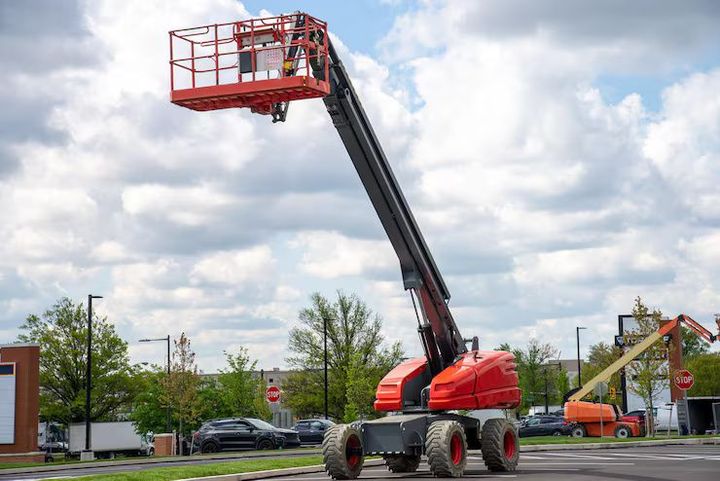
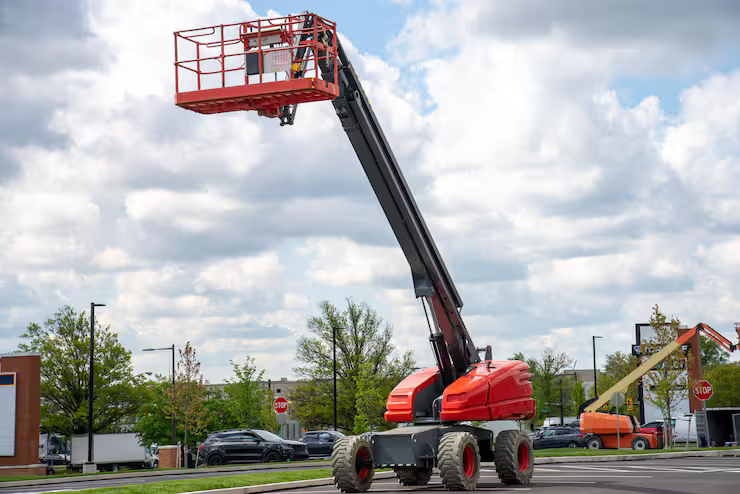
Boom lifts exist because many tasks require access to elevated spaces that ladders or scaffolding cannot safely or efficiently reach. Tasks such as building repairs, electrical installations, and window cleaning often involve heights and angles that demand flexibility and stability.
There are different types of boom lifts, including telescopic and articulating models. Telescopic lifts provide straight reach, while articulating lifts offer flexibility through multiple joints. The primary purpose of a boom lift is to improve safety and productivity by providing a stable working platform.
Importance
Boom lifts play a significant role in modern infrastructure and industrial operations. As cities grow and buildings become taller, the need for safe and efficient height access solutions continues to increase.
Traditional methods like ladders can be unstable and limit movement. In contrast, boom lifts provide controlled elevation and better positioning, reducing risks and improving efficiency.
Who Uses Boom Lifts
-
Construction workers
-
Maintenance technicians
-
Warehouse operators
-
Utility service teams
Key Benefits
-
Access to hard-to-reach areas
-
Improved efficiency at heights
-
Enhanced worker safety
-
Reduced physical strain
Boom lifts help meet modern safety standards and productivity expectations by offering reliable and adaptable solutions.
Recent Updates
The boom lift industry has experienced significant advancements, especially in technology and sustainability. In 2025, more electric-powered models were introduced to reduce emissions and support eco-friendly operations.
These electric lifts are particularly useful indoors, where noise reduction and air quality are important considerations.
Technological Advancements
-
Digital control panels
-
Real-time diagnostics
-
Remote monitoring systems
These features help operators identify issues early and improve overall performance.
Safety Improvements
-
Enhanced stability systems
-
Automatic leveling
-
Improved guardrails
Training methods have also evolved, with virtual simulations and digital platforms becoming more common for operator education.
Laws or Policies
Boom lift usage is regulated by workplace safety standards in many countries. These regulations aim to ensure safe operation and reduce workplace accidents.
In India, boom lift operations are guided by organizations such as:
-
Directorate General Factory Advice Service & Labour Institutes (DGFASLI)
-
Occupational Safety, Health and Working Conditions Code (OSH Code)
Key Regulatory Requirements
-
Mandatory operator training
-
Regular equipment inspection
-
Use of personal protective equipment (PPE)
-
Adherence to load capacity limits
International standards from OSHA and ISO also influence safety practices globally.
Regulatory Requirements Table
| Requirement | Purpose |
|---|
| Operator Training | Ensures proper handling |
| Equipment Inspection | Prevents mechanical failure |
| Load Limit Compliance | Avoids overloading risks |
| Safety Harness Usage | Protects workers from falls |
Compliance with these regulations is essential for maintaining safe work environments and avoiding legal issues.
Tools and Resources
Various tools and resources support the effective use of boom lifts. These help improve safety, efficiency, and operator knowledge.
Common Tools
-
Load capacity calculators for safe weight planning
-
Operator training platforms for certification
-
Maintenance checklists for regular inspections
-
Safety apps for alerts and guidelines
-
Instruction manuals for operational guidance
Resource Overview Table
| Tool Type | Function |
|---|
| Training Platforms | Educate operators |
| Safety Apps | Provide real-time safety guidance |
| Maintenance Checklists | Track equipment condition |
| Calculators | Assist with load and reach planning |
These resources help ensure safer and more efficient boom lift operations across different industries.
FAQs
What is the main purpose of a boom lift?
A boom lift is used to safely lift workers and tools to elevated areas for tasks like construction, maintenance, and repairs.
What are the different types of boom lifts?
The main types are telescopic boom lifts, which extend straight, and articulating boom lifts, which provide flexible movement through joints.
Is training required to operate a boom lift?
Yes, proper training is generally required to ensure safe operation and compliance with safety regulations.
What safety measures should be followed?
Common measures include using safety harnesses, inspecting equipment before use, and following load limits.
Can boom lifts be used indoors?
Yes, electric boom lifts are suitable for indoor use because they are quieter and produce no emissions.
Conclusion
Boom lifts are essential tools in modern industries, offering a safe and efficient way to work at heights. Their design provides flexibility, stability, and improved productivity across various applications.
With ongoing technological advancements and a strong focus on safety, boom lifts continue to evolve. Understanding their types, uses, and safety requirements is crucial for effective operation.
Regulations, training, and proper tools play a key role in ensuring safe usage. By following best practices and staying informed, users can maximize benefits while minimizing risks.