Explore Industrial Ventilation Systems: Air Quality and Workplace Safety
Industrial ventilation systems play an essential role in maintaining healthy indoor environments across manufacturing facilities, processing plants, warehouses, laboratories, and many other workplaces. These systems help manage airborne contaminants, regulate temperature, control humidity, and improve overall air circulation. Effective ventilation supports workplace safety while helping organizations maintain cleaner and more comfortable working conditions.
As industries continue to adopt advanced production methods, the need for efficient industrial ventilation systems has become increasingly important. Modern air quality management combines ventilation equipment with monitoring technology, energy-efficient designs, and regulatory compliance. Understanding how these systems work helps organizations make informed decisions about workplace safety and environmental responsibility.
Context
Industrial ventilation systems are engineered solutions designed to move, replace, or filter air within industrial buildings. Their primary purpose is to remove airborne contaminants such as dust, smoke, fumes, vapors, heat, and excess moisture while introducing cleaner air into the workspace.
These systems generally fall into two categories:
- General ventilation, which improves overall indoor air quality throughout a facility.
- Local exhaust ventilation, which captures contaminants near their source before they spread into the workplace.
Industrial ventilation is widely used in sectors such as manufacturing, chemical processing, food production, pharmaceuticals, mining, metal fabrication, and woodworking. Each industry has different ventilation requirements depending on the processes performed and the types of airborne particles generated.
Main Components of Industrial Ventilation Systems
Most industrial ventilation systems include several key components working together:
| Component | Primary Purpose |
|---|---|
| Air intake | Brings fresh outdoor air into the building |
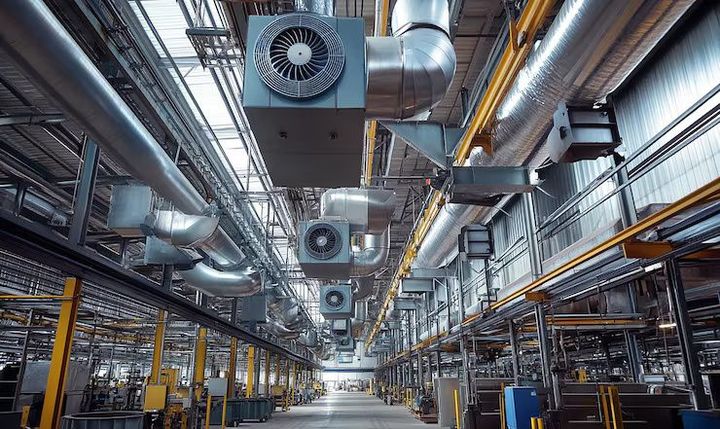
| Ductwork | Transfers air throughout the ventilation network |
| Fans and blowers | Create airflow and maintain air movement |
| Air filters | Capture dust, particles, and contaminants |
| Exhaust outlets | Remove contaminated air safely |
| Monitoring equipment | Measures airflow and indoor air quality |
Importance
Industrial ventilation systems contribute to healthier workplaces by reducing employee exposure to harmful airborne substances. Cleaner indoor air supports safer working conditions and helps maintain consistent production environments.
Poor air quality may result from:
- Dust generated during manufacturing
- Chemical vapors
- Welding fumes
- Smoke
- Heat accumulation
- Moisture and humidity
Proper ventilation helps reduce these workplace challenges by continuously moving contaminated air away from occupied areas.
Benefits for Workplace Safety
Well-designed industrial ventilation systems can provide several important advantages:
- Improved indoor air quality
- Better temperature control
- Reduced accumulation of airborne contaminants
- Lower humidity in moisture-sensitive environments
- Protection of sensitive manufacturing processes
- Improved equipment performance through cleaner operating conditions
Ventilation also supports industries that must maintain controlled environments for product quality or process consistency, such as pharmaceutical manufacturing and electronics production.
Recent Updates
Between 2024 and 2026, industrial ventilation systems have continued evolving through improvements in digital monitoring, automation, and energy efficiency. Organizations are increasingly combining ventilation equipment with smart technologies that provide continuous environmental monitoring.
One notable trend is the use of connected air quality sensors. These devices measure airborne particles, carbon dioxide, temperature, humidity, and other environmental conditions in real time. Facility managers can use this information to adjust ventilation performance when needed.
Another important development is predictive maintenance. Sensors installed on fans, motors, and filtration equipment help identify maintenance requirements before equipment performance declines. This approach helps improve system reliability and operational efficiency.
Energy efficiency has also become a major focus. Modern ventilation systems increasingly incorporate:
- Variable speed drives
- Energy recovery ventilation
- Smart airflow controls
- High-efficiency filtration technologies
Industries are also adopting digital building management systems that integrate ventilation with heating, cooling, lighting, and occupancy monitoring. These connected systems improve environmental control while supporting responsible energy management.
Air quality reporting has become more data-driven as organizations use cloud-based monitoring platforms to collect long-term environmental information. Historical data supports compliance reporting, maintenance planning, and workplace improvement initiatives.
Laws or Policies
Industrial ventilation systems are often designed according to occupational health, workplace safety, and environmental regulations. Requirements vary by country and industry, but most focus on protecting workers from hazardous airborne contaminants.
Several recognized standards provide guidance for ventilation system design and operation.
| Organization | Area of Guidance |
| OSHA | Workplace exposure and ventilation guidance |
| NIOSH | Occupational health recommendations |
| ASHRAE | Building ventilation standards |
| ISO | International management standards |
| Local environmental authorities | Air emissions and environmental compliance |
Organizations should evaluate ventilation systems regularly to ensure they continue meeting applicable regulations and workplace requirements.
Documentation commonly includes:
- Airflow measurements
- Filter maintenance records
- Equipment inspection reports
- Indoor air quality monitoring results
- Preventive maintenance schedules
Industries handling hazardous materials may also follow additional regulations specific to chemical handling, combustible dust, or biological safety.
Tools and Resources
Several educational resources help organizations understand industrial ventilation systems and workplace air quality requirements.
Useful resources include:
- OSHA guidance documents for workplace ventilation
- NIOSH publications on occupational exposure
- ASHRAE technical standards
- ISO management system documentation
- Government workplace safety agencies
- Indoor air quality assessment checklists
Many organizations also use digital resources such as:
- Airflow calculation tools
- Ventilation design templates
- Indoor air quality monitoring dashboards
- Preventive maintenance scheduling software
- Building management platforms
These resources help facility managers evaluate ventilation performance and maintain consistent workplace conditions.
FAQs
What is an industrial ventilation system?
An industrial ventilation system is a mechanical system that removes contaminated air and introduces cleaner air to improve indoor air quality and workplace safety.
Why is workplace air quality important?
Good workplace air quality helps reduce exposure to airborne contaminants, improves comfort, supports equipment performance, and contributes to healthier working environments.
How often should ventilation systems be inspected?
Inspection frequency depends on equipment type, workplace conditions, regulatory requirements, and manufacturer recommendations. Regular inspections help maintain system performance.
What industries commonly use industrial ventilation systems?
Manufacturing, mining, pharmaceuticals, food processing, laboratories, metal fabrication, chemical processing, woodworking, and electronics manufacturing commonly rely on industrial ventilation systems.
Can modern ventilation systems improve energy efficiency?
Yes. Many newer industrial ventilation systems include variable speed controls, smart sensors, energy recovery technologies, and automated airflow management that improve overall efficiency while maintaining indoor air quality.
Conclusion
Industrial ventilation systems are essential for maintaining clean air, supporting workplace safety, and managing airborne contaminants across many industries. Advances in digital monitoring, energy-efficient equipment, and smart building technologies continue improving ventilation performance and environmental management. Understanding applicable regulations, maintenance practices, and available resources helps organizations create healthier indoor environments. As industrial operations continue evolving, effective ventilation remains an important part of responsible workplace management and long-term operational reliability.