Explore X-Ray Diffractometer Technology and Key Facts
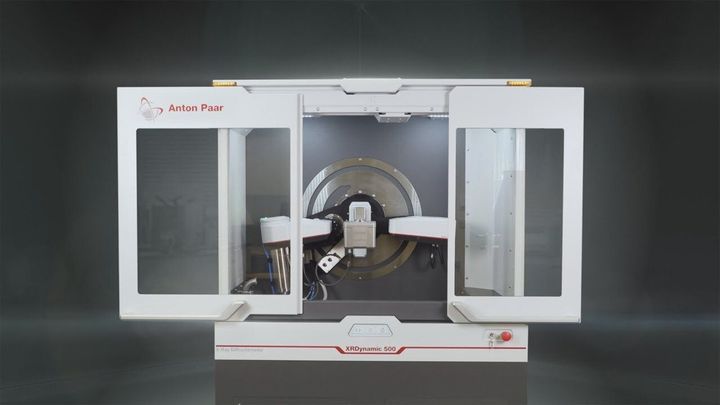
X-ray analysis plays an important role in modern science, manufacturing, and research. One of the most widely used instruments for studying the structure of materials is the X-Ray Diffractometer. This technology helps researchers understand how atoms are arranged within solids, making it valuable across many industries.
A modern XRD Machine can identify materials, examine crystal structures, and support quality control processes. From universities and research laboratories to industrial production facilities, the Laboratory X-Ray Diffractometer remains an essential tool for accurate XRD Material Analysis and scientific investigation.
Context – What It Is, Background, and Purpose
An X-Ray Diffractometer is a scientific instrument that uses X-rays to analyze the internal structure of crystalline materials. The technique behind it is known as X-ray diffraction (XRD), which was developed in the early twentieth century following discoveries about the wave nature of X-rays and crystal structures.
The basic principle involves directing X-rays toward a material sample. As the X-rays interact with the crystal lattice, they are scattered at specific angles. These diffraction patterns are recorded and analyzed to determine the material's structure.
A Laboratory X-Ray Diffractometer is commonly used to:
- Identify unknown materials
- Measure crystal structures
- Analyze phase composition
- Study material purity
- Investigate structural changes
The technology is widely used in chemistry, physics, geology, pharmaceuticals, electronics, and materials science.
Common Components of an XRD Machine
| Component | Function |
|---|---|
| X-Ray Source | Generates X-rays for analysis |
| Sample Holder | Holds the material being tested |
| Goniometer | Controls measurement angles |
| Detector | Captures diffraction signals |
| Analysis Software | Processes diffraction data |
These components work together to produce detailed information about a material's atomic arrangement.
Importance – Why It Matters and Who It Affects
The importance of XRD Material Analysis extends across numerous sectors because material properties often depend on crystal structure.
Researchers use X-ray diffraction to understand how materials behave under different conditions. Manufacturers use it to maintain consistent product quality. Educational institutions rely on the technology for scientific training and research.
Industries affected by X-Ray Diffractometer technology include:
- Pharmaceutical development
- Semiconductor manufacturing
- Mining and geology
- Construction materials
- Energy storage and batteries
- Nanotechnology research
For example, pharmaceutical companies may use an XRD Machine to verify the crystal form of a drug compound. In construction, researchers can analyze cement and mineral composition to improve material performance.
The ability to accurately identify and characterize materials helps improve product reliability, safety, and research outcomes.
Recent Updates – Trends and Developments From 2024–2026
The field of X-ray diffraction continues to evolve as technology becomes more advanced and data analysis methods improve.
Recent developments between 2024 and 2026 include greater automation and enhanced software capabilities. Modern systems can process diffraction data faster and with improved accuracy.
Key trends include:
- Artificial intelligence-assisted pattern recognition
- Faster detectors for rapid measurements
- Improved automation for laboratory workflows
- Integration with cloud-based data management
- Enhanced support for nanomaterial research
Many newer Laboratory X-Ray Diffractometer systems also feature user-friendly interfaces that simplify operation for researchers and students.
Another notable trend is the growing use of XRD Material Analysis in renewable energy research. Scientists are studying battery materials, solar cell components, and hydrogen-related technologies using advanced diffraction techniques.
Portable and compact XRD systems have also gained attention, enabling field-based material analysis in certain applications.
Emerging Research Areas
Researchers increasingly use X-ray diffraction in:
- Advanced battery development
- Sustainable construction materials
- Additive manufacturing
- Nanomaterials
- Environmental monitoring
These applications continue to expand as new materials are developed for future technologies.
Laws or Policies – Relevant Rules, Regulations, or Government Policies
Because X-Ray Diffractometer systems generate ionizing radiation, their operation is subject to safety regulations in many countries.
Organizations operating XRD equipment typically follow national radiation protection laws and workplace safety requirements. These regulations help ensure safe installation, operation, maintenance, and monitoring.
Common regulatory areas include:
- Radiation safety standards
- Equipment certification requirements
- Laboratory safety procedures
- Worker exposure monitoring
- Training requirements for operators
Many countries align their radiation protection frameworks with recommendations from international organizations such as the International Atomic Energy Agency (IAEA) and the International Commission on Radiological Protection (ICRP).
Laboratories often implement safety measures such as:
- Shielded instrument enclosures
- Safety interlock systems
- Radiation monitoring programs
- Operator training programs
- Regular equipment inspections
Compliance helps reduce radiation risks while maintaining safe research environments.
Tools and Resources – Useful Websites, Calculators, Templates, or Platforms
Several resources support learning and working with X-ray diffraction technology.
| Resource Type | Purpose |
|---|---|
| Crystallography Databases | Material identification and comparison |
| Scientific Journals | Research publications and case studies |
| XRD Software Platforms | Diffraction pattern analysis |
| Educational Courses | Training on XRD principles |
| Radiation Safety Guides | Laboratory safety information |
Useful resource categories include:
- Crystal structure databases
- Materials science learning platforms
- Scientific publication repositories
- University laboratory guides
- Government radiation safety documentation
Researchers often combine software analysis tools with diffraction databases to improve identification accuracy during XRD Material Analysis.
Educational institutions also provide online tutorials and laboratory manuals that help students understand diffraction theory and practical applications.
FAQs
What is an X-Ray Diffractometer used for?
An X-Ray Diffractometer is used to identify materials and analyze their crystal structures by measuring how X-rays interact with a sample.
How does an XRD Machine work?
An XRD Machine directs X-rays toward a material. The resulting diffraction pattern is measured and analyzed to determine structural properties.
What industries use XRD Material Analysis?
Industries such as pharmaceuticals, electronics, mining, construction, energy, and academic research commonly use XRD Material Analysis.
Is a Laboratory X-Ray Diffractometer safe?
When operated according to radiation safety regulations and laboratory procedures, a Laboratory X-Ray Diffractometer can be used safely.
Can XRD identify unknown materials?
Yes. X-ray diffraction is widely used to identify unknown crystalline materials by comparing diffraction patterns with reference databases.
Conclusion
The X-Ray Diffractometer remains one of the most important tools for material characterization and scientific research. Through accurate XRD Material Analysis, researchers can identify materials, study crystal structures, and support innovation across many industries. Recent advancements in automation, software, and detector technology continue to expand the capabilities of modern XRD Machine systems. As materials science evolves, the Laboratory X-Ray Diffractometer will continue to play a significant role in research, quality control, and technological development.