Industrial Equipment Automation: A Complete Guide to Smart Manufacturing and Efficiency
Industrial equipment automation refers to the use of advanced technologies such as robotics, control systems, sensors, and software to operate industrial machinery with minimal human intervention. The goal is to improve productivity, accuracy, safety, and efficiency in manufacturing and industrial processes.
Automation has evolved significantly over the decades. Early factories depended heavily on manual labor and mechanical systems, but modern industries now rely on advanced digital technologies.
Today, automation integrates with smart platforms, forming the foundation of Industry 4.0. These systems enable efficient, scalable, and high-precision manufacturing environments.
Industrial automation systems are widely used across industries to manage repetitive and complex operations. Common sectors include automotive, electronics, pharmaceuticals, food processing, and energy.
Key Components of Industrial Automation
Industrial automation systems consist of several essential technologies:
- Industrial robots
- Programmable Logic Controllers (PLCs)
- SCADA systems
- Sensors and actuators
- Industrial Internet of Things (IIoT) devices
- Artificial intelligence monitoring systems
These components work together to improve production consistency, reduce downtime, and enhance operational efficiency.
Why Industrial Automation Matters Today
Industrial automation has become critical as industries face growing global demand and complex supply chains. Companies must maintain high-quality production while improving speed and efficiency.
Automation helps industries overcome key operational challenges. It enables continuous production with consistent precision, ensuring better output and reduced errors.
Key Benefits of Automation
Automation supports several important improvements:
- Data-driven decision making
- Predictive maintenance
- Energy efficiency optimization
- Real-time monitoring
- Reduced manufacturing errors
It also improves workplace safety by handling hazardous tasks such as heavy machinery operation and chemical processing.
Industry Applications of Automation
Different industries apply automation in unique ways:
| Industry Sector | Automation Applications |
|---|---|
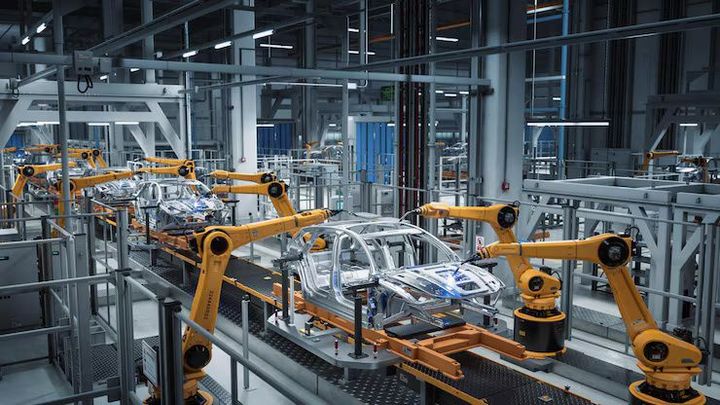
| Automotive Manufacturing | Robotic assembly and welding |
| Electronics Production | Precision PCB assembly |
| Food Processing | Automated packaging and sorting |
| Pharmaceutical Manufacturing | Sterile processing systems |
| Energy and Utilities | Smart grid monitoring |
Automation also enables flexible manufacturing systems, allowing quick adaptation to new products.
Recent Developments in Industrial Automation
Recent years, especially 2025, have seen rapid advancements in automation technologies. These innovations focus on connectivity, intelligence, and real-time data processing.
One major development is the expansion of Industrial IoT systems. These systems connect machines and sensors to collect and analyze real-time production data.
Another trend is the rise of collaborative robots, or cobots. These robots are designed to safely work alongside human operators while improving productivity.
Key Automation Trends in 2025
- Industrial IoT expansion for real-time monitoring
- AI-driven predictive maintenance systems
- Growth of collaborative robotics
- Adoption of digital twin technology
- Use of edge computing for faster processing
Automation Trends Overview
| Automation Trend | Description |
|---|---|
| Industrial IoT Expansion | Connected devices enabling real-time monitoring |
| AI-driven Predictive Maintenance | Machine learning detects equipment issues |
| Collaborative Robotics | Human-friendly robot collaboration |
| Digital Twin Technology | Virtual simulation of production systems |
| Edge Computing | Local data processing for quick decisions |
These trends reflect a shift toward intelligent and data-driven manufacturing environments.
Regulatory and Policy Considerations
Industrial automation is governed by various safety and compliance regulations. These frameworks ensure that automated systems operate safely and responsibly.
Manufacturers must follow strict guidelines to protect workers and the environment. Regulations also ensure that automation technologies meet operational standards.
Key Regulatory Areas
- Occupational safety standards
- Environmental regulations for emissions and energy
- Electrical safety requirements
- Industrial cybersecurity guidelines
Companies also comply with international standards such as ISO certifications related to quality and automation systems.
Governments are promoting Industry 4.0 initiatives to encourage digital transformation. These policies aim to boost productivity while maintaining safety and sustainability.
Tools and Digital Resources for Industrial Automation
Industrial automation relies on advanced software and digital platforms. These tools help control machines, monitor performance, and analyze production data.
Automation technologies allow engineers to design workflows and manage operations efficiently.
Common Automation Tools
- PLC programming software
- SCADA systems
- Human-machine interface (HMI) platforms
- Industrial analytics tools
- Predictive maintenance systems
Automation Tools Overview
| Tool Category | Purpose |
|---|---|
| PLC Software | Controls machines and production lines |
| SCADA Systems | Monitors large-scale industrial processes |
| HMI Platforms | Provides operator interfaces |
| Data Analytics Tools | Analyzes manufacturing performance |
| Digital Twin Platforms | Simulates equipment behavior |
These tools are often integrated with cloud platforms to provide real-time insights and improve operational efficiency.
Key Metrics Monitored in Automation
- Equipment utilization rates
- Production throughput
- Energy consumption patterns
- Maintenance alerts
These metrics help organizations maintain stable and efficient production systems.
Frequently Asked Questions
What is industrial equipment automation?
Industrial equipment automation refers to using control systems, software, and robotics to operate machinery with minimal human intervention.
How does automation improve manufacturing efficiency?
Automation increases production speed, reduces errors, and allows continuous monitoring of processes.
What industries use automation systems?
Industries such as automotive, electronics, pharmaceuticals, food processing, and energy widely use automation technologies.
What is the difference between automation and robotics?
Robotics is a part of automation. Automation includes robots along with sensors, software, and data analytics systems.
What is Industry 4.0?
Industry 4.0 refers to the integration of automation with technologies like AI, IoT, and data analytics to create smart manufacturing systems.
Conclusion
Industrial equipment automation plays a vital role in modern manufacturing. It enhances efficiency, accuracy, and safety by integrating robotics and intelligent systems.
Recent advancements such as AI, IIoT, and digital twin technology are transforming industrial operations. These innovations support smarter and more resilient production environments.
Regulatory frameworks ensure that automation systems remain safe and sustainable. As industries continue evolving, automation will remain a key driver of global industrial growth.