Industrial Food Manufacturing Equipment Guide: Understanding Modern Processing Systems
Industrial food manufacturing equipment plays an important role in producing the food products people use every day.
From preparing raw ingredients to packaging finished items, these systems help maintain consistent production while supporting food quality and safety. Food processing equipment has developed over many years as food demand has grown and manufacturing methods have become more efficient.
Today, commercial food processing machines are used in facilities that produce bakery products, dairy items, beverages, frozen foods, snacks, and many other products. Modern food manufacturing machinery combines mechanical equipment with digital monitoring and automation to simplify production steps. Understanding how these systems work helps explain how food moves from raw ingredients to packaged products.
Context
Understanding Industrial Food Manufacturing Equipment
Industrial food manufacturing equipment includes machines and systems designed to process, mix, cook, cool, package, and transport food products during production. These machines replace many repetitive manual tasks while supporting consistent production across different food categories.
Food manufacturing has evolved from small-scale manual operations into automated production facilities. Advances in engineering have introduced industrial food equipment that improves workflow while supporting food safety standards. Equipment may range from simple industrial food mixers to complete automated food processing systems operating throughout an entire production line.
The equipment used depends on the type of food being produced. A bakery uses different machinery than a dairy or beverage facility, although many production stages such as mixing, conveying, inspection, and packaging share similar principles.
Importance
Why Modern Food Processing Equipment Matters
Food manufacturing supports growing populations by producing large quantities of food efficiently. Food processing plant equipment helps manufacturers maintain consistent production while reducing interruptions and improving handling of ingredients.
Several groups benefit from these systems:
- Manufacturers maintain consistent processing methods.
- Workers operate equipment designed for controlled production tasks.
- Consumers receive packaged food prepared under regulated production conditions.
- Retail businesses depend on reliable product availability.
Food manufacturing automation also helps address challenges such as labor shortages, production efficiency, product consistency, and traceability. Automated systems can record production information, monitor temperatures, and assist with quality checks throughout the manufacturing process.
Common Types of Equipment
| Equipment Type | Primary Purpose |
|---|---|
| Industrial food mixers | Blend ingredients evenly |
| Conveyors | Move ingredients between production stages |
| Heating and cooking systems | Cook or process food products |
| Cooling equipment | Reduce product temperature safely |
| Food packaging machinery | Seal, label, and prepare products for distribution |
| Inspection systems | Check product quality and packaging accuracy |
Recent Updates
Current Trends in Food Manufacturing
Recent developments continue to improve industrial food manufacturing equipment through increased automation and digital technology. Rather than relying entirely on manual monitoring, many facilities now integrate sensors that collect operational data throughout production.
Several current trends include:
- Wider use of automated food processing systems for repetitive production steps.
- Greater adoption of food factory automation that connects multiple machines through centralized software.
- Improved energy-efficient motors and production equipment.
- Digital monitoring that tracks machine performance and maintenance needs.
- Expanded use of robotic systems for packaging and pallet handling.
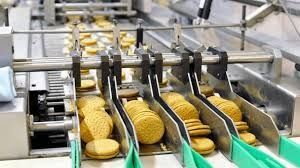
Industrial bakery equipment has also become more flexible, allowing manufacturers to adjust production settings more easily when preparing different recipes or product sizes.
Laws or Policies
Regulations That Shape Food Manufacturing
Food manufacturing equipment operates within food safety regulations established by government authorities. These regulations help protect consumers by requiring hygienic production environments and controlled manufacturing processes.
In many countries, food manufacturers follow standards related to:
- Equipment cleanliness and sanitation.
- Food contact material safety.
- Product traceability.
- Temperature monitoring.
- Hazard analysis and preventive controls.
Manufacturers may also follow internationally recognized food safety management systems that support consistent production practices across different markets. Government inspections and certification programs help verify compliance with applicable regulations.
Tools and Resources
Helpful Resources for Learning
People interested in food manufacturing can use several educational resources to understand equipment and production systems.
Useful resources include:
- Food safety authority websites explaining manufacturing regulations.
- Equipment manuals provided by machinery manufacturers.
- Computer-aided design (CAD) software used for factory layouts.
- Production planning software for manufacturing workflows.
- Maintenance management platforms that organize equipment inspections.
- Food engineering publications covering processing technologies.
- Energy consumption calculators that estimate equipment efficiency.
These resources help students, researchers, manufacturers, and facility planners understand different aspects of industrial food equipment and food manufacturing machinery.
FAQs
What is industrial food manufacturing equipment?
Industrial food manufacturing equipment includes machines used to prepare, process, transport, cook, package, and inspect food products within manufacturing facilities.
What is the difference between food processing equipment and commercial food processing machines?
Food processing equipment is a broad term covering all machinery involved in food production. Commercial food processing machines generally refer to equipment designed for continuous production in manufacturing facilities.
How do automated food processing systems improve production?
Automated food processing systems help coordinate multiple production stages, monitor equipment performance, improve consistency, and reduce repetitive manual operations while maintaining controlled processing conditions.
What types of food packaging machinery are commonly used?
Food packaging machinery may include filling machines, sealing equipment, labeling systems, wrapping machines, weighing equipment, and automated palletizing systems depending on the product type.
Where is industrial bakery equipment commonly used?
Industrial bakery equipment is commonly used in facilities producing bread, cakes, pastries, cookies, pizza bases, and similar baked products. These systems often include mixers, dough handling equipment, proofing chambers, ovens, cooling conveyors, and packaging machinery.
Conclusion
Industrial food manufacturing equipment supports modern food production by combining mechanical systems, automation, and food safety practices throughout manufacturing operations. Food processing equipment continues to evolve through digital monitoring, improved efficiency, and connected production systems. Understanding the different types of machinery, current trends, regulations, and educational resources provides a clearer view of how modern food manufacturing operates while maintaining consistent production and quality standards.