Industrial Chemicals Overview: Key Categories, Functions, and Common Applications
Industrial chemicals are substances used to support manufacturing, processing, cleaning, water management, material production, and many other industrial activities.
They range from widely used bulk industrial chemicals to highly specialized formulations designed for a particular process. An industrial chemical manufacturer may produce basic chemical materials, while a specialty chemical manufacturer focuses on formulations with specific functional properties.
The modern chemical industry developed alongside advances in agriculture, construction, textiles, metals, transportation, energy, and consumer manufacturing. As production systems became more complex, industries required chemicals that could control reactions, remove contaminants, protect materials, adjust water quality, and improve process consistency.
Main categories of industrial chemicals
Industrial chemicals can be grouped according to their composition, production volume, or intended function. Some materials are produced in very large quantities and used as basic inputs, while others are made in smaller volumes for narrowly defined applications.
Common categories include:
- Bulk industrial chemicals, which are produced in large quantities for broad industrial use.
- Specialty chemicals, which are formulated to perform specific functions in particular processes.
- Industrial cleaning chemicals, which help remove oils, residues, scale, and other unwanted materials.
- Water treatment chemicals, which support the management of water quality in industrial systems.
- Wastewater treatment chemicals, which assist with contaminant removal and treatment processes.
- Industrial process chemicals, which support manufacturing steps such as separation, reaction control, surface treatment, and material preparation.
- High purity industrial chemicals, which are produced with tightly controlled impurity levels for sensitive applications.
How industrial chemical production works
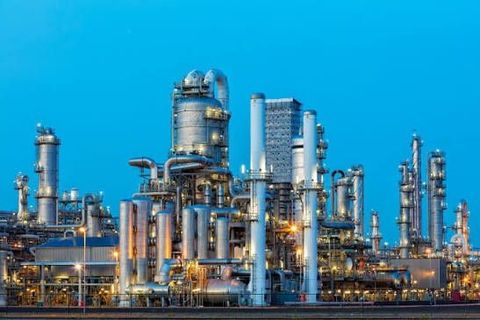
Large scale chemical manufacturing generally involves controlled reactions, separation processes, purification, testing, storage, and transportation. The exact production method depends on the chemical involved and its intended application.
Specialty chemical production may require smaller batches, precise formulations, and detailed quality controls. Custom chemical manufacturing involves creating a formulation according to defined technical requirements. Contract chemical manufacturing and chemical toll manufacturing are production arrangements in which manufacturing activities are carried out according to agreed specifications and responsibilities.
| Chemical category | Main function | Common application areas |
|---|---|---|
| Bulk industrial chemicals | Basic material input | Manufacturing, construction, processing |
| Specialty chemicals | Specific functional performance | Coatings, electronics, textiles, materials |
| Industrial cleaning chemicals | Residue and contaminant removal | Equipment, facilities, production systems |
| Water treatment chemicals | Water quality management | Cooling systems, boilers, industrial water |
| Wastewater treatment chemicals | Contaminant separation and treatment | Industrial wastewater systems |
| Industrial process chemicals | Process control and support | Manufacturing and material processing |
| High purity industrial chemicals | Controlled chemical composition | Electronics, laboratories, precision processes |
Importance
Industrial chemicals are important because many everyday products and essential systems depend on controlled chemical processes. Building materials, electronics, textiles, packaging, transportation equipment, treated water, and many manufactured goods involve chemicals at one or more stages of production.
Their importance is not limited to factories. Industrial chemical use can influence water quality, environmental management, workplace conditions, product consistency, and the efficiency of manufacturing systems.
Supporting modern production
Industrial process chemicals can help control acidity, prevent unwanted deposits, separate materials, improve surface preparation, or support chemical reactions. These functions allow production systems to operate under defined conditions.
Specialty chemicals are particularly important when a general-purpose material cannot provide the required function. A specialty chemical manufacturer may work with formulations designed for properties such as corrosion control, adhesion, stability, water resistance, or process compatibility.
Water and wastewater management
Water is widely used in industrial facilities for cooling, washing, processing, steam generation, and other activities. Water treatment chemicals may be used to manage scale, corrosion, suspended particles, and other water-quality concerns.
Wastewater treatment chemicals support processes that separate or reduce certain contaminants before water is discharged, reused, or sent for additional treatment. The exact treatment approach depends on the composition of the wastewater and applicable environmental requirements.
Cleaning and equipment condition
Industrial cleaning chemicals are used where ordinary household cleaning methods may not be suitable. Industrial equipment can accumulate oils, mineral deposits, process residues, and other materials that affect operation or product quality.
Cleaning chemistry must be matched carefully to the material being cleaned. A formulation that works on one surface may damage another, which is why compatibility information, concentration controls, and handling instructions are important.
Managing safety and environmental concerns
Industrial chemicals can create risks when they are stored, mixed, transported, or handled incorrectly. Some substances may be corrosive, reactive, flammable, or harmful through certain types of exposure.
Clear labels, safety data sheets, suitable storage arrangements, worker training, ventilation, spill planning, and appropriate protective equipment are common parts of chemical management. These measures help organizations understand chemical hazards and establish controlled handling procedures.
Recent Updates
From 2024 through 2026, the general direction of the industrial chemicals sector has continued to focus on efficiency, traceability, environmental management, and greater control over chemical use. Digital systems are increasingly being used to track inventories, production conditions, quality information, and documentation.
Greater focus on process efficiency
Manufacturers are examining ways to reduce unnecessary material use and improve control over chemical processes. Automated dosing equipment, digital sensors, and monitoring systems can help facilities measure chemical conditions more consistently.
In specialty chemical production, data systems can support batch records, formulation control, quality checks, and traceability. These tools are particularly relevant where small changes in composition may affect the final material.
Changes in water management
Industrial water management continues to receive attention because water availability and discharge requirements affect many regions. Facilities are increasingly examining water reuse, closed-loop systems, improved filtration, and more precise chemical dosing.
Water treatment chemicals and wastewater treatment chemicals remain part of many treatment systems, but their use is increasingly combined with membrane systems, sensors, biological treatment, filtration, and automated monitoring.
Development of lower-impact processes
Another general trend is the examination of chemical processes that use fewer hazardous inputs, generate less waste, or operate with improved energy efficiency. The suitability of any alternative depends on technical performance, safety requirements, available infrastructure, and the specific industrial process.
High purity industrial chemicals also remain important in sectors that require tightly controlled materials. Electronics, precision manufacturing, analytical work, and advanced material production can require detailed impurity monitoring and controlled production environments.
Flexible manufacturing arrangements
Custom chemical manufacturing, contract chemical manufacturing, and chemical toll manufacturing continue to support companies that require specific formulations or additional production capacity. These arrangements may involve raw material responsibilities, production instructions, quality requirements, packaging specifications, and documentation.
Clear technical agreements are important because responsibilities can vary significantly between projects. Quality controls and regulatory duties also depend on the chemical, its intended use, and the location where production takes place.
Laws or Policies
Industrial chemicals are shaped by rules covering manufacturing, worker protection, environmental management, transportation, labeling, storage, and waste handling. In India, chemical activities may fall under several national and state-level legal frameworks depending on the substance and industrial activity involved.
Chemical safety and environmental controls
Environmental rules can apply to air emissions, wastewater discharge, hazardous waste, and the handling of certain chemical materials. Industrial facilities may need approvals or permissions from relevant pollution control authorities based on their activities and location.
Workplace safety requirements also influence chemical storage and handling. Facilities generally need systems for hazard communication, emergency planning, safe operating procedures, and appropriate protective measures.
Classification and documentation
Safety data sheets are widely used to communicate information about chemical hazards, handling, storage, exposure controls, and emergency measures. Labels may include hazard symbols, signal words, and precautionary information based on the classification system applied to the chemical.
The Globally Harmonized System of Classification and Labelling of Chemicals provides an international framework for consistent hazard communication. National requirements determine how these principles are applied within a particular jurisdiction.
Transportation and waste management
The movement of hazardous chemicals may be subject to packaging, labeling, vehicle, documentation, and emergency-response requirements. Different rules can apply depending on the type and quantity of material being transported.
Chemical waste also requires appropriate identification and management. Waste streams should not be assumed to have the same properties as the original chemical because reactions, contamination, or process changes can alter their characteristics.
Regulatory requirements can change, and the applicable rules depend on the substance, quantity, location, and activity. Official government and regulatory sources are important references for current requirements.
Tools and Resources
Several tools and information resources can help people understand industrial chemicals and their management. These resources are useful for identifying hazards, reviewing technical information, organizing records, and supporting process calculations.
Safety data sheets and chemical databases
A safety data sheet provides structured information about a chemical substance or mixture. Common sections cover identification, hazards, composition, first-aid measures, fire response, accidental release measures, handling, storage, exposure controls, and physical properties.
Chemical databases maintained by scientific institutions and government bodies can provide information about chemical identity, properties, classifications, and research references. Information should be checked against the exact substance and formulation being used.
Process and water calculators
Industrial facilities may use calculators for dilution, concentration, flow rate, dosing, tank volume, and unit conversion. These tools can help with basic planning and documentation, although calculations should use accurate process data and appropriate units.
For water systems, monitoring tools may track factors such as pH, conductivity, temperature, flow, turbidity, and other relevant measurements. The required parameters depend on the process and water-quality objectives.
Documentation templates
Chemical inventory templates can record information such as chemical name, quantity, storage location, hazard classification, and document references. Inspection checklists may also help organize routine reviews of labels, containers, storage areas, and emergency equipment.
Useful resource categories include:
- Government environmental and workplace safety portals
- Pollution control authority guidance
- Safety data sheet libraries
- Chemical property databases
- Unit conversion and concentration calculators
- Chemical inventory templates
- Water-quality monitoring platforms
- Hazard classification references
These tools support information management, but they do not replace applicable legal requirements or qualified technical assessment.
FAQs
What are industrial chemicals used for?
Industrial chemicals are used in manufacturing, cleaning, water treatment, material processing, surface preparation, separation, and many other industrial activities. Their function depends on their chemical properties and the process in which they are used.
What is the difference between bulk industrial chemicals and specialty chemicals?
Bulk industrial chemicals are generally produced in large quantities and used as basic industrial inputs. Specialty chemicals are designed for specific functions or performance requirements and may involve more specialized formulations.
What do water treatment chemicals and wastewater treatment chemicals do?
Water treatment chemicals help manage water conditions such as scale, corrosion, suspended matter, and other quality factors. Wastewater treatment chemicals can support contaminant separation, particle removal, pH control, and other treatment stages.
How does custom chemical manufacturing differ from chemical toll manufacturing?
Custom chemical manufacturing generally involves producing a chemical according to defined formulation or performance requirements. Chemical toll manufacturing usually involves a production arrangement in which one party processes materials according to agreed technical terms. Exact responsibilities vary by agreement.
Why are high purity industrial chemicals important?
High purity industrial chemicals contain tightly controlled levels of unwanted substances. They are important in processes where small amounts of impurities can affect reactions, material properties, analytical results, or precision manufacturing.
Conclusion
Industrial chemicals support a wide range of manufacturing, water management, cleaning, and processing activities. Their categories include bulk materials, specialty chemicals, treatment chemicals, process chemicals, and high-purity substances, each with different functions and handling requirements. Modern chemical production increasingly uses digital monitoring, detailed documentation, process controls, and environmental management practices. Understanding chemical categories, applications, hazards, and regulatory responsibilities provides a useful foundation for understanding how industrial chemical systems operate.