Industrial Plastic Containers Guide: Understanding Types, Uses, and Key Features
Industrial plastic containers are durable containers designed to store, organize, protect, and move materials in factories, warehouses, farms, laboratories, distribution centers, and other working environments.
They developed as an alternative to materials such as wood and metal in applications where low weight, moisture resistance, repeated handling, and easy cleaning are important.
Modern industrial storage containers come in many shapes and sizes. Small industrial plastic bins may hold tools or components, while bulk plastic containers can handle larger quantities of raw materials, finished goods, liquids, or recyclable materials. Common materials include high-density polyethylene (HDPE) and polypropylene (PP), which can provide resistance to impact, moisture, and many everyday industrial substances.
Common Types and Their Functions
Different container designs support different handling and storage needs.
| Container Type | Common Use | Key Feature |
|---|---|---|
| Industrial plastic bins | Parts and tools | Easy organization |
| Large plastic storage containers | Equipment and materials | High internal capacity |
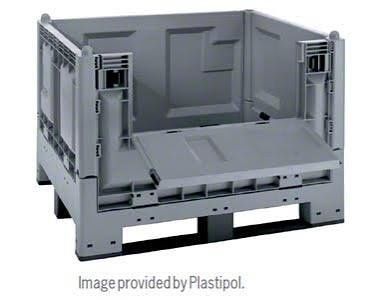
| Plastic pallet containers | Warehousing and transport | Forklift-compatible base |
| Chemical storage containers | Compatible liquids and substances | Material resistance |
| Reusable industrial containers | Repeated transport cycles | Durable construction |
| Industrial bulk containers | High-volume materials | Large holding capacity |
Heavy duty plastic containers often have reinforced walls, lids, handles, or stacking features. Heavy duty bulk storage containers may also include pallet-style bases that allow movement with forklifts or pallet-handling equipment.
Importance
Industrial plastic containers matter because safe storage and organized material movement affect many parts of daily production and distribution. Manufacturers, warehouse operators, food processors, agricultural facilities, recycling centers, and logistics teams may all use plastic material handling containers.
Proper container selection can help reduce product damage, contamination, moisture exposure, and disorganized storage. Reusable industrial containers may also reduce reliance on single-use packaging in systems where containers can be collected, cleaned, inspected, and used again.
Key Features to Consider
Important characteristics may include:
- Material compatibility: The plastic should be suitable for the material stored inside.
- Load capacity: The container must support the intended weight without unsafe deformation.
- Stackability: Some industrial packaging containers are designed to stack securely.
- Handling method: Containers may need handles, wheels, forklift entry points, or pallet bases.
- Cleaning needs: Smooth internal surfaces can make routine cleaning easier.
- Environmental conditions: Temperature, sunlight, moisture, and chemical exposure can affect plastic performance.
A plastic container manufacturer may produce containers for general storage or specialized industrial environments. However, suitability depends on the container material, design, intended contents, and operating conditions.
Recent Updates
From 2024 through 2026, the general trend in industrial plastic containers has focused on reuse, material efficiency, traceability, and circular manufacturing. More organizations are examining how containers can remain in circulation for longer periods rather than being discarded after limited use.
Digital tracking is also becoming more common in industrial storage systems. Barcodes, QR codes, RFID tags, and warehouse management platforms can help identify containers, record movement, and improve inventory visibility. Some plastic pallet containers and industrial bulk containers are designed with tracking areas or identification features.
Another trend involves recycled plastic content and designs that support easier sorting at the end of a container’s usable life. These developments are influenced by broader packaging and waste-reduction policies.
Laws or Policies
Rules for industrial plastic containers vary by country and by the material being stored. Because no target country was specified, international principles provide a general reference point.
Chemical storage containers may be affected by workplace safety rules, hazardous material classification systems, transport requirements, and environmental regulations. Industrial chemical storage systems often require clear labeling, compatible materials, secure closures, and procedures for spills or leaks.
Food-related applications may have additional requirements concerning materials that come into contact with food. Transported hazardous materials can also fall under international frameworks connected with the United Nations Recommendations on the Transport of Dangerous Goods.
Plastic waste and packaging policies are increasingly encouraging recycling, material recovery, and producer responsibility. Organizations using industrial packaging containers may therefore need to understand both product-safety rules and local waste-management requirements.
Tools and Resources
Several practical resources can support container selection and management. Material compatibility charts can help compare plastics with chemicals, while load-capacity documents provide information about weight limits and stacking conditions.
Useful resources include:
- Chemical compatibility charts for HDPE, PP, and other plastics
- Safety Data Sheets for understanding stored substances
- Warehouse inventory platforms for tracking industrial plastic bins
- Load and volume calculators for estimating storage requirements
- Container inspection checklists for cracks, deformation, closures, and labels
- Regulatory websites covering workplace safety, transport, packaging, and waste management
Technical documentation from a plastic container manufacturer can also explain dimensions, material type, temperature limits, and intended applications.
FAQs
What are industrial plastic containers used for?
Industrial plastic containers are used for storing, organizing, handling, and transporting parts, materials, liquids, waste, and finished products in industrial environments.
What makes heavy duty plastic containers different?
Heavy duty plastic containers generally use thicker walls, reinforced structures, stronger bases, or specialized designs to handle repeated movement and heavier loads.
What are plastic pallet containers?
Plastic pallet containers are large containers with integrated pallet-style bases. They can often be moved using forklifts or pallet-handling equipment.
Can chemical storage containers hold every type of chemical?
No. Plastic compatibility varies by chemical, concentration, temperature, and exposure time. The container material and technical documentation should be checked for the intended substance.
Are reusable industrial containers suitable for repeated transport?
Many reusable industrial containers are designed for repeated handling cycles. Their continued suitability depends on inspection, cleaning, load conditions, and the absence of significant damage.
Conclusion
Industrial plastic containers support storage, organization, material handling, and transportation across many industries. Designs range from small industrial plastic bins to heavy duty bulk storage containers and specialized industrial chemical storage systems. Material compatibility, load capacity, handling methods, and regulatory requirements are important factors in understanding how these containers are used. Current trends increasingly focus on reuse, tracking, recycling, and efficient material management.