Industrial Production Systems Tools: Guide to Modern Manufacturing
Industrial production systems are organized methods used to transform raw materials, components, energy, and information into finished products. They bring together manufacturing equipment, production processes, workers, control systems, software, and quality procedures.
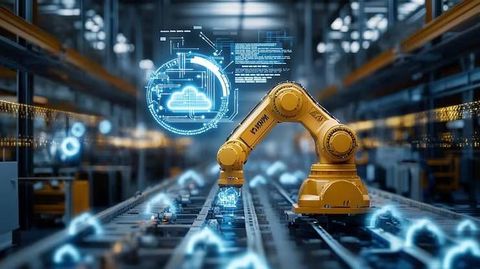
Traditional factories often relied on individual machines and manual monitoring. Modern manufacturing environments increasingly connect machines and production data so that different parts of a production process can work together.
A production system may include:
- CNC machines and machining equipment
- Assembly and packaging equipment
- Industrial robots and automated handling systems
- Sensors and programmable controllers
- Manufacturing execution systems
- Production planning software
- Quality inspection equipment
- Industrial data and analytics tools
- Energy monitoring systems
- Maintenance and asset-management tools
The main purpose is not simply to automate a factory. A well-designed production system coordinates resources so that manufacturing can be more predictable, measurable, safe, and adaptable.
This approach is closely associated with Industry 4.0 and smart manufacturing. The World Economic Forum's 2026 Intelligent Industrial Operations Outlook describes a continuing shift from traditional automation toward connected and increasingly intelligent industrial operations, including the use of AI and physical AI.
Importance: Why Modern Production Systems Matter
Manufacturing companies operate in environments where product requirements, production volumes, energy use, supply conditions, and quality expectations can change.
Industrial production systems help organizations manage these challenges through structured processes and measurable information.
One important area is production efficiency. Production planning tools can help coordinate materials, machine capacity, labor availability, and production schedules.
Another important area is quality control. Sensors, inspection equipment, statistical process control, and automated testing can identify variations earlier in the production process.
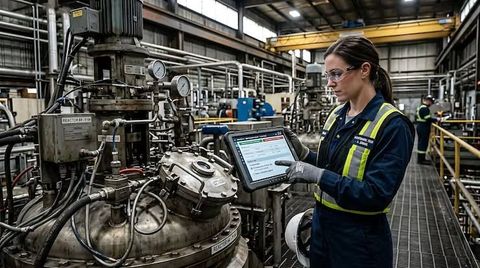
Predictive maintenance is also becoming increasingly important. Machine data can be monitored for unusual vibration, temperature, pressure, current, or operating patterns. This can help maintenance teams investigate possible equipment problems before they develop into larger production interruptions.
Modern systems also support industrial automation. Automated machines can perform repetitive or highly controlled operations while people supervise processes, handle exceptions, maintain equipment, and make operational decisions.
Energy management is another major consideration. Manufacturing facilities can monitor electricity, compressed air, heating, cooling, and other energy-intensive processes. ISO 50001 provides a framework for establishing and improving an energy management system.
For general manufacturing operations, the major benefits of structured production systems can include:
- Better production visibility
- More consistent process control
- Improved quality monitoring
- Easier production planning
- More organized maintenance
- Greater equipment utilization
- Better energy measurement
- Stronger workplace safety controls
- Faster identification of process problems
- More informed operational decisions
These benefits depend on proper implementation. Automation or software alone does not automatically improve manufacturing performance.
Recent Updates: Manufacturing Trends in 2026
The manufacturing technology landscape has continued to develop during 2025 and 2026, with greater attention on connected production, artificial intelligence, industrial data, and resilient operations.
A notable development is the growing discussion around AI-enabled industrial operations. The World Economic Forum's April 2026 outlook describes manufacturers moving beyond isolated technology pilots toward operating models where people and intelligent systems work together in real time.
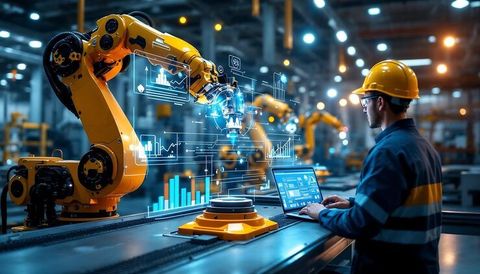
Digital twins are also becoming more relevant. A digital twin represents a physical machine, process, production line, or facility in a digital environment. Depending on its design, it can be used for monitoring, simulation, testing, and operational analysis.
Industrial IoT remains another important trend. Connected sensors can collect information from production equipment and transfer it to monitoring or analytics platforms. This creates greater visibility across machines and processes.
AI-assisted quality inspection is gaining attention as computer vision and machine-learning techniques become more capable. Such systems can analyze images or sensor information to identify certain types of defects. Human review can remain important, especially for complex or safety-critical decisions.
Energy and environmental performance are also receiving increased attention. In March 2026, ISO published ISO 50100:2026, focused on energy management systems and energy savings for decarbonization. The standard addresses energy-related greenhouse-gas emissions and applies across different types and sizes of organizations.
These developments show that modern production systems are moving toward greater connectivity and data use. However, technology selection should still be based on the actual production process, safety requirements, data quality, workforce capabilities, and operational objectives.
Laws or Policies: Safety, Machinery, and Energy Requirements
Industrial production systems are affected by different laws and standards depending on the country, product category, factory activity, and destination market.
Machinery safety is particularly important because production systems often combine machines, control equipment, software, electrical systems, and automated movement.
In the European Union, Regulation (EU) 2023/1230 establishes health and safety requirements for machinery and related products. The regulation is scheduled to apply from 20 January 2027, replacing the existing Machinery Directive framework for products within its scope.
The new framework also addresses areas relevant to modern production systems, including AI-powered safety functions and cybersecurity considerations for compliance-related software and safety control systems.
Another important area is energy management. ISO 50001:2018 provides a structured framework for improving energy performance through an energy management system. Its 2024 amendment introduced climate-action considerations, while ISO 50100:2026 provides a newer framework specifically addressing energy savings and decarbonization.
Manufacturers should distinguish between legal requirements and voluntary standards. Laws and regulations can establish mandatory requirements, while standards may provide structured methods for managing quality, safety, energy, or other processes.
Requirements can vary significantly by country and industry. Organizations should therefore verify the rules that apply to their particular machinery, facility, product, and market.
Tools and Resources for Industrial Production Systems
A modern manufacturing environment can use many different tools. The appropriate combination depends on the production model and operational requirements.
| Tool or Resource | Main Purpose |
|---|---|
| Production planning software | Scheduling materials, machines, and production activities |
| Manufacturing execution system | Monitoring and coordinating shop-floor production |
| PLC systems | Controlling industrial machinery and processes |
| SCADA platforms | Supervisory monitoring and industrial data visualization |
| Industrial IoT sensors | Collecting machine and process information |
| Digital twin tools | Modeling and analyzing physical production systems |
| Computer vision | Automated visual inspection and measurement |
| Predictive analytics | Identifying patterns related to equipment or production |
| Energy monitoring tools | Measuring electricity and other energy use |
| Maintenance management software | Organizing inspections, maintenance, and equipment records |
| Statistical process control | Monitoring process variation and quality |
| Simulation software | Testing production layouts and processes digitally |
Useful learning resources can also include machinery manuals, technical standards, process documentation, safety checklists, maintenance templates, production dashboards, energy-monitoring worksheets, and quality-control forms.
A practical approach is to start with a clearly defined production problem rather than selecting technology simply because it is new.
FAQs: Industrial Production Systems Tools
What are industrial production systems?
Industrial production systems are coordinated combinations of machines, people, processes, software, controls, and resources used to manufacture products. They can range from simple production lines to highly connected smart factories.
What is the difference between automation and a production system?
Automation focuses on performing tasks with limited manual intervention. A production system is broader and includes equipment, people, planning, quality control, maintenance, information flow, and other processes that work together.
How does Industry 4.0 affect manufacturing?
Industry 4.0 connects physical production equipment with sensors, software, industrial networks, analytics, and other digital technologies. The goal is greater visibility, coordination, and adaptability across production activities.
Why are digital twins used in manufacturing?
Digital twins can represent physical machines, production lines, or processes in a digital environment. Depending on the application, they can support simulation, monitoring, analysis, and process planning.
Are industrial production systems affected by regulations?
Yes. Machinery safety, workplace safety, electrical requirements, environmental rules, energy management, data protection, and product-specific regulations can affect manufacturing operations. Requirements depend on the country, industry, equipment, and intended market.
Conclusion: Building More Connected Manufacturing Systems
Industrial production systems provide the foundation for organized and measurable manufacturing. They combine equipment, people, processes, controls, software, and data to support production activities.