Key Information Every Processing Engineer Should Know About Industrial Ball Mills
Understanding how an industrial ball mill operates is essential for any processing engineer working in mineral processing, cement manufacturing, or chemical production. These cylindrical grinding machines reduce coarse materials into ultra-fine powders through impact and attrition.
By mastering the core principles of ball milling, engineers can improve grinding efficiency, maintain consistent particle sizes, and extend equipment longevity.
Context
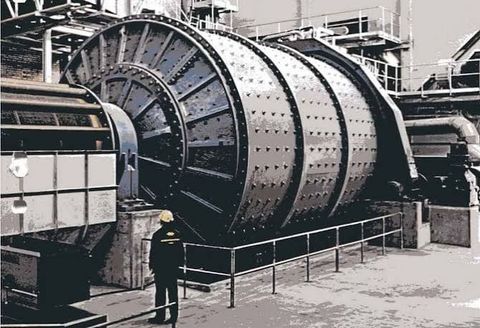
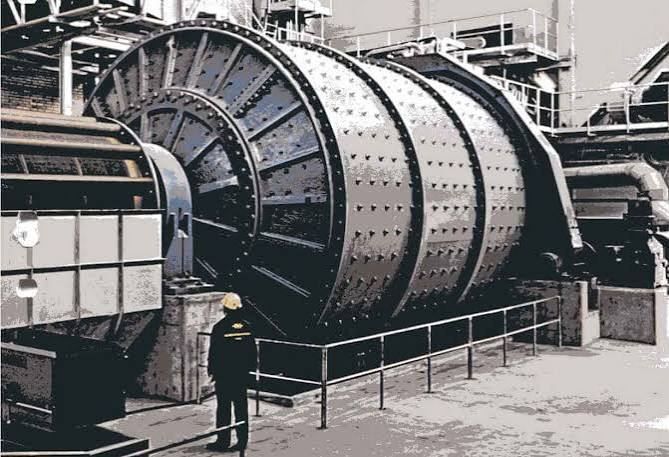
An industrial ball mill is a type of grinder used to blend and grind materials into fine powders for use in mineral dressing processes, paints, pyrotechnics, ceramics, and selective laser sintering. The machine consists of a hollow cylindrical shell rotating about its horizontal axis, partially filled with grinding media such as steel, ceramic, or rubber balls. As the cylinder turns, the media is lifted up the rising side of the shell and cascades down onto the material feed.
The concept of tumbling mills dates back to the late nineteenth century when early mining operations needed a continuous method to liberate valuable minerals from host rock. Over the decades, designs evolved from simple batch-operated drums to massive continuous-flow systems driven by gearless ring motors. Today, ball mills serve as the primary secondary or tertiary grinding stage in comminution circuits worldwide.
| Mill Component | Primary Function | Common Materials |
| Cylindrical Shell | Houses the grinding media and material charge | Rolled carbon steel plate |
| Internal Liners | Protects the shell from wear and lifts the grinding media | High-manganese steel, rubber, ceramic |
| Grinding Media | Crushes and abrades the feed material through impact | Forged steel, high-chrome alloy, alumina |
| Trunnion Bearings | Supports the rotating weight of the drum and charge | White metal, bronze, roller bearings |
| Drive System | Provides rotational torque to maintain critical speed | Girth gear and pinion, gearless motor |
Importance
Grinding is typically the most energy-intensive stage in any mineral or material processing plant, often accounting for over half of a facility's total electrical consumption. A poorly calibrated industrial ball mill can waste massive amounts of electricity while producing uneven particle distributions that ruin downstream separation processes. Optimizing mill parameters directly translates to lower energy usage and higher recovery rates of valuable end products.
These operational dynamics affect a wide range of professionals across heavy industry. Process engineers rely on accurate milling data to balance throughput against target fineness, while plant metallurgists monitor particle liberation to maximize chemical leaching or flotation yields. Maintenance teams also depend on predictable liner and media wear rates to schedule shutdowns safely and avoid unplanned mechanical failures.
Recent Updates
Modern comminution engineering has shifted heavily toward precision monitoring and energy conservation. Processing facilities are increasingly moving away from manual sampling in favor of automated digital twins and real-time particle size analyzers. These upgrades allow engineers to adjust feed rates, water addition, and mill speeds instantaneously.
Key Technological Developments
Acoustic and vibration sensors mounted on mill shells now detect changes in internal charge volume, alerting operators before detrimental media-on-liner impacts occur.
High-pressure grinding rolls and vertical stirred mills are frequently paired upstream or downstream of traditional ball mills to reduce overall circuit energy demands.
Discrete Element Method simulation software enables engineers to model lifter bar angles and media trajectories virtually before committing to physical liner modifications.
Variable frequency drives have become standard installations, giving engineers precise control over rotational speed to match fluctuating ore hardness.
Laws or Policies
Operating heavy rotating machinery involves strict adherence to occupational safety, environmental, and energy efficiency frameworks. Processing engineers must design and run ball milling circuits within parameters established by national and international regulatory bodies.
Occupational Health and Safety
Workplace safety agencies such as OSHA in the United States and the Health and Safety Executive in the United Kingdom enforce strict machine guarding standards around rotating shells and exposed drive gears.
Lockout and tagout protocols are legally mandated during liner replacements or media recharging to prevent accidental mill rotation while personnel work inside the drum.
Noise exposure regulations require acoustic enclosures or mandatory hearing protection, as industrial ball mills routinely generate sound levels exceeding 85 decibels.
Environmental and Dust Control
Air quality statutes regulate particulate matter emissions, requiring dry grinding circuits to integrate baghouse dust collectors and negative-pressure ventilation hoods.
Wet grinding operations must comply with water discharge and tailings containment laws to prevent heavy metals or chemical reagents from entering local watersheds.
International energy management standards, such as ISO 50001, encourage industrial facilities to audit high-draw equipment like grinding mills and document continuous efficiency improvements.
Tools and Resources
Processing engineers have access to several established mathematical models, software suites, and industry platforms to evaluate and optimize ball mill performance. Utilizing these resources helps standardize calculations across different plant sites.
Bond Work Index Calculators: Standard spreadsheets and web-based tools based on Fred Bond's third theory of comminution help engineers estimate the specific power required to reduce feed material to a target product size.
Molycop Tools: A widely recognized suite of process modeling applications used by metallurgists to simulate grinding circuits, hydrocyclone classifications, and media wear rates.
Julius Kruttschnitt Mineral Research Centre (JKMRC) Manuals: Comprehensive reference textbooks and simulation frameworks like JKSimMet provide detailed methodologies for comminution circuit auditing.
Society for Mining, Metallurgy and Exploration (SME) Digital Library: An online repository offering peer-reviewed technical papers, operational case studies, and engineering templates for mineral processing professionals.
FAQs
What is the critical speed of an industrial ball mill?
Critical speed is the theoretical rotational velocity at which centrifugal force pins the grinding media against the inner wall of the mill shell, preventing any cascading action. Processing engineers typically operate ball mills between 65 percent and 80 percent of critical speed to achieve optimal impact and attrition.
How does grinding media size affect milling performance?
Larger grinding balls carry greater kinetic energy and are necessary for breaking down coarse feed particles through high-impact collisions. Smaller balls provide a much larger cumulative surface area, which increases friction and produces finer product sizes during the final stages of grinding.
Why is pulp density important in wet ball milling?
Pulp density, which is the ratio of solids to water inside the mill, controls the viscosity of the slurry coating the grinding media. If the slurry is too thin, balls collide directly with each other and cause excessive wear, whereas an overly thick slurry cushions impacts and slows down particle breakage.
When should internal mill liners be replaced?
Liners should be replaced when the lifter bars wear down to the point where they can no longer lift the grinding charge to the proper cataract angle. Waiting too long reduces grinding efficiency and risks exposing the structural steel shell of the mill to direct media impact.
What is the difference between open-circuit and closed-circuit grinding?
In an open-circuit system, material passes through the ball mill once and exits directly to the next processing stage regardless of particle size. In a closed-circuit system, the mill discharge passes through a classifier like a hydrocyclone, which returns oversized particles back to the mill feed for further grinding.
Conclusion
Mastering the fundamentals of an industrial ball mill allows processing engineers to balance mechanical limitations with metallurgical goals. By carefully managing rotational speeds, media sizing, liner profiles, and slurry density, facilities can maintain consistent product quality while minimizing electrical waste. Staying informed on modern simulation tools and regulatory standards ensures that grinding circuits remain safe, compliant, and productive over decades of continuous operation.