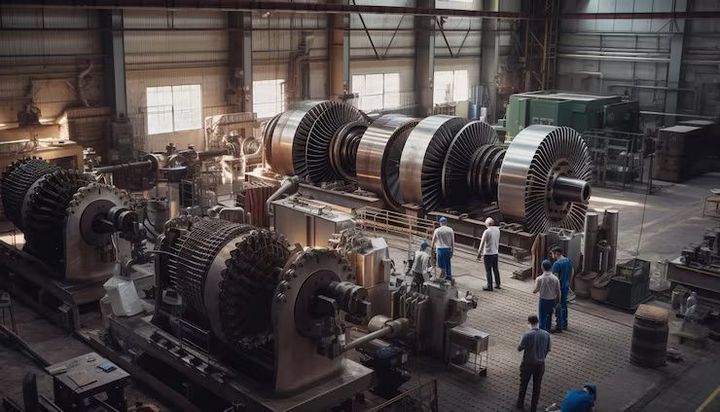
Mechanical Power Press Machines: Types, Benefits and Industrial Uses
Mechanical Power Press Machines are industrial machines designed to shape, cut, bend, punch, emboss, and form metal sheets using mechanical force. These machines play an essential role in modern manufacturing because they help produce consistent metal components with high precision.
The basic working principle involves converting the rotational energy of a motor into linear motion through a crankshaft, flywheel, gears, or eccentric mechanism. This movement drives a ram that applies force to a die, allowing metal to be formed into the desired shape.
Mechanical presses have been part of industrial manufacturing for decades. As production demands increased across automotive, aerospace, electronics, construction, and heavy engineering industries, manufacturers required machines capable of producing identical components quickly and accurately. Mechanical Power Press Machines continue to meet these needs by supporting high-volume production with reliable performance.
Today, these machines are available in multiple sizes, capacities, and configurations to suit different manufacturing processes. Their versatility makes them one of the most widely used industrial equipment categories worldwide.
Why Mechanical Power Press Machines Are Important
Mechanical Power Press Machines remain important because many industries depend on precision metal forming. Manufacturers require consistent dimensions, repeatable accuracy, and efficient production cycles to maintain product quality.
Some of the major reasons these machines matter include:
- High production efficiency
- Accurate metal forming
- Consistent component quality
- Reduced material waste
- Faster manufacturing cycles
- Suitable for mass production
- Reliable long-term performance
Industries that commonly use these machines include:
| Industry | Common Applications |
|---|---|
| Automotive | Vehicle body panels, brackets, structural components |
| Aerospace | Precision metal parts |
| Electronics | Electrical enclosures and connectors |
| Construction | Steel fittings and fabricated components |
| Consumer Products | Metal housings, hardware, appliances |
| Heavy Engineering | Industrial equipment parts |
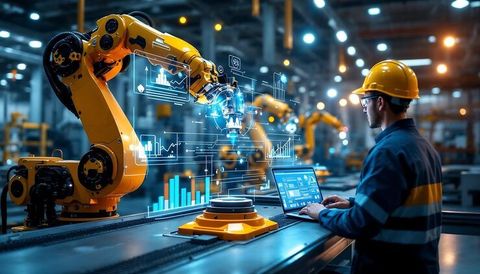
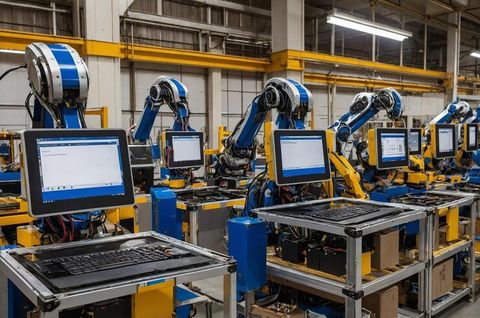
Mechanical Power Press Machines also support manufacturing automation by working alongside robotic loading systems, automated feeding units, and digital monitoring equipment. This combination improves productivity while maintaining consistent manufacturing quality.
Because of their efficiency, these machines continue to be associated with important industrial automation, precision manufacturing, metal fabrication, sheet metal processing, production engineering, manufacturing technology, industrial machinery, and mechanical engineering topics that are widely searched within industrial sectors.
Types of Mechanical Power Press Machines
Different manufacturing requirements call for different types of Mechanical Power Press Machines.
C-Frame Power Press
The C-frame design provides easy access to the working area. It is commonly used for small and medium-sized manufacturing operations requiring flexibility.
Typical applications include:
- Punching
- Piercing
- Bending
- Blanking
H-Frame Power Press
The H-frame structure offers greater rigidity and stability. It is suitable for larger workpieces and higher-tonnage operations.
It is commonly used in:
- Heavy fabrication
- Automotive manufacturing
- Structural component production
Gap Frame Press
Gap frame presses provide convenient access from multiple directions, making them suitable for operations requiring frequent material handling.
Straight Side Power Press
Straight side presses are designed for high precision and improved structural strength. They are widely used in continuous production environments.
Single Crank Press
Single crank presses operate efficiently for medium-capacity manufacturing where balanced force distribution is required.
Double Crank Press
Double crank presses provide additional support for larger dies and wider workpieces, making them suitable for heavy industrial production.
Benefits of Mechanical Power Press Machines
Mechanical Power Press Machines provide numerous operational advantages that make them valuable in industrial production.
High Production Speed
These machines complete repetitive operations rapidly, making them suitable for large production volumes.
Consistent Accuracy
Precision tooling enables uniform component dimensions across thousands of production cycles.
Reliable Operation
Mechanical systems are designed for continuous manufacturing with stable performance.
Better Material Utilization
Accurate die design helps minimize unnecessary material waste during production.
Lower Energy Consumption
Compared with some alternative forming methods, mechanical presses often operate with efficient energy usage during repetitive manufacturing processes.
Flexible Manufacturing
Different dies allow the same machine to perform multiple metal-forming operations.
Common Industrial Uses
Mechanical Power Press Machines support numerous manufacturing applications across industrial sectors.
Metal Stamping
Stamping creates precise shapes from sheet metal for industrial components.
Blanking
Blanking removes finished parts from larger metal sheets.
Piercing
Piercing creates accurately positioned holes in metal materials.
Bending
Metal sheets are bent into required angles and profiles.
Embossing
Embossing produces raised or recessed surface patterns.
Coining
Coining applies extremely high pressure to achieve fine detail and smooth finishes.
Progressive Die Manufacturing
Progressive dies perform multiple forming operations during a single production sequence, improving manufacturing efficiency.
Recent Updates and Industry Trends
Mechanical Power Press Machine technology has continued to evolve during 2025 and 2026, with manufacturers focusing on improved productivity, workplace safety, and digital manufacturing integration.
Several important developments include:
- Greater adoption of Industry 4.0 monitoring systems for production tracking.
- Increased use of digital sensors for machine condition monitoring and preventive maintenance.
- Growth in automated material feeding systems that improve production consistency.
- Wider integration of robotic handling equipment with press operations.
- Development of energy-efficient drive systems to support sustainable manufacturing.
- Improved control interfaces with touchscreen displays and production data logging.
- Expansion of predictive maintenance techniques using machine performance analytics.
Many manufacturing facilities are also emphasizing operator training, machine guarding, and digital maintenance records to improve workplace safety and equipment reliability.
Laws and Policies Affecting Mechanical Power Press Machines
Mechanical Power Press Machines are subject to workplace safety and industrial equipment regulations in many countries.
In India, factories operating these machines generally follow safety requirements under:
- Factories Act, 1948 (along with applicable state rules)
- Occupational Safety, Health and Working Conditions Code, 2020 (implemented through notified rules where applicable)
- Industrial safety standards for machinery guarding
- Workplace risk assessment guidelines
- Preventive maintenance and inspection practices
Important compliance areas include:
- Machine guarding
- Emergency stop systems
- Operator safety training
- Regular inspections
- Safe operating procedures
- Lockout and maintenance practices
- Personal protective equipment usage
Organizations are encouraged to maintain documented operating procedures and conduct routine safety evaluations to reduce workplace risks.
Helpful Tools and Resources
Several general tools and learning resources can help engineers, students, maintenance teams, and manufacturing professionals understand Mechanical Power Press Machines more effectively.
Useful resources include:
- Production planning templates
- Preventive maintenance checklists
- Machine inspection forms
- Industrial safety audit templates
- Engineering calculation worksheets
- Metal forming reference guides
- Manufacturing process flow diagrams
- Technical training manuals
- Industrial design software
- Equipment maintenance scheduling tools
These resources support better planning, equipment management, and operational efficiency without relying on specific commercial platforms.
Mechanical Power Press Machine Comparison
| Feature | Mechanical Power Press | Hydraulic Press |
|---|---|---|
| Operating Principle | Mechanical drive | Hydraulic pressure |
| Production Speed | High | Moderate |
| Repeatability | Excellent | Excellent |
| Best Application | High-volume production | Heavy forming operations |
| Energy Usage | Efficient during repetitive cycles | Depends on hydraulic system |
| Precision | High | High |
Frequently Asked Questions
What is a Mechanical Power Press Machine?
A Mechanical Power Press Machine is an industrial machine that uses mechanical force to shape, cut, punch, bend, or form sheet metal into required components.
Which industries commonly use Mechanical Power Press Machines?
These machines are widely used in automotive, aerospace, construction, heavy engineering, electrical equipment, electronics, appliance manufacturing, and general metal fabrication industries.
What are the main types of Mechanical Power Press Machines?
Common types include C-frame presses, H-frame presses, gap frame presses, straight side presses, single crank presses, and double crank presses.
What safety measures should operators follow?
Operators should use machine guards, follow approved operating procedures, wear appropriate personal protective equipment, perform regular inspections, and receive proper machine training before operation.
What are the advantages of Mechanical Power Press Machines?
Major advantages include high production speed, consistent accuracy, efficient material utilization, reliable operation, flexible manufacturing, and suitability for large-scale production.
Conclusion
Mechanical Power Press Machines remain an essential part of modern manufacturing because they combine speed, precision, and dependable performance for a wide variety of metal-forming applications. From automotive production to heavy engineering and consumer products, these machines help industries manufacture consistent components efficiently while supporting high production volumes.