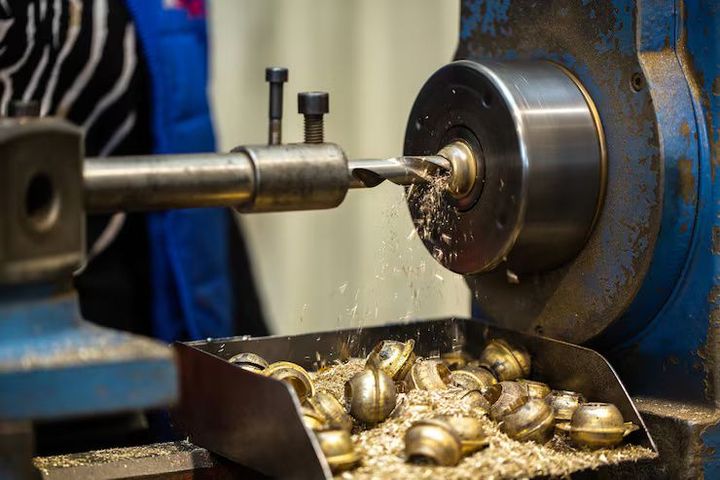
Precision Grinding Machines Insights: Improving Surface Finish, Accuracy, and Productivity
Precision grinding machines are advanced manufacturing systems used to remove very small amounts of material from a workpiece to achieve accurate dimensions, smooth surface finishes, and tight tolerances.
Unlike rough machining processes, grinding is often the final stage of manufacturing, producing components that require high levels of accuracy. Precision grinding machine manufacturers develop equipment for industries such as automotive, aerospace, medical device production, electronics, tool manufacturing, and general engineering.
Grinding uses abrasive wheels that rotate at high speed while the workpiece is carefully positioned. As the abrasive particles contact the material, they remove microscopic layers, gradually creating the desired size and finish. Modern industrial grinding machines are designed to work with steel, aluminum, ceramics, carbide, titanium, and many other engineering materials.
Today, CNC precision grinding machines have become common in manufacturing because computerized controls allow precise movement, repeatable machining, and improved process consistency. Many production facilities also work with OEM precision grinding machine manufacturers when specialized equipment is required for unique manufacturing processes.
Why Precision Grinding Developed
As industrial products became more advanced, manufacturers required components with increasingly accurate dimensions. Traditional machining methods such as turning or milling often leave small variations that must be corrected before final assembly.
Grinding technology developed to solve this challenge. Surface grinding machine manufacturers, centerless grinding machines, and cylindrical grinding equipment have gradually improved to meet the precision requirements of modern manufacturing.
Basic Working Principle
Grinding machines operate by rotating an abrasive wheel against the workpiece under controlled pressure. Small particles of material are removed continuously until the required dimensions and surface quality are achieved.
The amount of material removed is typically very small during each pass, allowing extremely accurate machining.
Importance
Why Precision Grinding Matters
Many products used in daily life contain precision-machined components. Bearings, gears, engine shafts, medical instruments, electric motors, hydraulic systems, and electronic equipment all depend on accurately manufactured parts.
Industrial grinding machines help produce these components with consistent dimensions and smooth finishes.
Supporting High Precision Manufacturing
High precision manufacturing equipment plays an important role whenever components must fit together with minimal variation. Even small dimensional errors may affect machine performance, reduce efficiency, or shorten product life.
Grinding provides one of the final opportunities to achieve exact specifications before assembly.
Improving Surface Finish
Surface quality affects friction, wear, lubrication, and mechanical performance. Precision grinding creates smoother surfaces that improve the interaction between moving components.
For example, bearings and rotating shafts require carefully finished surfaces to operate correctly over long periods.
Industries That Use Grinding Machines
Precision grinding equipment is widely used in:
- Automotive manufacturing
- Aerospace engineering
- Medical equipment production
- Tool and die manufacturing
- Electronics production
- Industrial machinery manufacturing
- Bearing production
- Energy equipment manufacturing
Each industry requires different grinding methods depending on component design and material characteristics.
Types of Precision Grinding Machines
Several machine categories exist for different manufacturing needs:
- Surface grinding machines produce flat, smooth surfaces.
- Centerless grinding machines grind cylindrical components without holding them between centers.
- Cylindrical grinding machines finish shafts and round components.
- Tool and cutter grinders sharpen cutting tools.
- CNC precision grinding machines automate complex machining operations.
Common Components of Precision Grinding Machines
Grinding Wheel
The grinding wheel contains abrasive particles bonded together. Different materials require different wheel compositions and grit sizes.
Workholding System
Fixtures, magnetic chucks, or specialized holders secure the workpiece during machining.
CNC Control System
Modern CNC precision grinding machines use computer-controlled movements to achieve accurate positioning and repeatable machining.
Cooling System
Grinding generates heat. Coolant systems help reduce temperature, improve surface finish, and extend grinding wheel life.
Measurement Equipment
Many machines include digital measuring systems that monitor dimensions during or after machining.
Comparison of Common Grinding Machine Types
| Machine Type | Primary Purpose | Typical Components |
|---|---|---|
| Surface grinding | Flat surfaces | Plates, molds, machine bases |
| Cylindrical grinding | External round surfaces | Shafts, rollers |
| Centerless grinding | Continuous cylindrical grinding | Pins, tubes, bearings |
| Tool grinding | Cutting tool preparation | Milling cutters, drills |
| CNC grinding | Automated precision machining | Complex industrial components |
Importance of Accurate Grinding
Dimensional Accuracy
Grinding helps achieve very tight dimensional tolerances required by modern manufacturing.
Better Component Performance
Accurately ground surfaces reduce vibration, friction, and uneven wear in mechanical systems.
Product Consistency
Industrial production depends on producing thousands of identical parts. Grinding supports consistent manufacturing quality across large production batches.
Longer Equipment Life
Proper surface finish can improve lubrication, reduce contact stress, and increase the operating life of mechanical assemblies.
Recent Updates
Greater CNC Automation
Recent developments have expanded the use of CNC precision grinding machines with advanced programming, automatic wheel dressing, and improved motion control.
Automation allows more consistent production with reduced manual adjustments.
Digital Monitoring Systems
Modern grinding equipment increasingly includes digital sensors that monitor wheel condition, vibration, spindle temperature, and machining parameters.
These systems help operators identify maintenance needs before production quality is affected.
Smart Manufacturing Integration
Many high precision manufacturing equipment systems now connect with factory management software as part of Industry 4.0 manufacturing environments.
Production data, machine status, and maintenance information can be collected for analysis.
Improved Grinding Materials
Grinding wheel technology continues to advance through improved abrasive materials such as cubic boron nitride (CBN) and synthetic diamond for specific industrial applications.
These materials support machining of harder engineering materials.
Flexible Manufacturing Systems
Turnkey precision machining solutions increasingly combine grinding with inspection, robotic handling, and automated loading systems to improve production efficiency.
Laws or Policies
Machinery Safety Regulations
Industrial grinding machines are generally subject to machinery safety regulations covering moving components, emergency stops, guarding systems, and operator protection.
Requirements differ by country but share similar safety objectives.
Occupational Health Standards
Grinding operations may generate dust, noise, and sparks. Workplace regulations often address ventilation, hearing protection, personal protective equipment, and machine operation procedures.
Electrical Safety Requirements
Modern CNC equipment must comply with electrical safety standards related to wiring, grounding, control systems, and emergency shutdown functions.
Environmental Considerations
Grinding fluids, used abrasive materials, and metal particles may be regulated under waste management and environmental protection policies.
Proper handling helps reduce environmental impact.
Tools and Resources
Several resources support precision grinding operations:
- Digital measuring instruments
- Surface roughness measurement equipment
- Grinding wheel selection guides
- CNC programming software
- CAD and CAM software
- Machine maintenance schedules
- Tool balancing equipment
- Industrial safety manuals
- Manufacturing quality documentation
- Technical standards for dimensional tolerances
These resources support accurate machining, quality control, and organized production management.
FAQs
What do precision grinding machine manufacturers produce?
Precision grinding machine manufacturers develop equipment that removes small amounts of material to achieve highly accurate dimensions and smooth surface finishes.
What are CNC precision grinding machines?
CNC precision grinding machines use computerized controls to automate machine movement and produce consistent, repeatable machining results.
How do centerless grinding machines differ from other grinding machines?
Centerless grinding machines support cylindrical workpieces without holding them between centers, making them suitable for continuous production of round components.
Why are surface grinding machine manufacturers important in modern industry?
Surface grinding machine manufacturers develop equipment capable of producing flat, accurate surfaces used in tooling, molds, machinery, and precision engineering.
What are turnkey precision machining solutions?
Turnkey precision machining solutions combine multiple manufacturing processes, inspection equipment, automation, and production planning into an integrated machining system.
Conclusion
Precision grinding machines are an essential part of modern manufacturing because they produce highly accurate components with excellent surface quality. Industrial grinding machines, CNC precision grinding machines, and centerless grinding machines each support different production requirements across many industries. Continued advances in automation, digital monitoring, and high precision manufacturing equipment are improving machining consistency and operational efficiency. These developments help manufacturers produce reliable components for a wide range of industrial applications.