Smart Factory Solutions: AI, IoT Connectivity and Digital Transformation
Smart factory solutions bring digital technologies into manufacturing environments so machines, sensors, software, and people can work with better access to information. Instead of depending mainly on manual records and isolated machines, a smart factory can collect operational data, analyze it, and use the results to support faster and more informed decisions.
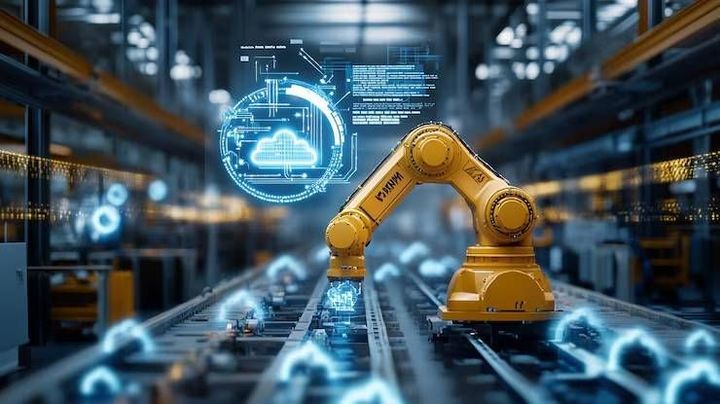
The main technologies include Artificial Intelligence (AI), Internet of Things (IoT), Industrial IoT (IIoT), machine learning, robotics, cloud computing, edge computing, digital twins, industrial automation, and data analytics.
A typical smart factory may have sensors monitoring temperature, vibration, pressure, speed, energy use, or machine condition. The collected information can then be processed through industrial software or analytics platforms.
AI can identify patterns in this information. For example, an analytics system may detect unusual vibration that could indicate a developing equipment problem. A quality-control system may also use computer vision to identify visible defects.
The idea is not simply to add more technology. A successful digital transformation connects technology with a specific manufacturing need.
Why Smart Manufacturing Matters Today
Manufacturers operate in an environment where production quality, energy management, cybersecurity, supply-chain visibility, and operational efficiency are closely connected.
Traditional production systems can make it difficult to see what is happening across an entire facility. Information may remain separated between machines, production lines, maintenance records, and business systems.
Smart factory solutions can help address these information gaps.
| Technology | Common Manufacturing Use |
|---|---|
| AI and machine learning | Quality analysis and predictive insights |
| IoT sensors | Equipment and environmental monitoring |
| Edge computing | Local data processing |
| Digital twins | Process and equipment simulation |
| Robotics | Repetitive production activities |
| Computer vision | Inspection and defect detection |
| Data analytics | Production and performance analysis |
| Cloud platforms | Centralized data access |
The approach can affect many groups, including factory managers, maintenance teams, quality professionals, engineers, cybersecurity teams, and production planners.
One important advantage is improved visibility. Instead of waiting for a problem to appear in a production report, connected systems can provide information closer to the time an event occurs.
However, digital transformation also introduces challenges. More connected equipment can create additional cybersecurity risks, while poor-quality data can reduce the usefulness of AI systems.
NIST's manufacturing cybersecurity work highlights the need to balance connectivity with security, reliability, performance, and safety.
How AI and IoT Work Together in a Smart Factory
IoT provides the connection between physical equipment and digital systems. Sensors collect information from machines and production environments.
AI provides another layer of analysis. It can process large datasets and identify patterns that may be difficult to detect manually.
A simple workflow can look like this:
- Sensors collect machine information.
- Industrial networks transfer the information.
- Edge systems can process time-sensitive data locally.
- Data platforms organize historical information.
- AI models analyze patterns and identify unusual conditions.
- Dashboards present useful information to operators and managers.
- People review the results and make operational decisions.
This combination can support areas such as predictive maintenance, production monitoring, quality inspection, energy management, process optimization, and inventory planning.
AI should not automatically be treated as a replacement for human decision-making. Industrial environments often involve safety requirements and complex operating conditions. Human review remains important, particularly when an AI system produces an unexpected result.
Digital Twins and Real-Time Manufacturing Data
Digital twins are another important part of smart manufacturing.
A digital twin is a digital representation of a physical asset, process, or system. It can use information from sensors and operational data to represent changing conditions.
For example, a digital model of a production line can help engineers study how a change in one process could affect another.
Digital twins can support:
- Equipment monitoring
- Process analysis
- Production planning
- Simulation
- Maintenance planning
- Energy analysis
- System testing
NIST's 2026 roadmap for AI and machine learning in smart manufacturing identifies digital twins, advanced sensing, robotics, industrial data analytics, logistics optimization, and sustainable manufacturing among important areas of development.
Recent Developments in Smart Factory Technology
Smart manufacturing continued to develop rapidly during 2025 and 2026.
In July 2026, NIST published a roadmap focused specifically on AI and machine learning for smart manufacturing. It identified industrial big data, digital twins, robotics, advanced sensing, explainable AI, reliability, and foundation models as areas requiring continued development.
Cybersecurity has also received increased attention.
On April 20, 2026, NIST finalized Revision 1 of its foundational cybersecurity guidance for IoT product manufacturers. The updated guidance covers cybersecurity activities from development through post-market stages and emphasizes security capabilities and information that help organizations manage connected-device risks.
In May 2026, NIST also published a draft manufacturing cybersecurity guide focused on responding to and recovering from cyberattacks involving industrial control environments.
These developments show a broader trend: smart manufacturing is moving beyond basic connectivity toward secure, data-driven, AI-assisted industrial systems.
Laws, Policies, and Regulatory Considerations
Smart factories can be affected by several categories of rules. The exact requirements depend on the country, industry, data involved, and type of equipment.
Data protection and privacy:
Factories may collect information related to employees, contractors, visitors, or other individuals. Where personal information is processed, applicable privacy and data-protection requirements need to be considered.
AI regulation:
The European Union's AI Act is particularly relevant for organizations operating in or interacting with the EU. The Act entered into force in 2024, with different requirements becoming applicable at different times. From August 2, 2026, the main framework became applicable, while certain high-risk provisions have later transition dates.
Cybersecurity:
Connected manufacturing equipment can fall within broader cybersecurity frameworks and sector-specific requirements. Organizations should consider device authentication, access management, network segmentation, incident response, software updates, and data protection.
Industrial safety:
Automation and robotics must also be considered alongside workplace and machinery-safety requirements. AI-based systems should not bypass established safety controls.
Because regulations vary considerably between countries, manufacturers should check the requirements that apply to their specific facility, industry, equipment, and data.
Tools and Resources for Smart Factory Planning
Organizations can use several types of tools when developing a digital manufacturing strategy.
Useful resources include:
- IoT monitoring platforms for connected equipment data
- Industrial dashboards for production visibility
- AI analytics tools for pattern recognition
- Digital twin software for simulation and modeling
- Computer vision systems for automated inspection
- Energy monitoring tools for tracking industrial consumption
- Cybersecurity assessment frameworks for connected environments
- Data-quality checklists for evaluating industrial datasets
- ROI and efficiency calculators for comparing improvement scenarios
- Process-mapping templates for identifying digitalization opportunities
- Risk assessment templates for AI and connected equipment
- Training resources covering industrial automation and cybersecurity
A practical starting point is to document existing machines, sensors, networks, data sources, and business processes before selecting new technologies.
This helps prevent a common problem: implementing technology without a clear operational purpose.
Frequently Asked Questions
What is a smart factory?
A smart factory is a manufacturing environment that uses connected equipment, data, automation, analytics, and digital technologies to improve monitoring and decision-making.
How does IoT help manufacturing?
IoT connects machines and sensors so operational information can be collected and analyzed. It can support equipment monitoring, production visibility, environmental measurement, and maintenance analysis.
What role does AI play in smart factories?
AI can analyze large amounts of industrial data, identify patterns, support quality inspection, detect unusual conditions, and assist with predictive maintenance and process analysis.
Are smart factories completely automated?
No. Smart manufacturing does not necessarily mean complete automation. Many systems are designed to support human operators and engineers by providing better information and automated assistance.
Is cybersecurity important for smart factories?
Yes. Connecting machines, sensors, networks, and software can expand the number of systems that need protection. Security planning should therefore be included from the early stages of digital transformation.
Conclusion
Smart factory solutions represent a broader change in how manufacturing systems collect information, communicate, and support operational decisions. AI, IoT connectivity, digital twins, robotics, analytics, and industrial automation can work together to create more connected production environments.