Tool Room Milling Machines: A Complete Guide to Machining Applications
Tool room milling machines are precision machine tools designed to remove material from a workpiece using rotating cutting tools. Unlike highly specialized production equipment, these machines are valued for their flexibility. They can handle different materials, part sizes, shapes, and machining tasks with careful operator control.
The concept of the tool room milling machine developed from the need to create accurate tools, dies, fixtures, molds, prototypes, and machine components. Tool rooms often work with parts that require careful measurement and detailed machining rather than extremely high-volume production.
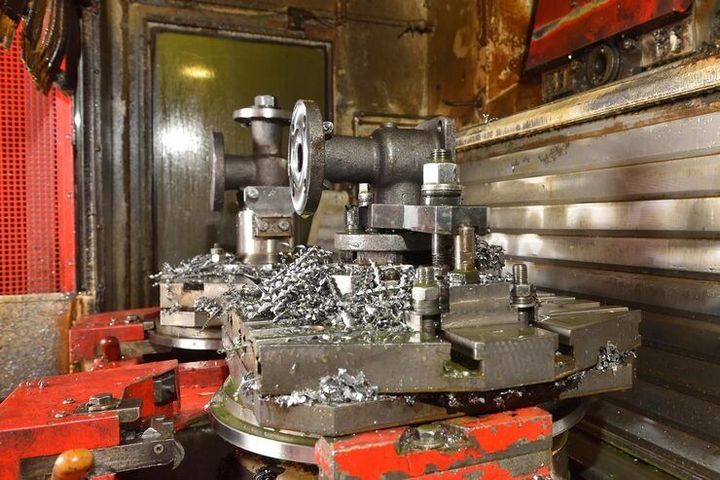
A typical machine includes a rigid frame, worktable, spindle, cutting tool, feed mechanisms, and controls. The workpiece is secured on the table, while the cutting tool rotates and removes material according to the selected machining operation.
Depending on the machine design, the spindle may move vertically, horizontally, or at different angles. This flexibility allows operators to perform a wide range of operations, including:
- Face milling for creating flat surfaces
- End milling for slots, pockets, and contours
- Drilling for accurate holes
- Reaming for improved hole precision
- Boring for enlarging existing holes
- Chamfering and edge preparation
- Keyway and groove machining
- Prototype and custom component production
Manual tool room milling machines are operated through handwheels and mechanical controls. CNC tool room milling machines use computer-based programming for controlled movement and repeatable machining. Some modern machines combine manual flexibility with digital readouts and programmable features.
Why Tool Room Milling Machines Matter in Modern Machining
Tool room milling machines remain important because many manufacturing environments require flexibility. A single machine may be used for different parts and operations, which makes it useful for workshops, technical training facilities, maintenance departments, prototype development, and precision engineering.
One major advantage is their ability to support low-volume and customized machining. A manufacturer may need a unique fixture, replacement component, testing part, or prototype rather than thousands of identical components. A versatile milling machine can handle these changing requirements.
These machines also support education and technical development. Students and trainees can learn important principles such as:
- Workpiece positioning
- Cutting tool selection
- Feed and spindle speed control
- Engineering drawings
- Dimensional measurement
- Material behavior
- Machining safety
The machines are also connected to important high-value industrial fields. Aerospace components, automotive parts, medical equipment components, electronics hardware, energy equipment, and precision tooling may all require milling operations during development or production.
Manual and CNC Tool Room Milling Machines
Manual machines provide direct operator control. They are often useful for one-off parts, repairs, adjustments, and learning basic machining principles.
CNC machines use programmed instructions to control tool movement. They can improve repeatability and support more complex geometries when correctly programmed and set up.
The right choice depends on the application, part complexity, required accuracy, production volume, operator experience, and available technical infrastructure.
| Machine Type | Main Strength | Common Application |
|---|---|---|
| Manual milling machine | Direct operator control | Repairs and custom parts |
| CNC milling machine | Repeatable programmed movement | Precision components |
| Vertical milling machine | Flexible cutting access | General machining |
| Horizontal milling machine | Strong material removal | Grooves and heavy cutting |
| Universal milling machine | Multi-directional flexibility | Tool rooms and complex work |
Recent Developments in Tool Room Milling Technology
The tool room milling sector has increasingly adopted digital technologies. Recent developments through 2025 and 2026 have focused on improved automation, digital monitoring, computer-aided manufacturing, and better integration between design and machining.
One important trend is the growing use of CAD and CAM software. Engineers can create a digital part model and generate toolpaths that guide CNC equipment. This reduces the need to manually calculate every movement and helps support complex geometries.
Digital readouts and measurement systems are also becoming more common. These technologies help operators monitor axis movement and improve positioning accuracy during machining.
Another trend is the use of data-driven manufacturing. Sensors may monitor machine conditions such as vibration, temperature, spindle behavior, and operating cycles. This information can support maintenance planning and help identify unusual machine behavior before it causes major disruption.
Artificial intelligence is also being explored in machining software. In 2025 and 2026, industry discussions increasingly focused on AI-assisted programming, automated toolpath generation, process monitoring, and digital manufacturing workflows. These technologies are developing rapidly, but results depend on accurate data, proper machine setup, and human verification.
Cybersecurity has also become more important as CNC machines become connected to networks and digital production systems. In September 2025, the National Institute of Standards and Technology published an initial public draft of an updated Cybersecurity Framework 2.0 Manufacturing Profile. The draft included greater attention to governance, supply chain risk, platform security, and technology infrastructure resilience.
These developments show that modern tool room machining is no longer limited to mechanical cutting. It increasingly connects precision engineering with software, data, automation, measurement, and digital security.
Laws, Safety Rules, and Industrial Policies
Machine safety rules vary by country and region. In the United States, workplace safety requirements administered by the Occupational Safety and Health Administration are particularly relevant to milling operations.
OSHA regulations require appropriate machine guarding to protect operators and other workers from hazards such as rotating components, flying chips, point-of-operation risks, and other moving parts. Milling machines are specifically identified among equipment that may require point-of-operation guarding under applicable requirements.
Important safety practices include:
- Using suitable guards and protective barriers
- Keeping hands away from rotating tools
- Wearing appropriate eye and face protection
- Securing the workpiece correctly
- Following approved lockout and energy-control procedures when applicable
- Removing chips with suitable tools rather than bare hands
- Inspecting cutting tools before use
- Following manufacturer operating instructions
Rules may also apply to electrical safety, workplace training, noise exposure, personal protective equipment, and hazardous energy control.
In other countries, national occupational safety authorities and machinery regulations may apply. Businesses and educational facilities should always check the rules that apply in their own jurisdiction.
Safety requirements should not be treated as a replacement for proper training. A machine can be technically advanced and still create serious hazards if it is incorrectly operated, poorly maintained, or used without suitable safeguards.
Tools and Resources for Learning and Machining Planning
Several general tools can help beginners, students, engineers, and workshop operators understand tool room milling machines more effectively.
Useful resources include:
- CAD software: Used to create 2D drawings and 3D part models.
- CAM software: Used to prepare machining strategies and CNC toolpaths.
- Machining calculators: Help estimate spindle speed, feed rate, cutting speed, and chip load.
- Digital calipers and micrometers: Used for dimensional measurement.
- Dial indicators: Help check alignment, runout, and positioning.
- Tool libraries: Provide information about cutting tool geometry and recommended operating ranges.
- Machine manuals: Explain controls, maintenance procedures, and operating limitations.
- Engineering drawing templates: Help users understand dimensions, tolerances, and technical symbols.
- Safety checklists: Support routine inspection of guards, tools, workholding equipment, and machine conditions.
- Technical training platforms: Provide lessons on CNC programming, machining fundamentals, CAD, CAM, and industrial safety.
A simple learning process usually begins with machining fundamentals. The learner can then progress to technical drawings, measurement, cutting tools, workholding, CNC programming, and advanced machining concepts.
Frequently Asked Questions About Tool Room Milling Machines
What is a tool room milling machine used for?
A tool room milling machine is used for precision cutting, shaping, drilling, slotting, contouring, and finishing of workpieces. It is especially useful for prototypes, tools, fixtures, molds, dies, repairs, and specialized components.
What is the difference between a manual and CNC tool room milling machine?
A manual machine is controlled directly by the operator using mechanical controls. A CNC machine follows programmed instructions to control movement and machining operations. Manual machines provide direct flexibility, while CNC systems support repeatable programmed work.
Which materials can be machined?
Common materials include aluminum, steel, stainless steel, brass, bronze, engineering plastics, and other machinable materials. The correct cutting tool, speed, feed, and machining method depend on the material and the desired result.
Are tool room milling machines suitable for beginners?
Yes, they can be useful for learning machining fundamentals when operated under proper supervision and training. Beginners should understand machine controls, workholding, cutting tools, measurement, and safety procedures before performing independent operations.
Why are CAD and CAM important for modern milling?
CAD helps create accurate digital part designs, while CAM helps convert those designs into machining instructions. Together, they can support complex shapes, repeatable programming, and more efficient digital manufacturing workflows.
Conclusion
Tool room milling machines remain important because they combine precision, flexibility, and broad machining capability. From traditional manual machines to modern CNC systems, they support the creation of tools, prototypes, fixtures, components, and specialized parts across many industries.
Their role is also changing as manufacturing becomes more digital. CAD and CAM software, digital measurement, machine monitoring, automation, and cybersecurity are becoming increasingly connected to machining workflows.