Belt Pulley Production Equipment Guide: Basics, Insights, Tips, and Key Information
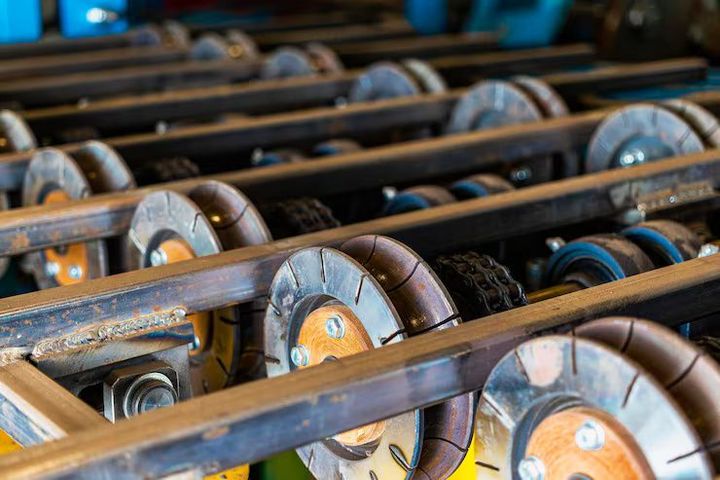
Belt pulleys are mechanical components used to transfer motion and power between rotating shafts through belts. They are widely used in industrial machinery, automotive systems, agricultural equipment, conveyors, and manufacturing plants. Belt pulley production equipment refers to the machines, tools, and automated systems used to manufacture these pulleys with precision and consistency.
The development of specialized equipment for pulley manufacturing exists because industrial machines require standardized components that maintain durability, alignment, and mechanical efficiency. Even small inaccuracies in pulley dimensions can lead to belt slippage, vibration, or mechanical wear.
Modern production equipment includes advanced machining technologies such as CNC lathes, casting systems, balancing machines, and surface finishing equipment. These machines enable manufacturers to produce pulleys from materials like cast iron, aluminum alloys, steel, and engineered plastics.
Typical Production Workflow
A standard belt pulley production process includes multiple stages to ensure precision and quality:
- Raw material preparation
- Casting or forging processes
- Precision machining
- Surface finishing
- Dynamic balancing and inspection
Automation and digital control systems have improved both accuracy and production efficiency across all these stages.
Why Belt Pulley Production Equipment Matters
Belt pulley systems are widely used for power transmission in industrial machinery due to their simplicity and reliability. They play a key role in factories, transportation systems, and mechanical devices.
Reliable production equipment ensures pulleys meet strict engineering standards. Proper alignment, groove geometry, and balance contribute to smoother operation and longer belt life.
Key Industries Using Belt Pulleys
Several industries depend heavily on high-quality pulley manufacturing:
- Industrial automation and manufacturing
- Automotive engineering
- Agricultural machinery production
- Mining and heavy equipment
- HVAC and ventilation systems
Poorly manufactured pulleys can lead to energy loss, excessive friction, and equipment failure, making precision production essential.
Recent Updates in Belt Pulley Manufacturing Technology
Recent advancements in 2024–2025 have significantly influenced pulley manufacturing processes. One major trend is the integration of smart manufacturing systems that monitor machine performance and production quality in real time.
Industrial Internet of Things (IIoT) technologies are also being used to improve predictive maintenance and diagnostics. These systems help detect tool wear, alignment issues, and inconsistencies during production.
Key Technological Developments
- Increased use of automated casting and machining lines
- Digital inspection using machine vision systems
- Energy-efficient machining equipment
- Production analytics for process optimization
Some manufacturers are also exploring hybrid production methods that combine traditional machining with additive manufacturing for prototyping.
Regulatory and Policy Considerations
Belt pulley production must comply with safety, environmental, and quality regulations. These guidelines ensure safe machine operation and environmentally responsible manufacturing practices.
Workplace safety standards require proper machine guarding, ventilation, and operator protection. Environmental policies address emissions and waste generated during casting and machining processes.
Common Regulatory Frameworks
- ISO 9001 (quality management)
- ISO 14001 (environmental management)
- Occupational safety regulations
- Industrial emission standards
Government initiatives in countries like India promote digital manufacturing and sustainable industrial practices.
Tools and Resources for Pulley Production and Design
Modern pulley manufacturing relies on digital tools and engineering software to ensure accuracy and efficiency. These tools assist in both design and production processes.
Common Tools Used
- CAD software for pulley design
- CAM software for machining programs
- CNC simulation tools
- Digital measurement systems
- Industrial monitoring dashboards
Engineers use these tools to calculate pulley dimensions, groove geometry, and belt compatibility for efficient power transmission.
Common Pulley Production Equipment
| Equipment Type | Primary Function | Typical Application |
|---|---|---|
| CNC Lathe | Precision turning | Metal pulley machining |
| Casting Furnace | Melting and shaping metal | Cast iron pulley production |
| Balancing Machine | Correcting rotational imbalance | High-speed pulley systems |
| Milling Machine | Groove and keyway creation | V-belt pulley finishing |
Digital measurement tools such as coordinate measuring machines (CMM) are also used to verify dimensions and maintain quality.
Production Workflow Overview
The production of belt pulleys follows a structured workflow to ensure consistency and quality across all stages.
Key Production Stages
- Material selection and preparation
- Casting or forging of pulley blanks
- CNC machining and groove cutting
- Surface finishing or coating
- Dynamic balancing and testing
Simplified Production Process Table
| Stage | Activity | Purpose |
|---|---|---|
| Raw Material | Metal preparation | Ensures structural strength |
| Machining | CNC turning and milling | Achieves precise dimensions |
| Finishing | Surface treatment | Improves durability |
| Inspection | Dimensional verification | Maintains quality standards |
Automation technologies are increasingly integrated into each stage to improve efficiency and precision.
Frequently Asked Questions
What is the main purpose of belt pulleys in machinery?
Belt pulleys transfer mechanical power between rotating shafts using belts. They help control speed, torque, and direction in mechanical systems.
What materials are commonly used to manufacture pulleys?
Common materials include cast iron, steel, aluminum alloys, and engineered plastics. The choice depends on load requirements and operating conditions.
How does CNC machining improve pulley production?
CNC machining ensures high precision and repeatability in cutting operations. It allows consistent groove geometry and accurate dimensions.
Why is pulley balancing important?
Balancing ensures smooth rotation at high speeds. Unbalanced pulleys can cause vibration, wear, and reduced performance.
What industries rely on pulley systems the most?
Industries such as manufacturing, agriculture, mining, automotive, and material handling depend heavily on pulley systems.
Conclusion
Belt pulley production equipment plays a vital role in modern industrial manufacturing. These machines enable precise production of components essential for efficient power transmission.
With the adoption of automation and digital technologies, pulley manufacturing continues to evolve. Advanced CNC systems, monitoring tools, and inspection technologies are improving precision, efficiency, and reliability.
Regulatory standards and environmental policies further ensure safe and sustainable production practices. Understanding pulley production provides valuable insight into the mechanical systems that support many industries worldwide.