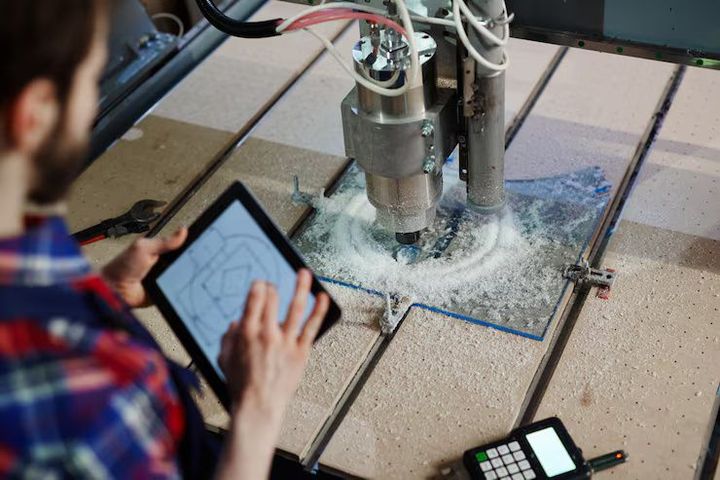
CNC Machinery Technology Guide: Discover Modern Manufacturing Tools and Industry Basics
CNC machinery technology refers to automated manufacturing systems controlled by computer software. The term CNC stands for Computer Numerical Control, a method that allows machines to perform precise cutting, drilling, shaping, and milling operations based on digital instructions.
Before CNC technology became widespread, manufacturing relied heavily on manual machine operation. Skilled operators controlled tools such as lathes and mills by hand, which required constant supervision and often resulted in variations in quality.
CNC (Computer Numerical Control) technology was developed to improve precision, repeatability, and efficiency in industrial production. Modern CNC machines use coded instructions generated by CAD and CAM software to automate complex manufacturing tasks.
Common Types of CNC Machines
CNC machines are designed for different manufacturing purposes. Each type performs specific operations depending on material and design requirements.
- CNC milling machines
- CNC lathes
- CNC laser cutting machines
- CNC plasma cutting systems
- CNC routers
- CNC grinding machines
For example, milling machines shape solid materials using rotating tools, while laser cutting systems use high-powered lasers for precise cutting.
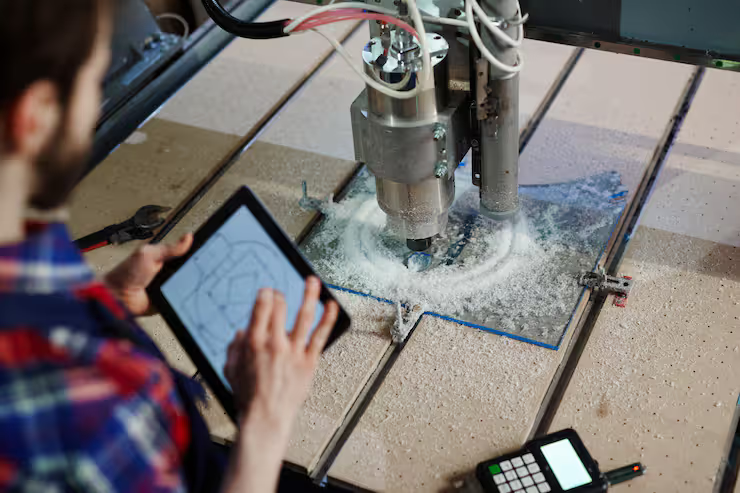
Why CNC Machinery Matters in Modern Manufacturing
CNC machinery plays a critical role in today’s industrial environment. Most modern products, including electronics, automotive parts, and medical devices, rely on precision-machined components.
One of the key advantages of CNC technology is its ability to produce components with extremely tight tolerances. This level of accuracy ensures consistent quality across large-scale production.
Key Industries Using CNC Technology
CNC technology is widely used across multiple industries due to its precision and efficiency.
- Automotive manufacturing
- Aerospace engineering
- Electronics production
- Medical device manufacturing
- Industrial equipment production
- Renewable energy infrastructure
Benefits of CNC Machinery
CNC machines help manufacturers overcome several production challenges.
- Reduce human error in repetitive tasks
- Improve production consistency
- Support complex design requirements
- Increase efficiency
- Enhance product quality and reliability
Automation is another major advantage, as CNC machines can operate continuously with minimal manual intervention.
Traditional vs CNC Machining
| Feature | Traditional Machining | CNC Machining |
|---|---|---|
| Precision | Moderate | Very High |
| Repeatability | Variable | Highly Consistent |
| Automation Level | Low | High |
| Complex Designs | Limited | Advanced Capability |
| Production Efficiency | Moderate | High |
This comparison highlights how CNC machining outperforms traditional methods in accuracy and efficiency.
Recent Developments in CNC Technology
CNC technology has evolved rapidly with advancements in automation and digital systems. In recent years, innovations such as artificial intelligence and smart manufacturing have transformed how CNC machines operate.
One major trend is the use of predictive maintenance systems. These systems monitor machine performance and help prevent unexpected failures.
Key Trends in 2024–2025
Several important developments have shaped modern CNC machinery.
- Digital twin technology for simulations
- High-speed CNC spindles for advanced materials
- Increased adoption of 5-axis machining systems
- Integration of IIoT sensors
- Energy-efficient manufacturing equipment
CNC Machine Capabilities
| CNC Machine Type | Typical Application | Key Advantage |
|---|---|---|
| CNC Milling | Metal component shaping | High precision |
| CNC Lathe | Cylindrical parts | Smooth rotation control |
| CNC Laser Cutting | Sheet metal processing | Clean, accurate cuts |
| CNC Router | Wood and composites | High-speed shaping |
| CNC Grinding | Surface finishing | Fine tolerances |
The adoption of 5-axis machining is particularly significant because it allows more complex shapes to be produced in a single setup.
Regulations and Policies Affecting CNC Machinery
CNC operations are governed by various regulations to ensure safety, quality, and environmental compliance. These standards are set by governments and industry organizations.
Manufacturing facilities must follow rules related to machine safety, worker protection, and environmental impact.
Common Regulatory Areas
- Workplace safety standards
- Industrial machinery regulations
- Environmental compliance requirements
- Quality management standards
- Energy efficiency guidelines
For example, regulations such as OSHA standards in the United States and CE directives in the European Union guide CNC operations.
Important Standards
- ISO 9001 (quality management)
- ISO 14001 (environmental management)
- RoHS Directive (hazardous materials control)
- REACH Regulation (chemical safety)
These frameworks help ensure consistent manufacturing quality and sustainability.
Tools and Resources for CNC Technology
Various digital tools support CNC operations and improve manufacturing efficiency. These tools help engineers design, simulate, and execute machining processes.
Key CNC Tools
- CAD Software – Used for creating 2D and 3D designs
- CAM Software – Converts designs into machine instructions
- CNC Simulation Software – Tests machining processes virtually
- G-Code Editors – Modify and control machine instructions
- Machine Monitoring Systems – Track performance and efficiency
CNC Workflow Stages
| Stage | Description |
|---|---|
| Design | Digital component modeling |
| Programming | Creating CNC toolpaths |
| Simulation | Testing machining process |
| Production | Automated part manufacturing |
| Inspection | Quality verification |
This workflow ensures accuracy and efficiency throughout the production cycle.
Frequently Asked Questions
What does CNC stand for?
CNC stands for Computer Numerical Control. It refers to automated machines controlled by computer programs for precise manufacturing.
What materials can CNC machines process?
CNC machines can process metals, plastics, composites, wood, and some ceramics.
What is G-code?
G-code is a programming language used to control CNC machines. It defines movement, speed, and tool actions.
What is 5-axis CNC machining?
It allows movement along five axes simultaneously, enabling complex geometries and fewer setups.
Why is CNC important?
CNC machining ensures precision, efficiency, and consistency, making it essential for modern industries.
Conclusion
CNC machinery technology has transformed modern manufacturing by introducing automation and precision. It enables industries to produce complex components with high accuracy and consistency.
Advancements such as AI integration, smart factories, and 5-axis machining continue to shape the future of CNC technology. As manufacturing evolves, CNC machines remain a foundational element of industrial production.