Crawler Cranes Guide: Types, Uses, Benefits, and Key Industry Applications Explained
Crawler cranes are large lifting machines mounted on a set of tracks instead of wheels. These tracks, often called crawlers, allow the crane to move across construction sites while carrying heavy loads. Unlike wheeled cranes, crawler cranes provide better stability and weight distribution, making them suitable for lifting extremely heavy materials.
Crawler cranes are essential machines used in construction and infrastructure projects that require lifting and placing extremely heavy materials. These include steel beams, bridge sections, wind turbine components, and industrial equipment. Traditional lifting equipment often cannot handle such tasks safely or efficiently.
These cranes are designed for stability and strength, making them suitable for large-scale engineering operations across various industries.
Key Components of a Crawler Crane
A crawler crane consists of several important parts that work together to perform heavy lifting tasks. Each component plays a role in maintaining balance, mobility, and lifting capability.
Main Components
- Rotating upper structure (superstructure)
- Boom or lattice structure for lifting
- Counterweights for balance
- Crawlers for movement on uneven terrain
- Hoist systems and cables
These components allow the crane to lift heavy loads while maintaining stability, even on soft or irregular ground.
Types of Crawler Cranes
Different types of crawler cranes are designed to meet specific operational needs. Each type offers unique features suited to different project environments.
Common Types and Uses
| Type of Crawler Crane | Typical Use | Key Characteristics |
|---|---|---|
| Lattice Boom Crane | Large infrastructure projects | Long reach and heavy lifting capability |
| Telescopic Crawler Crane | Compact worksites | Adjustable boom length |
| Heavy Lift Crawler Crane | Industrial projects | Extremely high load capacity |
| Mini Crawler Crane | Indoor or tight spaces | Compact size and mobility |
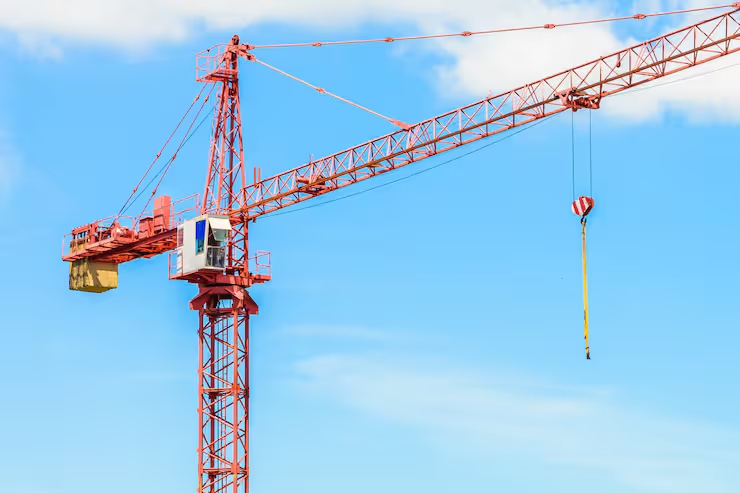
Crawler cranes are often used alongside other lifting equipment such as tower cranes and mobile cranes.
Why Crawler Cranes Matter in Infrastructure
Crawler cranes play a vital role in modern construction and infrastructure development. Their ability to lift heavy loads with stability makes them indispensable in large-scale projects.
Key Applications
- Renewable energy projects like wind farms
- Transportation infrastructure such as bridges and railways
- Industrial plant construction
- High-rise building development
Their importance has grown due to increasing global demand for infrastructure and energy development.
Advantages of Crawler Cranes
- Strong stability due to wide track base
- Ability to move with loads in certain conditions
- High lifting capacity
- Suitable for large structural components
These advantages help improve efficiency and reduce delays in construction projects.
Recent Developments in Crawler Crane Technology
Recent years have brought significant advancements in crawler crane technology. Manufacturers are focusing on improving safety, efficiency, and performance.
Key Trends (2024–2025)
- Adoption of telematics and remote monitoring
- Improved fuel and energy efficiency
- Development of hybrid power systems
- Advanced safety monitoring features
Digital control systems now assist operators in maintaining safe lifting operations by providing real-time data.
Industry Development Priorities
| Development Area | Industry Focus Level |
|---|---|
| Safety Monitoring Systems | High |
| Digital Telematics | High |
| Energy Efficiency | Moderate |
| Automation Integration | Growing |
These innovations are improving both safety and productivity in construction environments.
Regulations and Safety Policies
Crawler crane operations are governed by strict safety regulations to prevent accidents and ensure proper usage. These regulations vary by country but follow similar safety principles.
Key Regulatory Areas
- Load capacity limits
- Operator certification
- Regular inspections
- Site safety planning
- Equipment maintenance
Organizations such as OSHA in the United States and CEN in Europe provide guidelines for safe crane operations.
Environmental regulations also influence crane design, encouraging cleaner and more efficient technologies.
Tools and Resources for Crane Operations
Construction professionals use various tools and software to plan and manage crane operations effectively. These tools help ensure safety and efficiency during lifting tasks.
Common Tools
- Crane lift planning software
- Load chart calculators
- Engineering simulation platforms
- Project management software
- Equipment monitoring systems
These tools support accurate planning and reduce operational risks.
Key Lift Planning Parameters
| Parameter | Purpose |
|---|---|
| Load Weight | Determines lifting requirements |
| Boom Angle | Affects lifting capacity |
| Radius Distance | Distance between crane and load |
| Ground Bearing Pressure | Ensures ground stability |
Proper planning ensures safe and efficient crane operation on-site.
Common Questions About Crawler Cranes
What makes crawler cranes different from mobile cranes?
Crawler cranes use tracks instead of wheels, which improves stability and allows operation on uneven terrain.
What industries use crawler cranes?
They are commonly used in construction, infrastructure, renewable energy, and industrial projects.
How do they maintain stability?
They rely on counterweights and a wide track base to evenly distribute weight.
What affects lifting capacity?
Factors include boom length, load radius, counterweight setup, and ground conditions.
Why are they used in wind turbine installation?
They can lift large components to significant heights with high stability.
Conclusion
Crawler cranes are powerful machines that play a crucial role in modern construction and infrastructure development. Their ability to handle heavy loads and operate on challenging terrain makes them essential for large-scale projects.
With ongoing advancements in technology, including digital monitoring and improved safety systems, crawler cranes are becoming more efficient and reliable. As infrastructure and renewable energy projects continue to grow, their importance will remain significant in the global construction industry.