High Shear Mixers Explained: Important Facts and Details for Modern Manufacturing
High shear mixers play an important role in many manufacturing processes where different materials.
These machines use powerful mechanical forces to reduce particle size, improve consistency, and create stable mixtures across many industries. Today, high shear mixers are commonly found in food production, cosmetics, pharmaceuticals, chemicals, and other manufacturing environments.
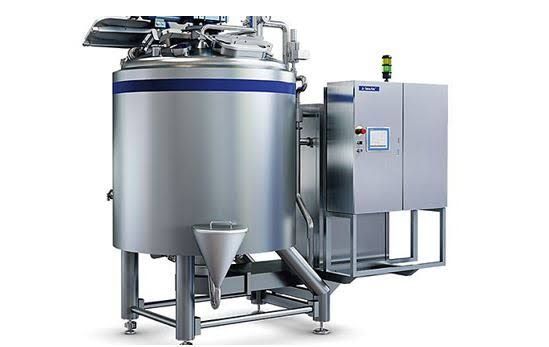
Different types of equipment are available for different production needs. An industrial high shear mixer may handle large production volumes, while a laboratory high shear mixer is designed for research, testing, and product development. Other common designs include the inline high shear mixer, batch high shear mixer, and vacuum high shear mixer. Understanding how these systems work helps explain why they have become an important part of modern manufacturing.
Context
Understanding High Shear Mixing
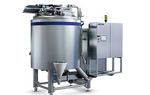
A high shear mixer is a machine that rapidly combines liquids, powders, or semi-solid materials by creating intense mechanical forces. Unlike traditional mixing methods that simply stir ingredients together, high shear mixing equipment breaks down particles and distributes them evenly throughout the mixture.
This process improves uniformity and helps manufacturers create products with consistent texture, appearance, and performance. High shear mixer machine designs vary depending on production goals, material characteristics, and processing requirements.
How the Technology Developed
Early industrial mixers relied mainly on slow-speed agitation. As manufacturing processes became more complex, industries required equipment capable of producing finer emulsions, suspensions, and dispersions. High shear technology was developed to meet these changing production requirements.
Modern systems now combine advanced rotor and stator designs with improved motor efficiency and digital process controls. These developments allow manufacturers to achieve repeatable mixing results across different production batches.
Common Types of High Shear Mixers
Several machine designs are commonly used across manufacturing industries.
| Mixer Type | Typical Purpose |
|---|---|
| Inline high shear mixer | Continuous production with material flowing through the mixer |
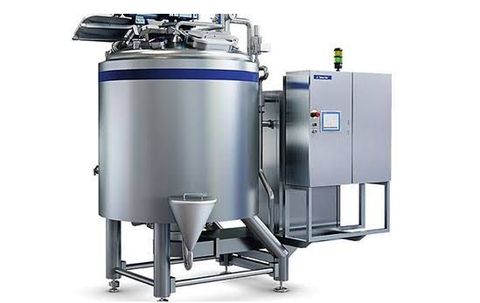
| Batch high shear mixer | Mixing ingredients inside a processing vessel |
| Laboratory high shear mixer | Product testing, formulation research, and small-scale development |
| Pharmaceutical high shear mixer | Preparing powders, granules, and liquid formulations |
| Cosmetic high shear mixer | Mixing creams, lotions, gels, and personal care products |
| Food processing mixer | Producing sauces, dairy products, beverages, and similar foods |
| Vacuum high shear mixer | Mixing while reducing trapped air within the product |
Main Components
Most industrial mixing equipment includes several important parts:
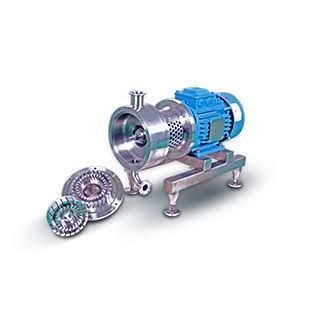
- Electric motor
- Rotor and stator assembly
- Mixing chamber
- Shaft and drive system
- Processing vessel or pipeline
- Control panel
- Safety protection features
Each component contributes to efficient mixing and product consistency.
Importance
Supporting Product Consistency
Manufacturers often need every production batch to have similar texture, appearance, and composition. High shear mixers help reduce variation by evenly distributing ingredients throughout the mixture.
This consistency is particularly important when products must meet strict quality standards or repeatable manufacturing specifications.
Improving Manufacturing Efficiency
High-speed mixing shortens the time required to combine difficult materials. Powders disperse more quickly, liquids blend more evenly, and emulsions become more stable than with slower mixing methods.
Although processing requirements vary, high shear mixing equipment often reduces the number of processing steps needed to reach the desired mixture.
Supporting Multiple Industries
Many industries depend on industrial mixing equipment because different materials require different mixing techniques.
Common applications include:
- Food manufacturing
- Cosmetic production
- Pharmaceutical manufacturing
- Chemical processing
- Paint and coating production
- Adhesive manufacturing
- Agricultural formulations
- Biotechnology research
Creating Stable Emulsions
Many products contain ingredients that naturally separate over time. An emulsifier mixer helps distribute oil and water into stable emulsions by creating very small droplets.
Examples include:
- Salad dressings
- Skin creams
- Lotions
- Certain beverages
- Cleaning products
Reducing Particle Size
Many manufacturing processes require smaller particle sizes to improve texture or stability. A homogenizer mixer or high shear mixer machine helps reduce larger particles into finer distributions, improving the overall quality of the finished mixture.
Recent Updates
Greater Process Automation
Recent manufacturing trends continue to focus on automation. Many modern high shear mixers now include programmable controls that allow operators to monitor speed, temperature, processing time, and production parameters more accurately.
Digital interfaces also improve production consistency by storing process settings for repeated manufacturing cycles.
Energy-Efficient Equipment
Equipment manufacturers continue developing motors and drive systems that use energy more efficiently while maintaining mixing performance. These improvements support broader manufacturing goals related to resource efficiency and operational sustainability.
Improved Cleaning Designs
Industries with strict hygiene requirements increasingly use equipment designed for easier cleaning. Smooth internal surfaces, sanitary construction, and clean-in-place compatibility have become more common in food processing mixer and pharmaceutical high shear mixer designs.
Increased Use of Inline Processing
Many manufacturers are expanding the use of inline high shear mixer systems for continuous production. Continuous processing reduces interruptions between production stages and allows materials to move through the manufacturing line without repeated transfers.
Growth in Laboratory Development
Product development continues to expand across many industries. Laboratory high shear mixer systems help researchers evaluate formulations before larger production begins, making product development more efficient and repeatable.
Laws or Policies
Manufacturing Quality Standards
High shear mixing equipment is commonly used within manufacturing environments that operate under quality management systems. Many organizations follow internationally recognized quality standards to maintain consistent production processes and documented procedures.
Food Production Regulations
Food manufacturing facilities generally follow hygiene and food safety regulations established by national authorities. Equipment used as a food processing mixer is typically designed to support cleaning requirements and reduce contamination risks.
Pharmaceutical Manufacturing Requirements
A pharmaceutical high shear mixer is often used within facilities operating under Good Manufacturing Practice (GMP) guidelines or similar regulatory frameworks. These guidelines focus on process control, documentation, equipment validation, and product quality.
Workplace Safety Rules
Industrial facilities are generally required to protect workers through machine guarding, emergency stop systems, operator training, and routine equipment inspections. Safety regulations vary by country but commonly emphasize safe operation of industrial machinery.
Environmental Considerations
Many manufacturing facilities also follow environmental regulations related to energy use, waste management, emissions, and responsible handling of processing materials. Equipment improvements often support these broader environmental objectives.
Tools and Resources
Computer-Aided Design Software
Engineering teams frequently use computer-aided design software when planning production lines, designing processing systems, or selecting compatible industrial mixing equipment.
Process Simulation Software
Simulation tools allow engineers to evaluate production conditions before equipment installation. These programs can model flow patterns, mixing performance, and production efficiency under different operating conditions.
Quality Management Platforms
Digital quality management platforms help manufacturers document production procedures, equipment maintenance, inspections, and manufacturing records.
Equipment Documentation
Manufacturers commonly provide:
- Equipment manuals
- Installation guides
- Maintenance schedules
- Spare parts documentation
- Process parameter references
- Safety instructions
These resources support consistent equipment operation throughout its working life.
Production Monitoring Systems
Many modern factories integrate high shear mixer machine controls with broader manufacturing software. These systems monitor equipment performance, production efficiency, maintenance intervals, and process consistency.
FAQs
What is a high shear mixer used for?
A high shear mixer combines liquids, powders, or semi-solid materials into a uniform mixture. It is widely used in food manufacturing, cosmetics, pharmaceuticals, chemicals, and many other industrial applications.
How does an inline high shear mixer differ from a batch high shear mixer?
An inline high shear mixer processes materials continuously as they move through a pipeline, while a batch high shear mixer blends ingredients inside a single processing vessel before the material moves to the next manufacturing stage.
Why is a laboratory high shear mixer important?
A laboratory high shear mixer allows researchers to test formulations, evaluate mixing performance, and develop production methods before moving to larger manufacturing equipment.
What industries commonly use a vacuum high shear mixer?
A vacuum high shear mixer is frequently used in cosmetic production, pharmaceutical manufacturing, specialty chemicals, and products where reducing trapped air helps improve mixture quality.
Is a homogenizer mixer the same as a high shear mixer?
Both machines use mechanical energy to improve mixture uniformity, but their operating principles and processing goals may differ depending on equipment design and manufacturing requirements. Some production systems combine both technologies for specific applications.
Conclusion
High shear mixers have become an important part of modern manufacturing because they improve mixing consistency, reduce particle size, and support efficient production processes. Different equipment designs, including inline, batch, laboratory, pharmaceutical, cosmetic, food processing, and vacuum systems, meet a wide range of manufacturing needs. Ongoing improvements in automation, hygiene, and energy efficiency continue to shape current equipment development. Understanding how these machines operate provides useful insight into many everyday products produced through modern industrial processes.