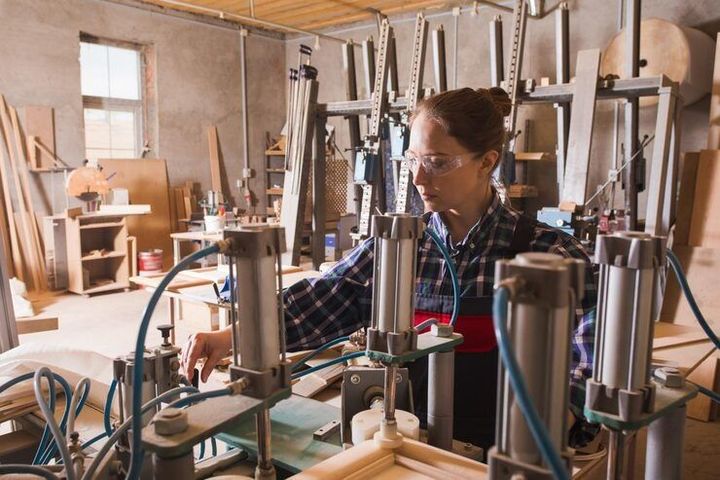
Honing Machines Explained: Types, Uses and Working Guide
Honing machines are precision manufacturing systems used to improve the surface finish, accuracy, and dimensional consistency of internal and external metal surfaces. They are commonly used after drilling, boring, or grinding operations to achieve tighter tolerances and smoother finishes.
The honing process involves abrasive stones that rotate and move back and forth against a workpiece surface. This controlled movement removes small amounts of material, helping manufacturers achieve highly accurate dimensions and surface characteristics.
The need for honing machines emerged as industries demanded greater precision in mechanical components. Traditional machining methods could create holes and surfaces, but achieving extremely fine finishes and exact dimensions often required an additional finishing process. Honing became an effective solution for producing components that require high performance and reliability.
Industries such as automotive manufacturing, aerospace engineering, hydraulic equipment production, heavy machinery manufacturing, and industrial equipment fabrication frequently rely on honing technology.
Common Types of Honing Machines
| Type | Main Application | Key Characteristic |
|---|---|---|
| Vertical Honing Machine | Cylinders and deep bores | Suitable for large workpieces |
| Horizontal Honing Machine | Long internal surfaces | Better for elongated components |
| Single-Pass Honing Machine | High-volume production | Fast processing |
| Multi-Spindle Honing Machine | Mass manufacturing | Multiple operations simultaneously |
| CNC Honing Machine | Precision industries | Automated control and accuracy |
Basic Working Principle
The honing process typically follows these steps:
• A workpiece is securely positioned.
• Abrasive honing stones contact the surface.
• The stones rotate while moving reciprocally.
• Small amounts of material are removed.
• Surface irregularities are corrected.
• Desired dimensions and finish are achieved.
This process creates a distinctive crosshatch pattern that helps retain lubrication and improves component performance.
Why Honing Machines Matter Today
Modern industries demand components with exceptional precision. Even minor dimensional errors can affect performance, efficiency, durability, and safety.
Honing machines play an important role because they help manufacturers achieve consistent quality while minimizing defects. Precision-finished components often perform better under demanding operating conditions.
Industries Benefiting from Honing Technology
• Automotive manufacturing
• Aerospace engineering
• Oil and gas equipment production
• Hydraulic system manufacturing
• Medical device manufacturing
• Industrial machinery production
• Energy and power generation sectors
Problems Honing Machines Help Solve
Many machining operations leave small imperfections on surfaces. These imperfections can create friction, wear, vibration, and performance issues.
Honing machines address several challenges:
• Surface roughness reduction
• Improved dimensional accuracy
• Enhanced roundness and straightness
• Better lubrication retention
• Increased component lifespan
• Reduced operational wear
The result is a more reliable component that performs efficiently throughout its service life.
Key Benefits of Honing Machines
| Benefit | Impact |
| Higher Accuracy | Improved dimensional consistency |
| Better Surface Finish | Reduced friction |
| Enhanced Durability | Longer component life |
| Improved Lubrication | Better operational efficiency |
| Consistent Production | Reliable manufacturing quality |
| Reduced Material Waste | Improved process efficiency |
As industries continue to adopt advanced manufacturing techniques, precision finishing processes remain essential for achieving high-quality outcomes.
Recent Updates and Industry Trends
The honing machine industry has experienced significant technological developments during 2025 and early 2026.
Growing Adoption of Automation
Manufacturers increasingly integrate automation into honing systems. Automated loading, unloading, and monitoring technologies help improve consistency and productivity.
Smart manufacturing environments now allow honing machines to communicate with broader production systems, enabling real-time monitoring and performance analysis.
Expansion of CNC-Controlled Honing
Throughout 2025, CNC-controlled honing systems continued gaining popularity because they provide:
• Greater precision
• Repeatable results
• Reduced human error
• Improved process control
Advanced software allows operators to monitor dimensions and adjust machining parameters automatically.
Data-Driven Manufacturing
Industrial facilities are adopting sensor-based monitoring systems that collect operational data during honing processes.
These systems help identify:
• Tool wear patterns
• Production efficiency trends
• Quality variations
• Maintenance requirements
Predictive maintenance strategies have become increasingly important in modern manufacturing environments.
Sustainability and Resource Efficiency
Environmental considerations have encouraged manufacturers to improve resource utilization.
Recent developments include:
• Improved abrasive materials
• Reduced energy consumption
• Better coolant management
• Lower material waste generation
These changes support broader industrial sustainability goals while maintaining production quality.
Precision Requirements Continue to Increase
Industries such as aerospace, medical devices, and electric vehicle manufacturing continue demanding tighter tolerances and superior surface finishes.
As a result, honing technology continues evolving to meet increasingly strict manufacturing standards.
Honing Technology Trend Overview
| Trend | Industry Impact |
| Automation | Improved productivity |
| CNC Integration | Greater accuracy |
| Smart Monitoring | Better quality control |
| Predictive Maintenance | Reduced downtime |
| Sustainability Focus | Resource efficiency |
| Advanced Abrasives | Improved finishing performance |
Laws, Standards, and Regulatory Considerations
Honing machines operate within broader manufacturing regulations and industrial quality frameworks.
The specific requirements vary by country and industry sector, but several common regulatory areas influence honing operations.
Workplace Safety Regulations
Manufacturing facilities must follow occupational safety requirements related to:
• Machine guarding
• Operator protection
• Noise management
• Dust control
• Emergency stop systems
Safety regulations help reduce workplace risks associated with industrial machinery.
Environmental Compliance
Industrial facilities often follow regulations regarding:
• Waste disposal
• Coolant handling
• Emissions management
• Resource consumption
• Hazardous material control
Environmental compliance helps ensure responsible manufacturing practices.
Quality Management Standards
Many manufacturers operate under recognized quality management systems.
These frameworks typically focus on:
• Process consistency
• Documentation
• Inspection procedures
• Continuous improvement
• Product traceability
Industry-Specific Requirements
Certain sectors maintain additional standards:
• Aerospace manufacturing standards
• Automotive quality frameworks
• Medical device production requirements
• Energy sector specifications
These requirements often influence machining tolerances, inspection procedures, and production documentation.
Governments worldwide continue encouraging advanced manufacturing through industrial modernization programs, digital transformation initiatives, and technology adoption frameworks.
Helpful Tools and Resources for Learning About Honing Machines
Professionals, students, engineers, and manufacturing teams often use various resources to better understand honing technology.
Educational Resources
• Technical manuals
• Manufacturing textbooks
• Engineering training materials
• Industrial process guides
• Professional certification programs
Digital Design and Analysis Tools
• Computer-aided design software
• Manufacturing simulation tools
• Surface roughness calculators
• Tolerance analysis tools
• Production planning systems
Process Monitoring Resources
• Machine monitoring dashboards
• Quality inspection templates
• Maintenance tracking systems
• Performance reporting tools
• Statistical process control applications
Useful Learning Areas
Individuals studying honing technology may benefit from learning:
• Precision machining principles
• Surface finishing methods
• Metrology and measurement
• Manufacturing quality control
• Industrial automation fundamentals
These resources support better understanding of modern production environments and precision engineering processes.
Frequently Asked Questions
What is a honing machine used for?
A honing machine is used to improve surface finish, dimensional accuracy, roundness, and overall quality of internal or external surfaces after machining operations.
How is honing different from grinding?
Grinding removes larger amounts of material and shapes a component, while honing is a finishing process focused on improving accuracy and surface quality.
Which industries commonly use honing machines?
Automotive, aerospace, hydraulic equipment, medical device manufacturing, energy production, and industrial machinery sectors frequently use honing technology.
What materials can be honed?
Honing can be applied to various materials, including steel, cast iron, aluminum alloys, and certain advanced engineering materials.
Why is the crosshatch pattern important?
The crosshatch pattern helps retain lubricants, reduces friction, improves wear resistance, and enhances the performance of moving mechanical components.
Conclusion
Honing machines are an important part of modern precision manufacturing. They help create highly accurate surfaces, improve component performance, and support quality requirements across multiple industries.