Honing Machines Guide: Essential Features, Applications, and Industry Uses
Honing machines are precision machining tools used to improve the surface finish and geometric accuracy of metal components. The process involves using abrasive stones that rotate and move back and forth inside a workpiece to refine its internal or external surfaces. Honing is commonly used after other machining processes such as drilling, boring, or grinding to achieve highly accurate dimensions and smooth finishes.
Honing machines are essential tools used in industrial manufacturing to achieve high precision and smooth surface finishes. These machines are especially important for components that require tight tolerances and consistent internal textures.
Many industrial parts, such as engine cylinders and hydraulic valves, must meet strict engineering standards. Even small imperfections can reduce performance or lead to mechanical failure.
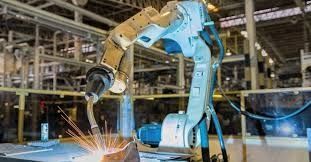
Honing machines are widely used in CNC manufacturing, automation systems, and advanced production environments. They can operate manually or through computer-controlled systems for improved accuracy and repeatability.
Types of Honing Machines
Different types of honing machines are designed for specific production needs and component sizes.
- Vertical honing machines
- Horizontal honing machines
- CNC honing machines
- Multi-spindle honing machines
- Portable honing equipment
Each type supports different industrial applications and production environments.
How Honing Works
Honing removes a very small amount of material while creating a crosshatch surface pattern. This pattern improves lubrication retention, which is critical in moving mechanical systems.
The process is commonly used for internal surfaces such as cylindrical bores. It enhances both dimensional accuracy and surface quality.

Why Honing Machines Matter in Modern Industries
Honing machines play a vital role in industries that require high-precision components. These include automotive, aerospace, and heavy equipment manufacturing.
Modern machinery operates under high pressure and temperature conditions. Precision finishing ensures smooth operation and reduces wear over time.
Key Benefits of Honing
Several factors highlight the importance of honing in today’s manufacturing landscape:
- Achieves extremely tight tolerances measured in microns
- Improves surface finish and reduces friction
- Extends component lifespan
- Enhances energy efficiency and reliability
These advantages make honing a critical process in precision engineering.
Industries That Use Honing Technology
Honing is widely used across multiple industrial sectors:
- Automotive engine manufacturing
- Aerospace component production
- Hydraulic and pneumatic systems
- Industrial machinery engineering
- Oil and gas equipment production
Technical Challenges Solved by Honing
Honing helps address several manufacturing challenges:
- Correcting minor dimensional errors
- Improving roundness and cylindricity
- Enhancing lubrication retention
- Increasing durability under high stress
Recent Developments in Honing Machine Technology
Recent advancements in 2024 and 2025 have improved honing machine performance and integration with modern systems.
One major trend is the adoption of CNC automation and smart factory technologies. These systems enable real-time monitoring of machine performance and production data.
Key Innovations
- High-speed abrasive stone technology
- Integrated automated measurement systems
- Adaptive pressure control systems
- Digital twin technology for performance analysis
Manufacturers are also focusing on sustainability by improving energy efficiency and coolant management systems.
The growth of electric vehicles has further increased demand for high-precision components. This has driven innovation in honing and precision machining technologies.
Regulations and Manufacturing Policies
Honing machines operate under strict safety and environmental regulations. These rules ensure safe operation and reduce industrial risks.
Workplace safety standards typically address machine guarding, operator training, and noise exposure. Environmental regulations focus on proper handling of lubricants and coolants.
Common Industry Standards
| Quality Standard | Purpose |
|---|---|
| ISO 9001 | Quality management systems |
| ISO 14001 | Environmental management |
| IATF 16949 | Automotive manufacturing |
These standards help manufacturers maintain quality and compliance in production processes.
Useful Tools and Resources for Honing Technology
Modern honing operations rely on a range of digital tools and measurement systems. These tools ensure accuracy, efficiency, and process control.
Design and Engineering Tools
- CAD software for component design
- CAM software for machining paths
- CNC simulation tools
Measurement and Inspection Tools
- Coordinate Measuring Machines (CMM)
- Surface roughness testers
- Bore gauges
Manufacturing Management Systems
- Production planning platforms
- Machine monitoring dashboards
- Predictive maintenance software
Honing Process Overview
| Step | Process Description |
|---|---|
| Component preparation | Workpiece is securely mounted |
| Abrasive selection | Suitable honing stones are chosen |
| Controlled motion | Stones rotate and move inside the bore |
| Surface finishing | Crosshatch pattern is created |
| Inspection | Accuracy and surface quality are verified |
Machining Process Comparison
| Machining Process | Surface Finish Quality | Typical Use |
|---|---|---|
| Grinding | High | External surfaces |
| Boring | Moderate | Initial internal shaping |
| Honing | Very High | Precision internal finishing |
This comparison shows why honing is often used for final finishing operations.
Common Questions About Honing Machines
What is the primary function of a honing machine?
A honing machine improves dimensional accuracy and surface finish, especially inside cylindrical holes. It removes a minimal amount of material for fine finishing.
How is honing different from grinding?
Grinding removes more material and is usually applied to external surfaces. Honing focuses on precise internal finishing and correcting small imperfections.
Which industries use honing machines most?
Industries such as automotive, aerospace, hydraulic systems, and industrial machinery rely heavily on honing technology.
Why is the crosshatch pattern important?
The crosshatch pattern helps retain lubrication, which reduces friction and improves performance in moving components.
Can honing machines be automated?
Yes, modern honing machines use CNC systems and automation for high precision and repeatability.
Conclusion
Honing machines are essential in modern manufacturing where precision and reliability are critical. They refine internal surfaces and help produce high-performance components.
These machines support industries such as automotive, aerospace, and industrial engineering. Their ability to achieve tight tolerances makes them indispensable in advanced manufacturing.
With the rise of smart factories and digital systems, honing technology continues to evolve. It remains a key part of precision machining and industrial innovation worldwide.