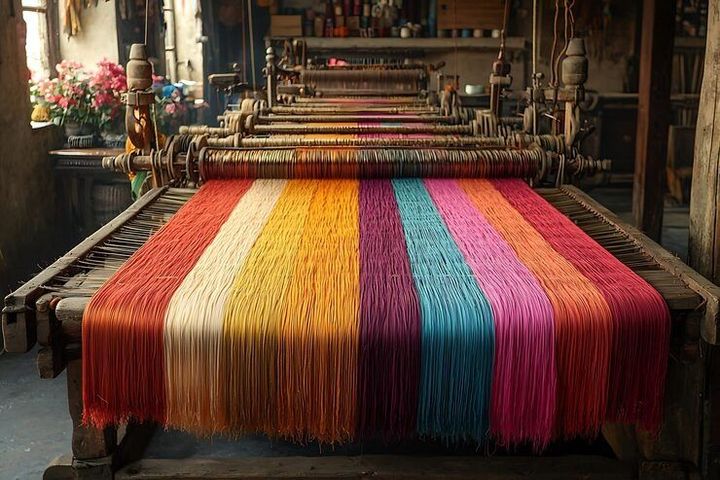
Jacquard Looms Explained: Technology, Applications & Textile Manufacturing
Jacquard looms are advanced textile machines designed to create detailed woven patterns by controlling individual warp threads. Unlike basic weaving systems that repeat simple designs, Jacquard technology can produce complex images, textures, motifs, logos, and decorative patterns directly within the fabric structure.
The technology is named after Joseph Marie Jacquard, who developed an important punched-card control system in the early 19th century. His invention changed textile manufacturing by making complex pattern creation more systematic and repeatable.
Today, the original punched-card concept has evolved into computerized Jacquard weaving systems. Modern machines use digital pattern files, electronic controls, automated thread selection, and advanced monitoring systems. These developments allow textile manufacturers to create detailed fabrics with improved precision and greater design flexibility.
Jacquard looms are used in fashion textiles, home furnishings, upholstery, technical fabrics, decorative materials, and many other textile applications. Their main purpose is to control individual warp threads so that complicated patterns can be woven into the fabric during production.
Why Jacquard Looms Matter in Modern Textile Manufacturing
The textile industry has changed significantly because of digital design, automation, advanced materials, and growing demand for customized fabrics. Jacquard looms are important because they connect creative design with precise industrial production.
A major advantage is design flexibility. Traditional weaving systems often depend on repeated patterns and limited structures. Jacquard technology allows each warp thread to be controlled according to the digital design. This makes it possible to create detailed shapes, artistic patterns, geometric designs, lettering, and multi-layered textures.
Jacquard looms also help reduce the need for manual pattern control. Automated systems can follow digital instructions with consistent accuracy. This can support better production planning and reduce mistakes caused by repeated manual adjustments.
The technology affects several groups within the textile industry, including:
- Textile designers creating complex fabric patterns
- Weaving manufacturers producing decorative and technical textiles
- Fashion companies developing textured fabrics
- Interior designers using patterned upholstery and furnishing materials
- Researchers working with smart and functional textiles
- Consumers looking for detailed and durable woven products
Jacquard fabrics are also valued for their visual depth. Since the pattern is woven into the fabric structure, the design can have a more integrated appearance than some surface-printing methods.
Another important factor is material versatility. Jacquard looms can work with different types of yarn, depending on the machine design and production requirements. Common materials include cotton, wool, silk, polyester, viscose, blended fibers, and some technical yarns.
The technology also supports modern digital workflows. Designers can create patterns using computer-aided design software and then prepare them for electronic loom systems. This creates a connection between design development, production planning, and manufacturing control.
Recent Trends in Jacquard Loom Technology
During 2025 and 2026, textile manufacturing continued to focus on automation, digital production, data monitoring, energy efficiency, and advanced fabric development. These trends are influencing how Jacquard looms are designed and operated.
One important trend is the wider use of digital textile design. Modern design software allows patterns to be created, edited, tested, and adjusted before production begins. This can help manufacturers identify design problems earlier and improve production planning.
Artificial intelligence and machine learning are also becoming more important in textile production. These technologies may assist with pattern development, defect detection, production analysis, and predictive maintenance. However, their role depends on the specific equipment and software used by each manufacturer.
Another trend is the development of smart textile applications. Researchers and manufacturers are exploring fabrics that can support sensing, communication, temperature management, and other technical functions. Jacquard weaving can be useful in these areas because it allows complex structures and controlled patterns to be integrated into fabric construction.
Energy efficiency is also receiving greater attention. Textile manufacturers are examining equipment performance, power consumption, production efficiency, and material waste. Modern electronic control systems can support better monitoring of machine operations and production conditions.
Digital connectivity is another major development. Many modern textile machines can connect with manufacturing information systems. This can help production teams monitor machine status, collect data, and analyze manufacturing performance.
Recent developments have also encouraged greater interest in flexible production. Instead of focusing only on very large volumes of one design, some manufacturers are exploring more adaptable production systems that can support multiple designs and changing customer requirements.
Laws, Regulations, and Textile Manufacturing Policies
The regulations affecting Jacquard looms depend on the country where the equipment is manufactured, installed, or operated. There is no single worldwide law that applies to every Jacquard loom.
Manufacturers and textile facilities generally need to consider several areas of regulation.
Workplace safety requirements:
Industrial weaving equipment contains moving parts, electrical systems, rotating components, and automated mechanisms. Workplace safety rules may require protective measures, machine guarding, operator training, emergency controls, and regular equipment inspection.
Electrical and machinery safety:
Industrial equipment may need to follow national or regional safety standards related to electrical systems, machine construction, electromagnetic compatibility, and operational safety.
Environmental regulations:
Textile manufacturing can be affected by rules concerning energy use, industrial emissions, waste management, water use, and material handling. The exact requirements depend on the production process and local regulations.
Product and textile regulations:
Textile products may need to comply with rules concerning fiber labeling, chemical substances, product safety, and consumer information. Requirements differ by market and product category.
Government manufacturing programs:
Many countries support modernization, digital manufacturing, advanced machinery, energy efficiency, and textile technology development through industrial policies and technology programs. These programs can influence investment in automated weaving systems and digital textile manufacturing.
Businesses should always review the latest national and regional requirements before installing or operating industrial weaving equipment. Regulations can change over time, particularly in areas related to environmental performance, workplace safety, and digital manufacturing.
Tools and Resources for Jacquard Loom Design and Production
Several types of tools can help users understand, design, operate, and analyze Jacquard weaving systems.
Computer-aided textile design software:
These programs help create patterns, adjust colors, simulate fabric designs, and prepare digital files for production.
Pattern conversion tools:
Digital pattern conversion software can help prepare design files for compatibility with specific electronic weaving systems.
Production monitoring systems:
Manufacturing monitoring tools can track machine status, production information, operational performance, and potential interruptions.
Maintenance planning templates:
Digital checklists and maintenance templates can help organize inspection schedules, component checks, cleaning tasks, and technical records.
Textile calculation tools:
Calculators can assist with yarn measurements, fabric density, production planning, and other technical textile calculations.
Training resources:
Online courses, technical manuals, textile engineering books, educational videos, and industry learning platforms can help beginners understand weaving principles.
Quality control checklists:
Standardized inspection forms can help teams review pattern accuracy, fabric appearance, weaving consistency, yarn condition, and production quality.
Using the right combination of design, production, maintenance, and learning tools can make Jacquard loom operations easier to understand and manage.
Frequently Asked Questions About Jacquard Looms
What is a Jacquard loom?
A Jacquard loom is a weaving machine that controls individual warp threads to create complex patterns and detailed designs in woven fabric. Modern versions commonly use electronic or computerized control systems.
How is a Jacquard loom different from a regular loom?
A regular loom may create simpler repeated structures, while a Jacquard loom can control individual warp threads. This allows it to produce more complex patterns, images, textures, and decorative designs.
What fabrics can be produced using Jacquard technology?
Jacquard technology can be used with various yarns and fibers, including cotton, silk, wool, polyester, viscose, and blended materials. The exact materials depend on the machine and fabric design.
Are modern Jacquard looms computerized?
Many modern Jacquard looms use electronic controls and digital pattern files. These systems can provide precise control over complex designs and may connect with digital production systems.
Where are Jacquard looms commonly used?
They are commonly used in fashion textiles, upholstery, home furnishings, decorative fabrics, technical textiles, and other applications that require detailed woven patterns.
Conclusion
Jacquard looms have played an important role in the development of advanced textile manufacturing. From the early punched-card system to modern computerized weaving technology, the basic concept has continued to evolve.