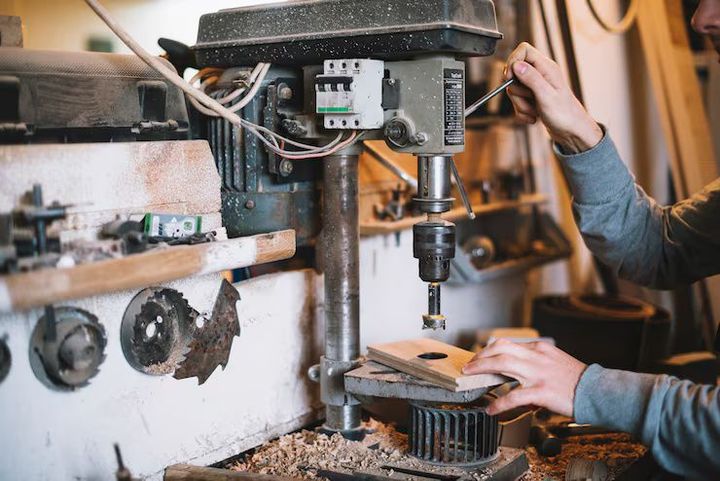
The concept of jig boring originated from the need to manufacture jigs and fixtures with exceptional accuracy. These jigs guide cutting tools in production processes, ensuring consistency across large volumes of parts. Over time, jig boring machines evolved into essential equipment for precision engineering and advanced manufacturing.
Modern jig boring machines are equipped with advanced features such as digital readouts (DRO), CNC systems, and high-precision spindles. These capabilities allow operators to perform complex machining tasks with high repeatability and efficiency.
Types of Jig Boring Machines
Common types of jig boring machines include:
-
Vertical jig boring machines
-
Horizontal jig boring machines
-
CNC jig borers
-
Floor-type jig boring machines
Common Applications
These machines are widely used in:
-
Tool and die making
-
Aerospace component manufacturing
-
Automotive part production
-
Precision engineering applications
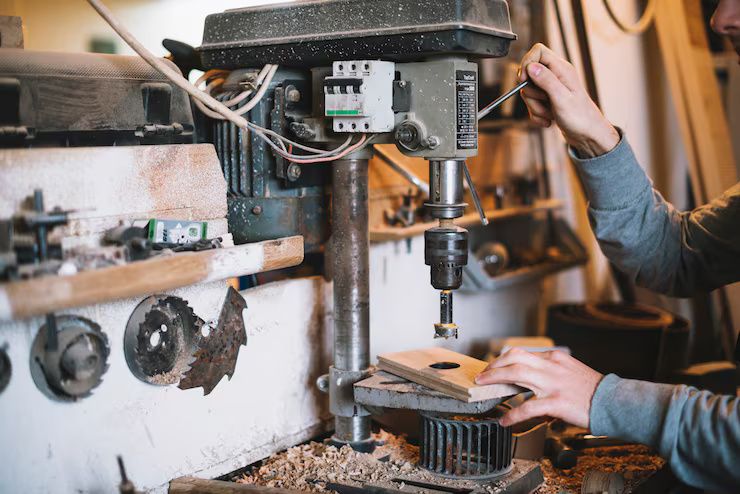
Their primary function is to ensure that holes are drilled accurately and positioned correctly relative to other features on a workpiece.
Why Jig Boring Machines Matter in Modern Manufacturing
Jig boring machines play a critical role in industries where precision is essential. As manufacturing processes become more advanced, the demand for high-accuracy machining continues to increase.
These machines address several key challenges:
-
Ensuring precise hole alignment in complex components
-
Reducing errors during assembly
-
Improving product quality and reliability
-
Supporting high-performance engineering applications
Industries That Benefit
Industries that rely heavily on jig boring include:
-
Aerospace and defense
-
Automotive manufacturing
-
Electronics and semiconductor production
-
Medical device manufacturing
Jig boring machines also help reduce material waste and improve efficiency. By achieving accurate results in a single setup, they minimize rework and additional processing steps.
Recent Developments and Industry Trends
In 2025, several technological advancements have influenced jig boring machines. One of the most significant trends is the integration of CNC technology, replacing traditional manual systems.
Another major development is the adoption of smart manufacturing technologies. These innovations enhance machine performance and monitoring capabilities.
Key Technological Features
Modern machines now include:
-
Real-time monitoring systems
-
Data analytics for performance tracking
-
Predictive maintenance capabilities
Hybrid machines that combine jig boring with milling functions are also gaining popularity. These machines reduce setup time and improve workflow efficiency.
Sustainability is another growing focus. Manufacturers are adopting energy-efficient systems and reducing coolant usage to meet environmental standards.
Regulations, Standards, and Compliance
Jig boring machines operate under strict industrial regulations to ensure safety and quality. Compliance is essential due to the high-speed and precision nature of these machines.
Key Compliance Areas
-
Workplace safety standards
-
Environmental regulations
-
Quality standards such as ISO 9001
-
Machinery certification requirements
Regulatory Bodies in India
Manufacturing facilities in India must follow:
-
Bureau of Indian Standards (BIS)
-
Factory safety regulations under labor laws
-
Environmental norms by pollution control boards
International standards such as ISO and CE marking ensure global compliance and performance consistency.
Tools and Resources for Jig Boring Applications
Various tools and software solutions support jig boring operations. These tools enhance precision, efficiency, and workflow management.
Common Tools and Software
-
CAD software for design
-
CAM software for machining programs
-
CNC simulation tools
-
Digital readout (DRO) systems
-
Precision instruments like micrometers and dial indicators
Common File Formats
-
G-code for CNC programming
-
DXF and STEP files for design data
Comparison of Machining Methods
| Feature | Jig Boring Machine | Standard Drilling Machine | CNC Milling Machine |
|---|
| Accuracy Level | Very High | Moderate | High |
| Hole Position Precision | Excellent | Limited | Good |
| Automation Capability | Moderate to High | Low | High |
| Application Complexity | High | Low | Very High |
Basic Workflow
The typical jig boring process includes:
-
Preparing and securing the workpiece
-
Aligning the machine with reference points
-
Inputting coordinates or program data
-
Performing precision boring operations
-
Inspecting the finished component
Advanced systems may also include optical alignment, tool wear monitoring, and automated calibration features.
Frequently Asked Questions
What is the main function of a jig boring machine?
A jig boring machine is used to create highly accurate holes with precise positioning. It is essential in precision engineering and manufacturing processes.
How is jig boring different from regular drilling?
Jig boring focuses on accuracy and alignment, while regular drilling prioritizes speed and general hole creation.
What industries use jig boring machines?
Industries such as aerospace, automotive, electronics, and medical devices rely heavily on jig boring for precision components.
Are jig boring machines automated?
Modern jig boring machines often include CNC systems, enabling automated and highly precise operations.
Why is precision important?
Precision ensures proper assembly, reduces errors, and improves product reliability and performance.
Additional Insights into Precision Machining
Jig boring machines are considered a benchmark for machining accuracy. Their ability to maintain tight tolerances makes them essential in high-performance applications.
Key Performance Factors
-
Spindle stability
-
Thermal control
-
Machine rigidity
-
Operator expertise or programming accuracy
Factors Affecting Precision
| Factor | Impact on Precision |
|---|
| Machine Calibration | High |
| Tool Quality | High |
| Environmental Control | Moderate |
| Operator Skill | Moderate |
With the growth of digital manufacturing, jig boring machines are increasingly integrated into automated production systems. This ensures faster production cycles and consistent quality.
Conclusion
Jig boring machines remain a vital part of modern manufacturing and precision machining. Their ability to produce accurate and precisely positioned holes makes them indispensable across multiple industries.
Recent advancements in CNC technology, smart systems, and energy efficiency have further enhanced their capabilities. At the same time, adherence to safety and environmental regulations ensures responsible operation.
As industries continue to move toward automation and high-precision engineering, jig boring machines will play a key role in maintaining quality and innovation in manufacturing.