Large Format Inkjet Printers Overview: Essential Guide for Print Quality and Applications
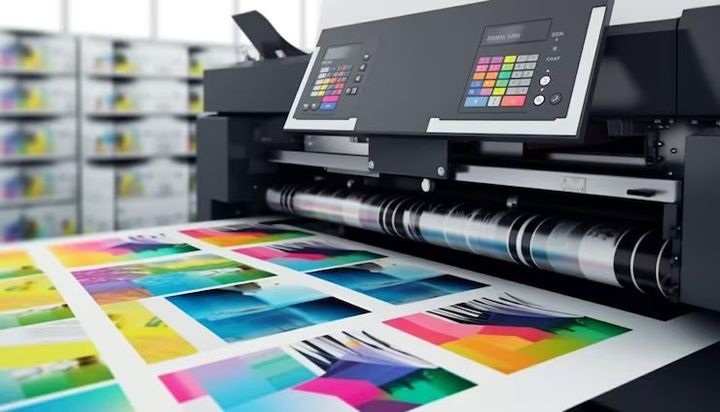
Large format inkjet printers are specialized printing devices designed to produce high-resolution prints on large media sizes, often ranging from 24 inches to several meters wide. These printers are commonly used for applications such as architectural drawings, engineering plans, posters, banners, signage, maps, and large photographic prints.
Traditional desktop printers usually support standard paper sizes like A4 or letter. However, industries such as architecture, advertising, and manufacturing require much larger prints to present detailed visuals clearly.
Large format inkjet printers address this need by combining high-resolution printing with the ability to handle wide media. These printers use inkjet technology to spray microscopic ink droplets onto surfaces, producing precise graphics and vibrant colors.
Supported Media Types
Large format inkjet printers are highly versatile because they can print on multiple materials, including:
- Poster paper
- Vinyl and banner materials
- Canvas
- Photo paper
- Adhesive-backed media
- Technical drawing paper
This flexibility allows businesses to create both technical documents and large-scale visual displays.
Why Large Format Inkjet Printing Matters
Large format printing plays a key role in modern visual communication. Many industries rely on large prints to present information in a clear and professional way.
Key Industries Using Large Format Printing
Common industries include:
- Architecture and construction
- Advertising and marketing
- Engineering and manufacturing
- Retail display design
- Photography and visual arts
- Geographic information systems (GIS)
Benefits of Large Format Printing
Large format printers offer several advantages:
- Maintain high resolution on large surfaces
- Provide precise line accuracy for technical drawings
- Deliver strong color consistency for branding
- Support digital workflows with design software
- Reduce production time through automation
They are also widely used in visual marketing across retail spaces, exhibitions, and public areas.
Recent Developments and Industry Trends
Large format printing has seen several advancements between 2024 and 2025. These innovations focus on improving sustainability, speed, and automation.
Key Trends
Some major trends include:
- Adoption of eco-solvent and water-based inks
- Faster print speeds with improved printheads
- AI-based color correction and optimization
- Cloud-connected printer management systems
- New media materials like textiles and synthetic substrates
These developments help businesses improve efficiency while reducing environmental impact.
Printing Technologies Overview
| Printing Technology | Key Characteristics | Typical Applications |
|---|---|---|
| Dye-based Inkjet | High color vibrancy | Photography and art prints |
| Pigment-based Inkjet | Strong durability and fade resistance | Posters and signage |
| Eco-solvent Inkjet | Weather-resistant output | Outdoor graphics |
| UV Inkjet | Instant curing with UV light | Rigid materials and signage |
Regulatory and Environmental Considerations
Large format printing is influenced by environmental and safety regulations. These rules help control emissions and ensure safe workplace practices.
Key Considerations
Important regulatory aspects include:
- Control of volatile organic compounds (VOCs)
- Compliance with chemical safety standards
- Proper handling of inks and cleaning materials
- Responsible waste management practices
In countries like India, industries are encouraged to adopt eco-friendly technologies such as water-based inks and energy-efficient printers.
Tools and Resources for Printing Workflows
Modern large format printing relies on digital tools to ensure accuracy and efficiency. These tools support everything from design to final output.
Design Software
Commonly used tools include:
- Adobe Illustrator
- Adobe Photoshop
- CorelDRAW
- AutoCAD
- SketchUp
Color Management Tools
Accurate color reproduction is essential in printing. Useful tools include:
- ICC profile management software
- Monitor calibration devices
- Spectrophotometers
Print Workflow Tools
Professional environments often use:
- RIP (Raster Image Processor) software
- Print queue management systems
- File preflight tools
Typical Printing Workflow
| Workflow Stage | Description |
|---|---|
| Design | Create artwork or technical drawings |
| File Preparation | Convert files into printable formats |
| Color Calibration | Ensure accurate color reproduction |
| Printing | Produce output using large format printer |
| Finishing | Trim, mount, or laminate prints |
Frequently Asked Questions
What is a large format inkjet printer?
A large format inkjet printer produces prints wider than standard paper sizes, typically starting at around 24 inches.
Which industries use these printers?
Industries such as architecture, engineering, advertising, photography, and retail commonly use them.
How is high image quality maintained?
These printers use advanced printheads with thousands of microscopic nozzles for precise ink placement.
What materials can be printed?
They support materials like vinyl, canvas, photo paper, banners, and technical drawing sheets.
Why is color management important?
It ensures that printed output matches the intended digital design, which is critical for branding and accuracy.
Conclusion
Large format inkjet printers are essential for modern visual communication and technical documentation. They enable high-resolution printing on large media, supporting industries from engineering to marketing.
Technological advancements such as eco-friendly inks, AI integration, and improved workflows have enhanced their capabilities. These innovations allow organizations to produce accurate and visually impactful outputs efficiently.
As regulations and sustainability concerns continue to shape the industry, large format printing is evolving toward safer and more efficient practices. Understanding these systems helps businesses make better use of printing technology.