Dry Granulation Machine Guide: Understanding Modern Powder Processing Techniques
Dry granulation is a manufacturing process used to transform fine powders into larger, easier-to-handle granules without adding liquid.
A dry granulation machine plays an important role in industries that process powders, particularly pharmaceutical manufacturing. This method helps improve material flow, reduces dust, and supports consistent production.
Context
What Is Dry Granulation?
Dry granulation is a process that compresses powder into compacted material and then breaks it into uniform granules. Unlike wet granulation, this technique does not require moisture or a drying stage. As a result, it is suitable for materials that are sensitive to heat or water.
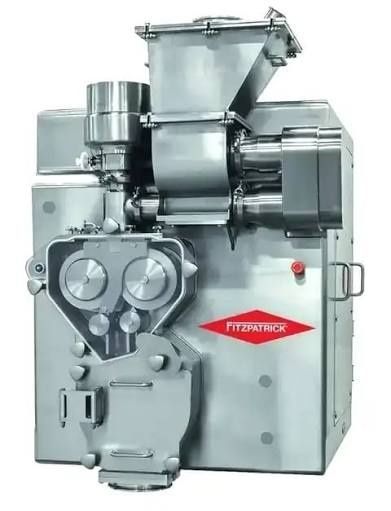
A dry granulation machine usually includes compression rollers, milling components, and control systems that work together to create granules with consistent size and density. Modern dry granulation equipment is used in pharmaceutical production, food processing, chemical manufacturing, and other industries where powder handling is important.
How the Process Works
A common dry granulation system follows several basic steps:
- Powder preparation and feeding
- Compression using a roller compactor machine
- Formation of compacted sheets or ribbons
- Milling into granules
- Screening for consistent particle size
Many pharmaceutical processing equipment lines include a pharmaceutical dry granulator or roller compactor granulator as part of tablet manufacturing equipment.
Importance
Why Dry Granulation Matters
Powder materials can be difficult to store, transport, and process. Very fine particles may create dust, separate during handling, or flow unevenly into manufacturing equipment. Dry powder granulation machine technology helps reduce these challenges by producing more uniform granules.
Industries that manufacture tablets, capsules, chemicals, and nutritional products often depend on pharmaceutical granulation equipment because consistent granules support stable production and predictable processing.
The process also provides practical advantages, including:
- Improved powder flow
- Lower dust generation
- More uniform particle size
- Better handling during production
- Compatibility with moisture-sensitive materials
These characteristics make industrial granulation systems valuable in many manufacturing environments.
Common Equipment Used
| Equipment | Primary Purpose |
|---|---|
| Dry granulation machine | Compresses and granulates powder |
| Roller compactor machine | Forms powder into dense ribbons |
| Roller compactor granulator | Combines compaction and granulation |
| Milling unit | Breaks compacted material into granules |
| Screening equipment | Separates granules by particle size |
| Tablet manufacturing equipment | Converts granules into tablets |
Recent Updates
Current Industry Trends
Modern pharmaceutical production machinery continues to focus on automation, process monitoring, and improved consistency. Digital control systems now help operators monitor pressure, feed rates, and roller speed during production.
Equipment manufacturers are also designing systems with easier cleaning procedures and modular layouts that simplify maintenance and production changes. Compact designs help manufacturers use available floor space more efficiently while maintaining consistent processing.
Another growing trend is improved data collection during production. Integrated monitoring systems record operating conditions, supporting quality documentation and process evaluation.
Environmental considerations have also encouraged greater attention to powder containment and dust control. Many newer systems include enclosed designs that reduce airborne particles during operation.
Laws or Policies
Regulatory Considerations
Pharmaceutical manufacturing is governed by regulations that focus on product quality, safety, and consistent production. In many countries, facilities using pharmaceutical processing equipment follow Good Manufacturing Practice (GMP) guidelines established by national regulatory authorities.
Manufacturers also follow quality management standards that document equipment operation, maintenance, cleaning procedures, and production records. Validation and routine inspection help demonstrate that equipment performs consistently under controlled conditions.
Specific regulatory requirements vary between countries, so organizations typically follow the rules established by their national health authorities alongside internationally recognized manufacturing standards.
Tools and Resources
Helpful Resources for Learning
People interested in powder processing can learn more through technical references, educational organizations, and regulatory publications. Useful resources include:
- Good Manufacturing Practice guidance documents
- International pharmaceutical quality standards
- Engineering handbooks covering powder processing
- Process flow diagram templates
- Equipment maintenance checklists
- Particle size analysis references
- Technical publications on pharmaceutical granulation equipment
Simulation software is also used during production planning to study material flow and equipment performance before manufacturing begins.
FAQs
What is a dry granulation machine?
A dry granulation machine compresses powder into dense material and then converts it into granules without adding liquid. It is commonly used for moisture-sensitive materials.
How does a roller compactor machine differ from wet granulation equipment?
A roller compactor machine forms granules by mechanical compression rather than using liquid binders and drying stages. This makes it suitable for certain powder formulations.
Why is pharmaceutical granulation equipment important?
Pharmaceutical granulation equipment helps improve powder flow, reduce dust, and create granules with more consistent size, supporting stable tablet manufacturing processes.
What industries use industrial granulation systems?
Industrial granulation systems are widely used in pharmaceutical manufacturing, food production, chemical processing, agricultural products, and material research involving powdered ingredients.
How does tablet manufacturing equipment work with a dry granulation system?
A dry granulation system prepares consistent granules that are later compressed into tablets using tablet manufacturing equipment, helping maintain uniform production.
Conclusion
Dry granulation is an established manufacturing technique that transforms fine powders into uniform granules without using liquid. Modern dry granulation equipment combines mechanical compression, process monitoring, and controlled particle sizing to support efficient powder processing. Pharmaceutical processing equipment, including roller compactor granulator systems, remains an important part of tablet production and other industrial applications. Understanding the process, equipment, and regulatory framework helps explain its role in contemporary manufacturing.