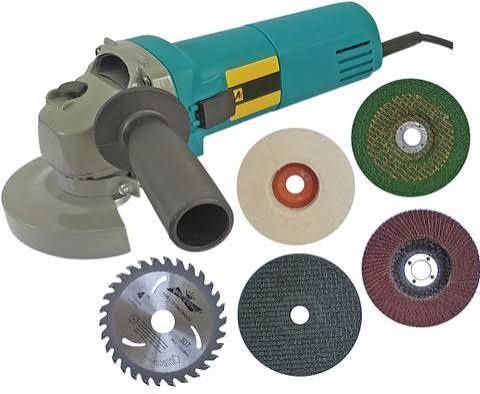
Grinding Machine Guide: Understanding Types, Applications, and Working Principles
Grinding plays an important role in modern manufacturing by improving the shape, size, and surface finish of different materials.
A grinding machine uses an abrasive wheel or similar tool to remove small amounts of material with high accuracy. From simple workshop tasks to large-scale manufacturing, this process supports consistent production and quality control.
Context
What Is a Grinding Machine?
A grinding machine is a machine tool designed to remove material from a workpiece through abrasion. Unlike cutting tools that remove larger sections of material, grinding focuses on fine finishing and accurate dimensions. Over time, grinding technology has developed from manually operated equipment to highly automated systems that improve precision and repeatability.
Many industries use an industrial grinding machine to finish metal parts, sharpen tools, and prepare surfaces for assembly. Today, equipment ranges from compact workshop machines to advanced CNC grinding machine systems that operate through computer-controlled programs.
Common Types of Grinding Machines
Different applications require different machine designs. Some widely used examples include:
| Grinding Machine Type | Typical Purpose |
|---|---|
| Surface grinding machine | Producing smooth, flat surfaces |
| Cylindrical grinding machine | Finishing the outer surface of round components |
| Centerless grinding machine | Processing cylindrical parts without holding them between centers |
| Tool and cutter grinder | Sharpening and restoring cutting tools |
| Precision grinding machine | Achieving tight dimensional accuracy |
| Automatic grinding machine | Repeating programmed grinding operations with minimal manual adjustment |
Importance
Why Grinding Technology Matters
Grinding supports the production of components that require smooth finishes and accurate dimensions. Industries such as automotive manufacturing, aerospace, construction, electronics, and medical equipment depend on grinding processes during production.
Industrial grinding equipment helps improve consistency while reducing material waste. Proper surface finishing also contributes to better assembly, smoother movement between parts, and longer equipment life.
Everyday Applications
Grinding technology appears in many products used daily, including:
- Vehicle engine and transmission components
- Kitchen appliances
- Construction tools
- Electric motors
- Metal furniture
- Industrial machinery parts
- Precision instruments
Metal grinding equipment is also used during maintenance to restore worn components and improve surface quality.
Recent Updates
Current Industry Trends
Recent developments focus on improving efficiency, automation, and digital monitoring. Grinding machine automation allows production systems to monitor machine conditions, adjust operating parameters, and reduce unnecessary downtime.
CNC grinding machine technology continues to improve through advanced programming software and better sensor integration. Modern systems can complete multiple grinding operations with consistent accuracy while collecting production data for quality monitoring.
Manufacturers are also developing machines that consume less energy, generate lower vibration, and improve dust management. These improvements support cleaner and more efficient manufacturing environments.
Laws or Policies
Standards That Influence Grinding Equipment
Grinding machines are commonly designed and operated according to workplace safety and industrial standards. Requirements differ by country, but several common areas include:
- Machine guarding to reduce contact with moving parts
- Emergency stop systems
- Dust collection and ventilation measures
- Operator training requirements
- Routine equipment inspection
International standards developed by organizations such as ISO often influence machine design and quality management. Many countries also apply workplace safety regulations covering industrial machinery and metal processing equipment.
Tools and Resources
Helpful Resources for Learning
People interested in grinding technology can learn through technical references, educational platforms, and industry organizations. Useful resources include:
- Machine manufacturer documentation
- CNC programming software manuals
- ISO standards information
- Engineering reference books
- CAD and CAM software for manufacturing planning
- Technical education platforms covering machining processes
- Maintenance checklists for industrial equipment
These resources help explain machine operation, maintenance procedures, and production planning in a practical way.
FAQs
What is a grinding machine used for?
A grinding machine removes small amounts of material to improve surface finish, achieve accurate dimensions, and prepare components for assembly or additional manufacturing processes.
What is the difference between a surface grinding machine and a cylindrical grinding machine?
A surface grinding machine creates smooth, flat surfaces, while a cylindrical grinding machine is designed to finish the outside surface of round components such as shafts and rollers.
How does a CNC grinding machine improve production?
A CNC grinding machine uses computer-controlled programming to perform repeated grinding operations with consistent accuracy. This helps maintain uniform quality across multiple components.
When is a centerless grinding machine used?
A centerless grinding machine is commonly used for cylindrical parts that need continuous processing without being clamped between centers. This method is widely used for high-volume production.
What is the purpose of a tool and cutter grinder?
A tool and cutter grinder restores and sharpens cutting tools used in machining operations, helping maintain accurate cutting performance over time.
Conclusion
Grinding technology supports accurate manufacturing across many industries by improving surface quality and dimensional precision. Different machine types are designed for specific production tasks, from flat surfaces to cylindrical components and cutting tools. Continued advances in automation, digital monitoring, and precision engineering are shaping modern grinding processes while supporting efficient manufacturing practices.