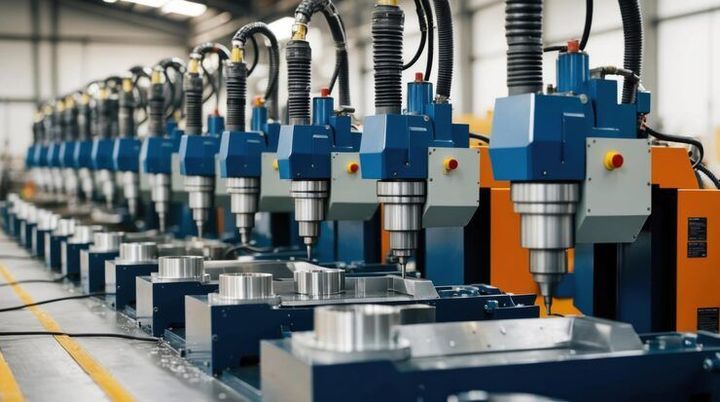
Industrial CNC Lathe Machines: Precision Manufacturing, Automation and Technology
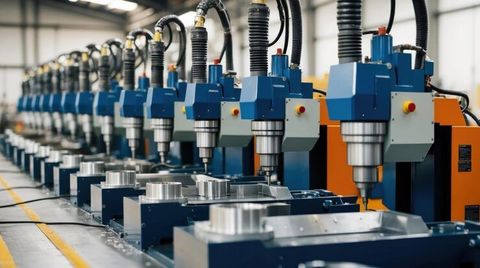
Industrial CNC lathe machines are advanced manufacturing systems designed to shape metal and other materials with high levels of accuracy. CNC stands for Computer Numerical Control. It refers to a technology that controls machine movements through programmed instructions rather than relying entirely on manual operation.
A traditional lathe rotates a workpiece while a cutting tool removes unwanted material to create a specific shape. A CNC lathe performs similar operations through computer-controlled movements, allowing manufacturers to produce components with consistent dimensions and surface quality.
These machines are widely used in automotive manufacturing, aerospace engineering, medical equipment production, electrical equipment manufacturing, and general industrial engineering.
The development of CNC lathe technology began as manufacturers needed more accurate and repeatable machining processes. As industrial production became more advanced, manual machining alone became difficult to manage for complex designs and large production volumes.
Modern industrial CNC lathe machines combine mechanical engineering, computer programming, electronic controls, and automated tool movements.
Common operations include:
Turning: Reducing the outside diameter of a rotating workpiece.
Facing: Creating a flat surface at the end of a component.
Thread Cutting: Producing internal or external threads.
Drilling: Creating accurate holes in a workpiece.
Boring: Enlarging existing holes to specific dimensions.
Grooving: Producing narrow channels or grooves.
Parting: Separating a finished component from the remaining material.
Depending on their configuration, CNC turning centres can also perform additional operations through multiple tools, powered tooling, and advanced spindle arrangements.
Importance of CNC Lathe Machines in Modern Manufacturing
Industrial CNC lathe machines play an important role in modern manufacturing because industries require accurate components, repeatable production, and reliable quality control.
Many industrial products contain rotating parts that must fit together correctly. Even small dimensional differences can affect the performance, durability, and safety of the final product.
CNC machining helps manufacturers manage these requirements through programmed movements and controlled cutting operations.
1. High Precision Manufacturing
Precision is one of the main advantages of CNC turning technology. Computer-controlled movements help maintain consistent dimensions across multiple components.
This is particularly important in aerospace components, automotive shafts, hydraulic parts, and precision engineering applications.
2. Consistent Production Quality
Manual machining depends heavily on operator experience and individual adjustments. CNC lathe machines use stored programs to repeat machining operations.
This supports consistent production when the same component needs to be manufactured repeatedly.
3. Industrial Automation
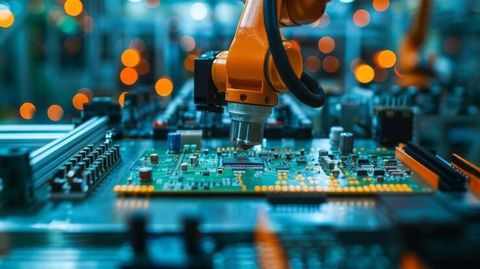
Modern CNC systems can integrate automatic tool changers, robotic loading systems, material handling equipment, and automated inspection technologies.
These features help reduce unnecessary manual handling and improve production planning.
4. Complex Component Manufacturing
Advanced CNC turning centres can produce components with different diameters, grooves, threads, and other detailed features.
Multi-axis machining capabilities also help manufacturers create more complex geometries.
5. Reduced Material Waste
Accurate cutting instructions and suitable machining parameters can help control material removal.
Manufacturers can also use simulation software to identify programming errors before machining begins.
Industries Using CNC Lathe Technology
Industry | Common applications |
|---|---|
Automotive | Shafts, pistons, and transmission parts |
Aerospace | Precision fittings and rotating components |
Medical equipment | Instrument components and precision parts |
Electronics | Metal connectors and small housings |
Energy | Industrial valves and turbine components |
Heavy engineering | Rollers, threaded parts, and machine components |
These applications demonstrate how CNC turning supports different manufacturing requirements.
Recent Updates: CNC Lathe Technology and Manufacturing Trends in 2025–2026
Industrial machining is experiencing important technological developments. Manufacturers are increasingly combining traditional CNC equipment with digital systems, automation, and advanced inspection technologies.
Several developments are shaping the industry.
1. Artificial Intelligence in CNC Machining
Artificial intelligence is becoming an important part of smart manufacturing.
AI-supported systems can analyse machine operating information, identify unusual patterns, and help predict possible equipment problems.
Some applications include:
Predictive maintenance analysis.
Cutting parameter recommendations.
Tool wear monitoring.
Production performance analysis.
Automated quality inspection.
These technologies can support better manufacturing decisions, although their effectiveness depends on data quality and system integration.
2. Smart Factory Integration
Smart factories connect CNC machines with production monitoring systems, industrial sensors, and manufacturing software.
This allows production teams to monitor machine status, operating conditions, and production information through connected digital platforms.
The approach is closely related to Industry 4.0, which focuses on connected equipment and data-driven manufacturing.
3. Robotics and Automated Loading
Robotic systems are increasingly integrated with CNC turning centres.
Robots can load raw materials, position workpieces, remove completed components, and transfer materials between production stages.
This approach is particularly useful in repetitive manufacturing environments.
4. Digital Twins and Machining Simulation
Digital twin technology creates a digital representation of a physical machine or manufacturing process.
Engineers can use simulation environments to study machining movements, examine production sequences, and identify potential problems before implementing changes on actual equipment.
This can support improved machine planning and process development.
5. India's Manufacturing Development
India's Union Budget 2025–26, presented on 1 February 2025, announced the National Manufacturing Mission.
The initiative focuses on manufacturing development, technology availability, MSME growth, workforce readiness, and product quality.
The Economic Survey 2025–26 also highlighted India's movement towards higher-technology manufacturing and stronger integration into global production networks. These developments provide a broader industrial environment for advanced machine tools and precision manufacturing.
Industrial CNC lathe machine manufacturing and operation in India are influenced by product standards, workplace safety regulations, environmental requirements, and industrial policies.
Understanding these frameworks is important for machine manufacturers, factory operators, engineers, and industrial equipment manufacturers.
1. Bureau of Indian Standards
The Bureau of Indian Standards (BIS) develops Indian Standards covering product quality, testing, and industrial equipment.
Its machine tool standards include requirements for geometric accuracy, positioning accuracy, repeatability, vibration, and thermal performance.
For CNC turning machines, the IS/ISO 13041 series provides relevant testing conditions for numerically controlled turning machines and turning centres.
Manufacturers and quality teams can use these standards when evaluating machine accuracy and performance.
India introduced the Machinery and Electrical Equipment Safety (Omnibus Technical Regulation) Order, 2024, to establish safety requirements for specified machinery categories.
However, the Ministry of Heavy Industries published its withdrawal on 16 January 2026.
Therefore, manufacturers should not assume that the withdrawn 2024 order remains an active blanket certification requirement. They should check current notifications and any other applicable product-specific requirements before determining compliance.
On 21 November 2025, the Government of India brought four Labour Codes into effect, including the Occupational Safety, Health and Working Conditions Code, 2020.
The framework addresses workplace safety, worker welfare, and occupational health.
For CNC machining facilities, important safety practices include:
Installing suitable machine guards and protective enclosures.
Providing appropriate personal protective equipment.
Training operators in machine handling.
Maintaining emergency stop systems.
Managing metal chips and cutting fluids safely.
Following suitable equipment inspection procedures.
Factories should review applicable central and state requirements for their operations.
The National Manufacturing Mission announced in the Union Budget 2025–26 aims to strengthen India's manufacturing ecosystem.
Its focus areas include technology development, MSME growth, product quality, and workforce development.
Advanced CNC machines can contribute to these broader industrial objectives by supporting precision engineering and modern production capabilities.
Different digital and technical resources help engineers understand, operate, programme, and maintain industrial CNC lathe machines.
The following categories are useful for manufacturing professionals and technical learners.
1. CAD Software
Computer-Aided Design software helps engineers create two-dimensional drawings and three-dimensional models of machine components.
These designs provide the geometric information needed for machining preparation.
2. CAM Programming Software
Computer-Aided Manufacturing software converts component designs into machining instructions.
It helps generate toolpaths, select cutting operations, and prepare CNC programs.
3. CNC Simulation Tools
Simulation platforms allow programmers to examine tool movements and machining sequences before actual production.
They can help identify tool collisions, programming errors, and unsuitable machining movements.
4. Precision Measurement Instruments
Common measurement instruments include:
Digital vernier calipers.
Outside micrometers.
Dial indicators.
Bore gauges.
Surface roughness testers.
Coordinate measuring machines.
These instruments help evaluate component dimensions and finished surface quality.
5. Machine Monitoring Systems
Industrial monitoring platforms collect information about machine operation, production cycles, temperature, vibration, and equipment status.
Such information helps production teams understand machine performance.
6. Technical Learning Resources
Engineers and students can explore:
CNC programming manuals.
Machine tool operating guides.
Industrial safety training materials.
Engineering drawing references.
Indian machine tool standards.
Manufacturing process documentation.
Using suitable technical resources can improve machining knowledge and support consistent production practices.
Understanding Different Types of CNC Lathe Machines
CNC lathe machines are available in different configurations depending on component size, complexity, production requirements, and machining operations.
Machine type | Main characteristics | Common applications |
|---|---|---|
Horizontal CNC Lathe | Horizontal spindle arrangement | Shafts and cylindrical parts |
Vertical CNC Lathe | Vertical workpiece arrangement | Large and heavy components |
CNC Turning Centre | Advanced turning capabilities | Complex precision components |
Swiss-Type CNC Lathe | Sliding headstock arrangement | Small and slender components |
Multi-Axis CNC Lathe | Multiple controlled axes | Complex industrial parts |
Selecting a machine configuration requires consideration of workpiece dimensions, material type, spindle capacity, tooling arrangements, and required accuracy.
Frequently Asked Questions About Industrial CNC Lathe Machines
1. What is an industrial CNC lathe machine?
An industrial CNC lathe machine is a computer-controlled machine tool that rotates a workpiece while cutting tools remove material to create specific shapes and dimensions. It is commonly used for precision manufacturing.
2. What materials can CNC lathe machines process?
CNC lathe machines can process materials such as aluminium, stainless steel, carbon steel, brass, copper, titanium, and selected engineering plastics. The appropriate machine, cutting tool, and machining parameters depend on the material.
3. What is the difference between a CNC lathe and a conventional lathe?
A conventional lathe generally relies on manual controls and operator adjustments. A CNC lathe follows computer-programmed instructions to control machining movements, supporting repeatability and automated production.
4. Which industries use CNC turning technology?
Automotive, aerospace, medical equipment, electronics, energy, defence, and general engineering industries use CNC turning technology to manufacture precision components.
5. How does automation improve CNC lathe machine operations?
Automation can support automatic material loading, tool changing, component handling, machine monitoring, and production inspection. These capabilities help improve workflow consistency and reduce repetitive manual activities.
Conclusion
Industrial CNC lathe machines have become an important part of modern precision manufacturing. Their computer-controlled operations support accurate machining, consistent component production, and the creation of complex industrial parts.