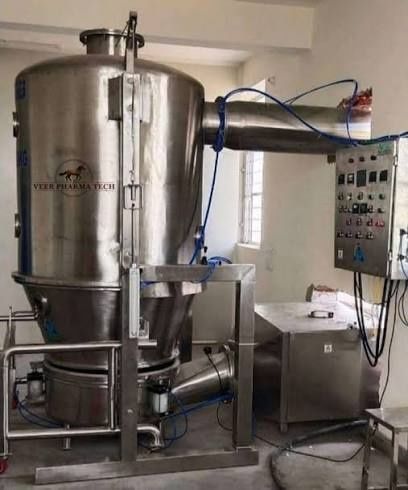
Pharmaceutical Granulation Equipment Guide: Understanding Modern Processing Systems
Pharmaceutical granulation equipment plays a central role in the production of many solid dosage medicines.
Granulation is a manufacturing process that converts fine powders into larger, more uniform particles known as granules. These granules improve the handling, flow, mixing, and compression characteristics of pharmaceutical ingredients. As medicine production has evolved, pharmaceutical granulator machine designs have become more advanced, helping manufacturers maintain consistency, quality, and efficiency throughout production.
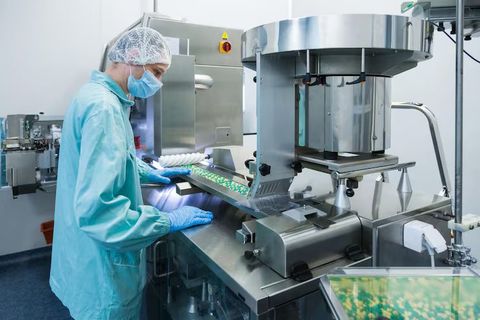
Modern pharmaceutical processing equipment includes a wide range of systems designed to support granulation, blending, drying, and tablet formation. Understanding how these systems work helps explain why granulation remains an important step in pharmaceutical manufacturing. Whether using wet granulation equipment or dry granulation equipment, the goal is to create stable granules that can be processed into tablets or capsules with predictable quality characteristics.
Context
Understanding Pharmaceutical Granulation
Granulation is a process used to combine powder particles into larger aggregates. Pharmaceutical powders often have properties that make direct tablet compression difficult. Fine powders may flow poorly, separate during handling, or produce inconsistent tablet weights. Granulation addresses these challenges by creating particles with improved physical properties.
The development of pharmaceutical granulation equipment emerged alongside advances in industrial medicine production. As manufacturing volumes increased, the need for reliable and repeatable processes became more important. Today, granulation systems are integrated into many pharmaceutical production equipment facilities around the world.
Types of Granulation Methods
The two primary granulation approaches are wet granulation and dry granulation.
- Wet granulation uses a liquid binder to help powder particles adhere together.
- Dry granulation compresses powders without adding liquid.
- Both methods aim to improve powder flow and tablet formation.
- The choice depends on ingredient characteristics and manufacturing requirements.
Different pharmaceutical granulator machine designs are available to support these methods, each suited to specific production needs.
Common Equipment Used in Granulation
Several types of pharmaceutical processing equipment are commonly used during granulation:
| Equipment Type | Primary Function |
|---|---|
| High shear granulator | Rapid mixing and granule formation |
| Fluid bed granulator | Granulation and drying in one system |
| Roller compactor | Dry granulation process |
| Oscillating granulator | Particle sizing and uniformity |
| Fluid bed dryer | Drying wet granules |
| Tablet press | Compressing granules into tablets |
These machines often operate as part of larger tablet production line equipment systems.
Importance
Why Granulation Matters
Granulation helps improve manufacturing consistency. Uniform granules contribute to predictable tablet weights, ingredient distribution, and physical strength. Without granulation, some powder formulations may be difficult to process efficiently.
For everyday consumers, granulation indirectly affects medicine quality. Consistent manufacturing processes help ensure that tablets meet established quality standards and perform as intended.
Supporting Large-Scale Production
Modern pharmaceutical production equipment is designed to handle substantial production volumes while maintaining quality controls. Granulation allows manufacturers to process materials more efficiently by reducing dust generation and improving powder flow through equipment.
Important benefits include:
- Improved powder handling
- Reduced material segregation
- Better flow characteristics
- More uniform tablet formation
- Enhanced process consistency
- Easier downstream processing
Role in Tablet Manufacturing
Many medicines are produced in tablet form. Tablet manufacturing equipment relies on feed materials that flow consistently into tablet presses. Properly formed granules support this process by helping maintain uniform filling and compression.
As a result, pharmaceutical granulation equipment is often considered a key component of tablet manufacturing equipment systems.
Impact on Product Stability
Granulation can also contribute to product stability. By creating more uniform particles and improving ingredient distribution, manufacturers can reduce variations that may occur during processing and storage.
The exact impact depends on the formulation, production method, and equipment configuration, but granulation remains an important tool for addressing manufacturing challenges.
Recent Updates
Increased Process Automation
Recent developments in pharmaceutical processing equipment have focused heavily on automation. Modern granulation systems often include automated controls that monitor process variables such as mixing speed, moisture levels, temperature, and drying conditions.
Automation can help manufacturers maintain process consistency while reducing manual intervention.
Growth of Continuous Manufacturing
A notable trend is the increasing use of continuous manufacturing systems. Traditional pharmaceutical production often relies on batch processing, where materials move through separate stages. Continuous manufacturing integrates multiple steps into a streamlined process.
In some facilities, pharmaceutical granulation equipment is now connected directly to blending, drying, and tablet compression systems.
Advanced Monitoring Technologies
Manufacturers are increasingly using process analytical technologies to monitor granulation in real time. These tools help operators observe particle growth, moisture content, and other quality indicators during production.
Examples include:
- Particle size monitoring systems
- Moisture measurement sensors
- Near-infrared analysis tools
- Automated quality monitoring platforms
Flexible Equipment Design
Many granulation machinery manufacturers are developing systems that support multiple formulations and production scales. Flexible equipment configurations allow facilities to adapt to changing production requirements without extensive modifications.
Focus on Energy Efficiency
Another ongoing trend involves improving equipment efficiency. Modern high shear granulator and fluid bed granulator systems often incorporate features intended to optimize energy usage during mixing and drying operations.
Laws or Policies
Good Manufacturing Practice Requirements
Pharmaceutical production is governed by Good Manufacturing Practice (GMP) regulations in many countries. These regulations establish standards for equipment design, operation, maintenance, and documentation.
Pharmaceutical granulation equipment used in regulated production environments typically must support cleaning, validation, and process control requirements.
Equipment Qualification and Validation
Regulatory authorities generally expect manufacturers to demonstrate that pharmaceutical processing equipment operates as intended. Qualification and validation activities help confirm that equipment consistently produces acceptable results.
Common validation stages include:
- Installation qualification
- Operational qualification
- Performance qualification
These processes are part of broader quality management systems.
International Regulatory Frameworks
Several organizations influence pharmaceutical manufacturing standards globally, including:
- World Health Organization
- International Council for Harmonisation
- U.S. Food and Drug Administration
- European Medicines Agency
While regulations vary by region, many principles related to equipment quality, documentation, and process control are similar.
Data Integrity Expectations
Modern pharmaceutical facilities increasingly rely on digital systems. Regulatory agencies emphasize accurate electronic records, traceability, and secure data management throughout manufacturing operations.
As a result, many pharmaceutical production equipment platforms include electronic monitoring and audit trail capabilities.
Tools and Resources
Technical Documentation
Equipment manuals and technical documentation remain valuable resources for understanding granulation systems. These materials typically include operational guidance, maintenance information, and troubleshooting procedures.
Regulatory Guidance Resources
Manufacturers often consult guidance documents from regulatory organizations to understand current expectations related to pharmaceutical processing equipment and production practices.
Useful resources may include:
- GMP guidance documents
- Validation guidelines
- Quality risk management frameworks
- Equipment qualification templates
- Inspection readiness checklists
Process Modeling Software
Digital tools are increasingly used to support granulation process development. These platforms can assist with process analysis, simulation, and optimization activities.
Examples include:
- Process simulation software
- Statistical analysis tools
- Manufacturing execution systems
- Quality management platforms
- Data visualization applications
Industry Publications
Technical journals and industry publications provide information about evolving trends in pharmaceutical granulation equipment, manufacturing techniques, and process innovations.
Training Materials
Educational resources help operators and engineers understand how equipment functions within a larger tablet production line equipment environment. These resources may include:
- Equipment operation guides
- Process development references
- Validation templates
- Training modules
- Technical webinars
FAQs
What is pharmaceutical granulation equipment?
Pharmaceutical granulation equipment refers to machines used to convert powder ingredients into granules before tablet or capsule production. These systems help improve powder flow, uniformity, and manufacturing consistency.
What is the difference between wet granulation equipment and dry granulation equipment?
Wet granulation equipment uses a liquid binder to join powder particles, while dry granulation equipment forms granules through compression without adding liquid. The appropriate method depends on the characteristics of the formulation.
How does a high shear granulator work?
A high shear granulator uses an impeller and chopper to mix powders and binder liquids rapidly. The intense mixing action promotes granule formation within a relatively short processing period.
What is a fluid bed granulator used for?
A fluid bed granulator suspends particles in a stream of air while applying granulating liquid. In many systems, granulation and drying occur within the same equipment, improving process efficiency.
Why is pharmaceutical granulator machine selection important?
Different formulations have different processing requirements. Selecting appropriate pharmaceutical granulator machine technology helps support consistent granule formation, efficient production, and compatibility with downstream tablet manufacturing equipment.
Conclusion
Pharmaceutical granulation equipment remains a fundamental part of modern medicine manufacturing. Granulation improves powder handling, supports tablet production, and contributes to manufacturing consistency. Technologies such as the high shear granulator and fluid bed granulator have expanded the range of available processing approaches. As automation, monitoring systems, and continuous manufacturing methods continue to evolve, pharmaceutical processing equipment is becoming increasingly integrated and data-driven while maintaining a strong focus on quality and regulatory compliance.